Definition and Purpose of Form W-8BEN-E
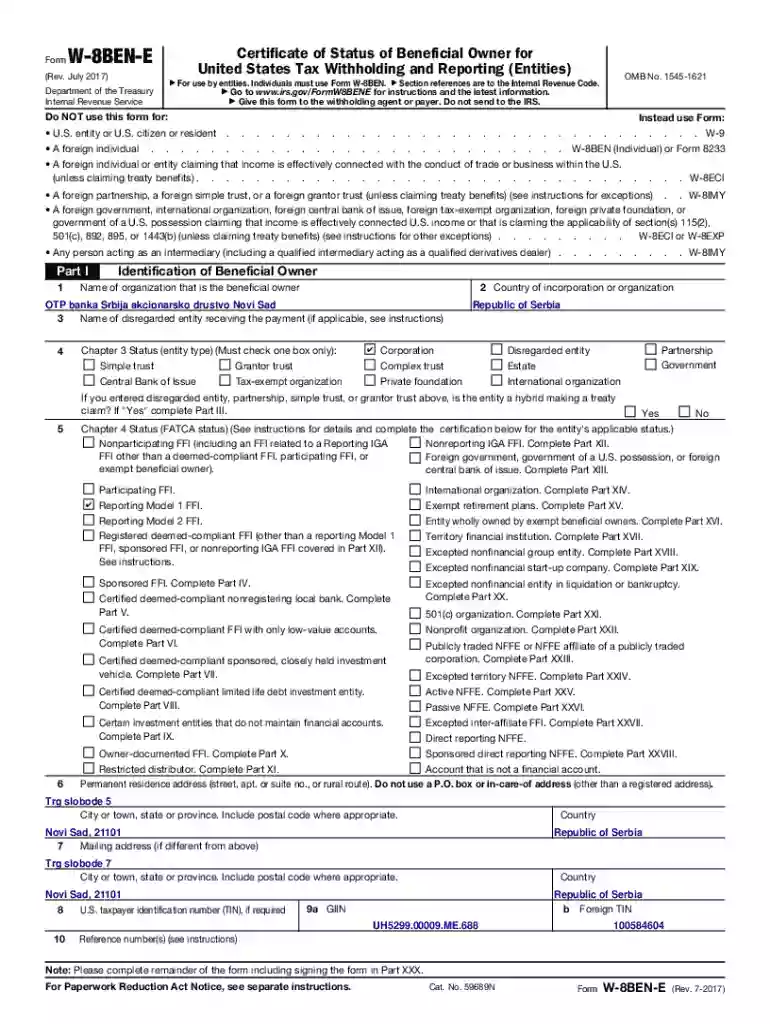
The W-8BEN-E form is designed for foreign entities to certify their status as beneficial owners for U.S. tax withholding and reporting purposes. It helps organizations declare their non-U.S. status and apply for treaty benefits if applicable. By completing this form, entities can clarify their classification as corporations, partnerships, or trusts, ensuring accurate tax treatment.
Real-World Scenarios
- Multinational Corporations: A foreign-based corporation working with U.S. firms utilizes the form to benefit from treaty provisions.
- International Investment Funds: Investment entities abroad use this form to certify their tax status and minimize withholding rates.
How to Use the Form W-8BEN-E
Completing the W-8BEN-E involves several key steps tailored to the entity's specific needs. This form is presented to a withholding agent or payer, not to the IRS.
Key Steps Include:
- Entity Identification: Provide essential details such as the entity's name, country of incorporation or organization, and type.
- Chapter 3 Status: Choose the appropriate box that indicates the entity's status for income tax purposes.
- Claim of Tax Treaty Benefits: If applicable, specify the treaty benefit being claimed and the reason for eligibility.
- Certification: An authorized individual must sign and date the form to validate its accuracy.
Steps to Complete the Form
Each section of the W-8BEN-E requires careful attention to avoid errors. The process includes sequential tasks that must be adhered to accurately.
- Review Instructions: Understand the guidelines provided by the IRS to avoid common pitfalls.
- Complete Entity Information: Clearly fill in the fundamental details about the business.
- Determine and Declare Chapter 3 and Chapter 4 Status: Accurately select the entity's tax status under both chapters as it affects withholding.
- Certify the Form: Ensure that the information is true, complete, and signed by someone authorized to act on behalf of the entity.
Example Scenario
An international tech startup providing services to U.S. businesses needs to signal its tax status. By completing the form, the company can potentially reduce or eliminate the withholding tax otherwise applied to its earnings from U.S. clients.
Requirements for Submission of Form
There are specific documents and protocols to follow when submitting the W-8BEN-E.
Required Documents:
- Entity Formation Documents: Proof of the entity’s existence and classification.
- Supporting Documentation for Treaty Benefits: As needed, evidence supporting any claimed treaty benefits.
Submission Methods:
- Direct to Payer or Withholding Agent: The form is not submitted to the IRS directly but to the organization applying the withholding.
Legal Use and Implications
The form carries legal weight, impacting both withholding requirements and eligibility for treaty benefits. Entities failing to provide accurate information might miss out on significant tax savings or risk misclassification penalties.
Compliance Importance:
- Accurate Representation: Avoid hefty penalties and ensure proper tax treatment.
- Adherence to IRS Protocols: Following legal guidelines is necessary for maintaining good standing.
IRS Guidelines and Compliance
The IRS provides explicit instructions and forms for completion and submission.
Key Guidelines:
- Usage Purpose: Establish tax status and claim any eligible reductions in withholding.
- Documentation Support: Maintain records to substantiate claims for treaty benefits.
Consequences of Non-Compliance:
- Financial Penalties: Incorrect submissions could lead to penalty charges.
- Increased Withholding: Absent verification, a higher withholding rate may apply.
Important Dates and Filing Deadlines
While the form does not directly go to the IRS, timely completion and submission to the applicable entity are essential.
Key Deadlines:
- Entity Review Period: Regular updates to the form may be required to ensure ongoing compliance, especially if there are changes in the entity’s status.
- Renewal Timeline: Typically every three years or upon a change in circumstance requiring an update.
Business Entity Types Eligible for Form W-8BEN-E
Different types of foreign entities benefit from using the W-8BEN-E specific to their business operations.
Applicable Entities:
- Corporations: Including those that are publicly traded or those that meet specific stock ownership requirements.
- Partnerships and Trusts: Depending on their tax status and operations in the U.S.
Considerations:
- Entity Classification: Impacts the type of documentation and eligibility for treaty benefits.
- Benefit Optimization: Selecting the correct entity type maximizes potential tax advantages.
By adhering to these guidelines, foreign entities can effectively navigate U.S. withholding regulations while optimizing their tax responsibilities and opportunities.