
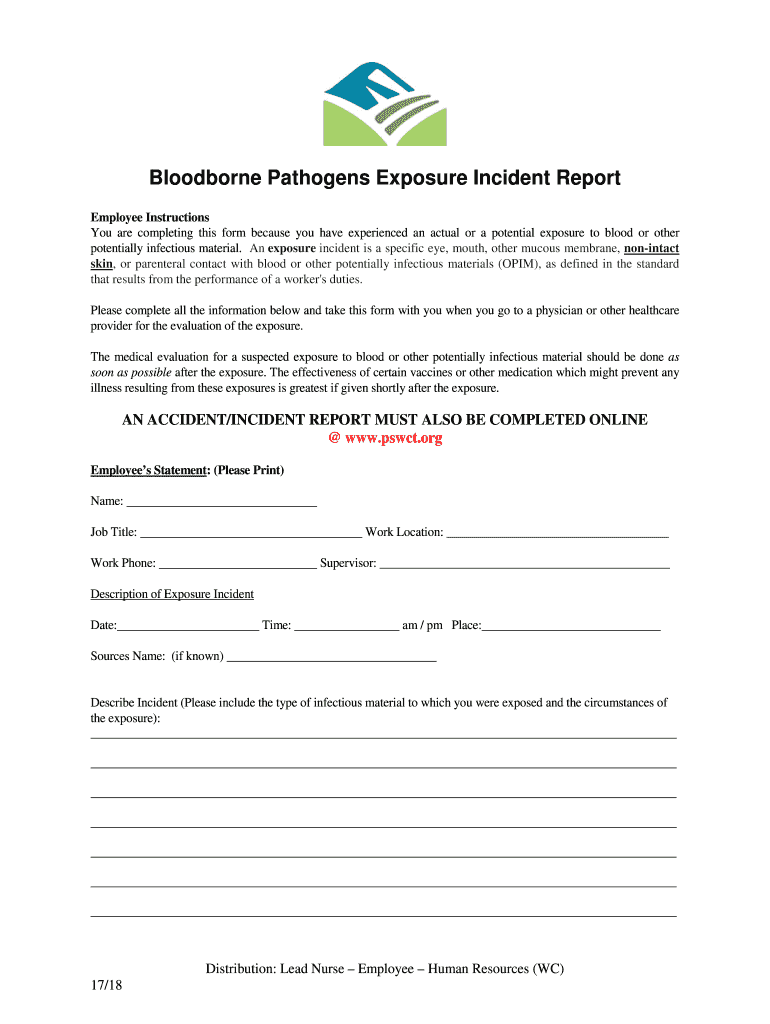







Definition & Purpose of the Bloodborne Pathogens Exposure Incident Report
The Bloodborne Pathogens Exposure Incident Report is a crucial document for employees who have encountered an exposure to bloodborne pathogens or potentially infectious materials. This form serves to formally document the details of the incident, providing a structured method for capturing critical information such as the nature of exposure, personal details of the exposed individual, and any immediate actions taken post-exposure. Its primary purpose is to ensure that proper medical evaluation and follow-up care are conducted, thereby safeguarding employee health and compliance with workplace safety regulations.
- Nature of Exposure: Describes how the exposure occurred, whether through a sharp object, mucous membrane contact, or another means.
- Personnel Details: Includes the exposed individual's name, job title, and department.
- Immediate Response: Records any first aid or immediate medical steps taken following the exposure incident.
Steps to Complete the Bloodborne Pathogens Exposure Incident Report
Filling out the Bloodborne Pathogens Exposure Incident Report accurately is essential. The process involves several key steps to ensure that all relevant information is thoroughly documented.
- Personal Information Entry: Begin by providing personal and employment details, including your name, department, and supervisor's contact information.
- Incident Description: Clearly describe the circumstances of the exposure, detailing the date, time, and location of the incident. Include specific actions that led to the exposure.
- Source Identification: If known, document the source of the blood or potentially infectious material. This could involve identifying a patient or object that caused the exposure.
- Medical Evaluation: Record whether immediate medical attention was sought, including the name of the healthcare provider and any treatments or advice received.
- Supervisor Statement: A section for your supervisor to review and comment on the incident, providing additional context or clarification as needed.
Key Elements of the Bloodborne Pathogens Exposure Incident Report
This incident report is composed of several critical components that capture essential aspects of the exposure.
- Employee Information: Includes all necessary personal and occupational details of the exposed employee.
- Incident Details: Encompasses a narrative of how the exposure occurred, ensuring all aspects are documented for review.
- Medical Actions: Records both immediate and follow-up medical interventions, including hepatitis B vaccination status when relevant.
- Supervisor Review: Offers insights or remarks from the supervisor regarding the incident and any preventative measures suggested.
Legal Use of the Bloodborne Pathogens Exposure Incident Report
The Bloodborne Pathogens Exposure Incident Report fulfills legal requirements under OSHA's Bloodborne Pathogens Standard. This standard mandates the documentation of exposure incidents and the provision of medical follow-up for employees.
- Compliance Requirement: Ensures that companies adhere to federal workplace safety regulations.
- Employee Rights: Protects the rights of employees to receive a post-exposure evaluation and medical treatment.
- Record-Keeping: Serves as part of mandatory workplace records that employers must maintain in case of inspections or audits.
Who Typically Uses the Bloodborne Pathogens Exposure Incident Report
This report is primarily used by various sectors where employees are at risk of exposure to infectious materials, including:
- Healthcare Workers: Nurses, doctors, and lab technicians who handle blood and bodily fluids regularly.
- First Responders: Paramedics and firefighters who are often first on the scene and may come into contact with bloodborne pathogens.
- Laboratory Personnel: Employees in research institutions who handle potentially infectious samples.


Important Terms Related to the Bloodborne Pathogens Exposure Incident Report
Understanding these key terms can aid in accurately completing and processing the incident report:
- Bloodborne Pathogens: Infectious microorganisms present in blood that can cause disease in humans, such as HBV and HIV.
- Exposure Incident: A specific eye, mouth, other mucous membrane, non-intact skin, or parenteral contact with blood or other potentially infectious materials.
- Personal Protective Equipment (PPE): Gear worn to minimize exposure to hazards that cause serious workplace injuries and illnesses.
Examples of Using the Bloodborne Pathogens Exposure Incident Report
Various scenarios can necessitate the use of the Bloodborne Pathogens Exposure Incident Report:
- Needlestick Injury: A nurse accidentally punctures her skin with a used needle during a routine procedure, necessitating immediate documentation.
- Splash Incident: A lab technician experiences a splash of human blood to their eyes while handling samples, prompting the need for a report and medical follow-up.
- Skin Exposure: An electrician repairing hospital equipment is exposed to potentially infectious blood that touches non-intact skin, requiring documentation.
State-Specific Rules for the Bloodborne Pathogens Exposure Incident Report
Although federal regulations generally govern bloodborne pathogen safety, specific states may have additional requirements:
- California: Has stringent workplace safety rules under Cal/OSHA that might include additional reporting or preventive measures.
- New York: Requires additional documentation for any exposure occurring in healthcare facilities or emergency services.
- Texas: State health departments may have supplementary guidelines for exposure documentation and follow-up procedures.




