
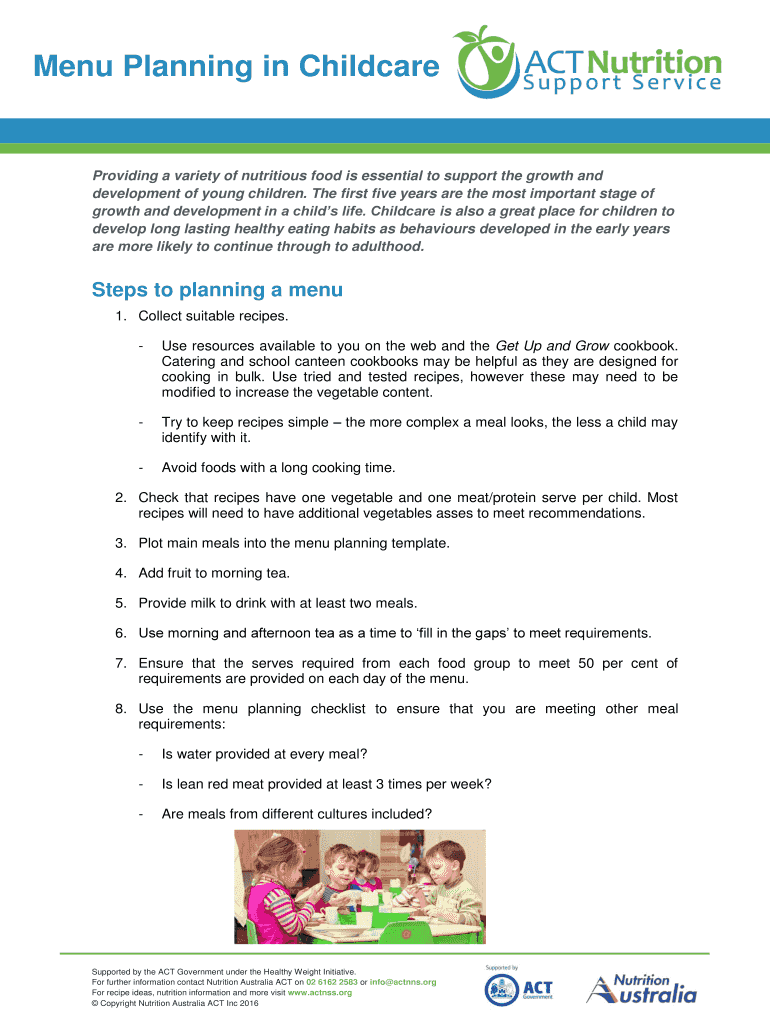







Definition & Importance of Menu Planning in Childcare
Menu planning in childcare involves strategically organizing food offerings to meet the nutritional needs of young children. It emphasizes a balanced diet rich in essential nutrients to support growth, cognitive development, and overall well-being. This structured approach ensures a variety of foods, including vegetables, proteins, and dairy, are included to promote diverse eating habits from an early age. By understanding the definition and importance of menu planning, childcare providers can make informed decisions that positively influence children's health outcomes.
Key Elements of Effective Menu Planning
- Balanced Diet: Incorporating a range of food groups to provide essential nutrients.
- Cultural Diversity: Including meals that reflect different cultures to broaden children's culinary exposure.
- Child Preferences: Considering the tastes and dislikes of children while ensuring nutritional adequacy.
- Seasonal Ingredients: Utilizing fresh and locally available produce to enhance flavor and nutrition.
Steps to Complete Menu Planning
Creating an effective menu in childcare involves several critical steps. These steps ensure the menu meets nutritional standards while being appealing to children.
- Assess Nutritional Needs: Evaluate the dietary requirements essential for children's growth.
- Select Diverse Ingredients: Choose a variety of foods to cover all food groups.
- Plan Meals: Organize meals to ensure a balance of nutrients throughout the day.
- Review Guidelines: Ensure menus align with USDA dietary guidelines for children.
- Incorporate Feedback: Gather feedback from caregivers and children to adjust menus as needed.
Examples of Menu Plans
- Breakfast: Whole-grain cereal with milk and fresh fruit.
- Lunch: Grilled chicken with quinoa and steamed vegetables.
- Snack: Yogurt with berries.
- Dinner: Baked fish with brown rice and a salad.
Benefits of Menu Planning in Childcare
Menu planning offers various benefits that extend beyond basic nutrition. Understanding these advantages can help childcare providers see the value in thorough planning.
Nutritional and Developmental Benefits
- Improved Health: Reduces the risk of nutrient deficiencies.
- Enhanced Learning: Well-fed children demonstrate better focus and academic performance.
- Supports Growth: Provides the necessary vitamins and minerals for physical development.
Operational Benefits
- Cost Efficiency: Streamlines purchasing and reduces food waste.
- Simplified Operations: Ensures consistent meal quality and standardization.
- Regulatory Compliance: Helps meet state and federal guidelines for childcare nutrition.
Who Typically Uses Menu Planning in Childcare?
Menu planning is utilized by various stakeholders in the childcare sector, each with distinct roles in the planning and implementation.
Roles and Responsibilities
- Childcare Providers: Design and implement the menu, ensuring balance and variety.
- Nutritionists: Provide expertise on dietary requirements and food choices.
- Chefs/Cooks: Prepare meals according to the planned menu.
- Regulatory Bodies: Oversee compliance with nutritional standards and guidelines.
Legal Use and Compliance
Legal compliance is a crucial aspect of menu planning in childcare, requiring providers to adhere to established nutritional guidelines and regulations.
Mandatory Nutritional Standards
- USDA Guidelines: Adhering to specific nutrient requirements set for childcare settings.
- State Regulations: Varying standards based on geographic location and local legislation.
- Allergy Considerations: Implementing strategies to accommodate children with food allergies.
State-Specific Rules for Menu Planning
Menu planning may differ by state due to varying regulations and guidelines. Understanding these differences is essential for compliance and optimal planning.
Examples of State Variations
- California: May have additional requirements for organic produce.
- Texas: Potential emphasis on traditional foods to cater to local preferences.
- New York: Could require specific documentation of meal plans submitted periodically.
Digital Vs. Paper Version for Documentation
In the modern era, menu planning documentation can be done digitally or on paper, with each method having its advantages.
Advantages of Digital Menu Planning
- Ease of Updates: Modify and share menus quickly.
- Efficient Record-Keeping: Store long-term records securely online.
- Enhanced Communication: Easily share changes and updates with stakeholders instantly.
Paper Version Considerations
- Traditional Familiarity: Preferred by some for ease of use and direct access.
- Physical Backup: Useful for locations with limited digital infrastructure.




