







Definition & Meaning
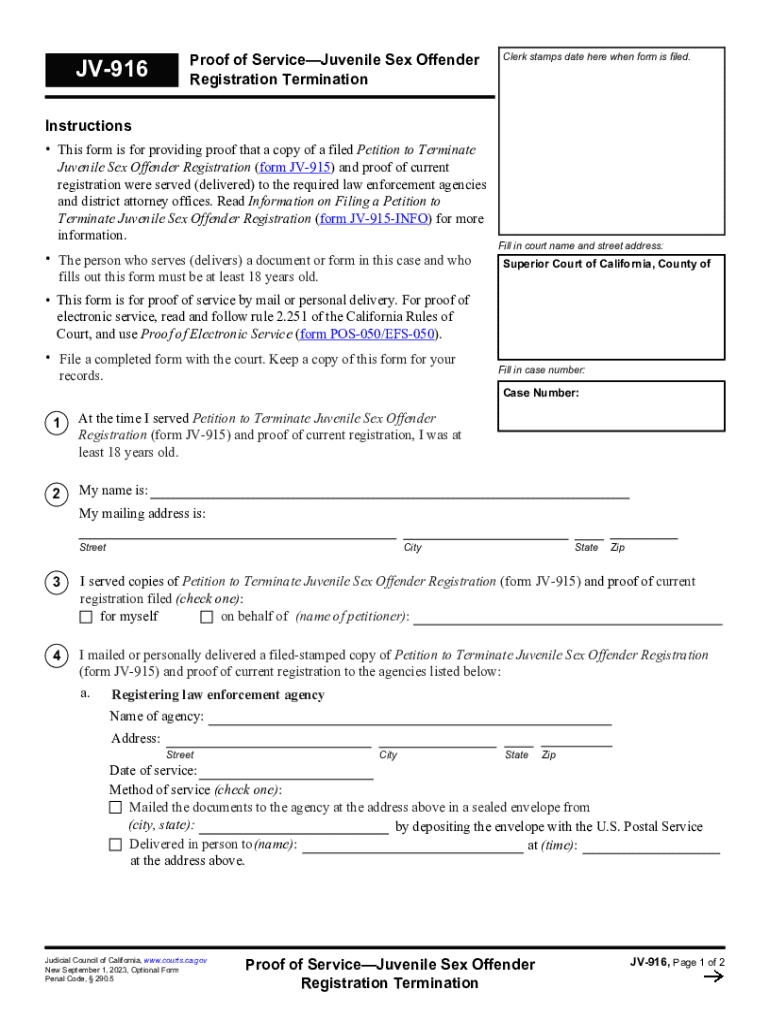
The JV-916 form, also known as the Proof of Service form, plays a critical role in legal proceedings related to juvenile sex offender registration in the United States. This form serves to officially confirm that a Petition to Terminate Juvenile Sex Offender Registration, specifically form JV-915, along with proof of current registration, has been successfully delivered to the appropriate legal and law enforcement entities. Completion and submission of the JV-916 are mandatory for the petitioner to move forward with their request to terminate registration.
How to Use the JV-916
Understanding how to properly utilize the JV-916 form is crucial for its acceptance by the court. The form is utilized to document the service of the petition and proof of registration to all necessary parties. It requires detailed information regarding the delivery method, information about the server, and proof that the required documents were received by the district attorney and relevant law enforcement agencies. This ensures that all parties are informed and that legal requirements for notification are met.
Steps to Complete the JV-916
-
Identify the Parties Involved: Clearly state who is serving the documents and to whom they are being served. Include names and addresses of recipients.
-
Determine the Method of Service: Specify the method by which the documents were delivered, such as personal delivery, mail, or electronic means, depending on what is permissible in your jurisdiction.
-
Filling Out the Form: Complete all sections of the form, providing accurate and comprehensive details on the case and delivery process. This includes the date of service and a description of the documents served.
-
Sign the Form: The server must sign the form to verify that the information provided is accurate. Unsigned forms will not be accepted by the court.
-
File with the Court: Submit the completed form to the appropriate court. Retain a copy for personal records as proof of service.
Who Typically Uses the JV-916
The JV-916 form is generally used by individuals who have filed a Petition to Terminate Juvenile Sex Offender Registration. They might include attorneys representing the petitioner or individuals acting pro se (representing themselves). The form is also pertinent for legal professionals who are part of juvenile justice systems, ensuring that proper notifications have been made to transition proceedings forward.

Key Elements of the JV-916
- Server's Details: Name and age of the individual serving the documents.
- Delivery Method: Whether the service was conducted in person or via an alternative method.
- Recipient Information: Complete details of each recipient of the service.
- Service Date: Exact dates on which each document was served.
- Case Information: Case number and court details must be accurately reflected.
- Signature: Certification of the server's identity and validation of the service process.
State-Specific Rules for the JV-916
While the JV-916 is a standardized form, each state may impose additional requirements or procedural variations. It's essential to consult local court rules or a legal professional to understand specific mandates. For instance, some states may require direct service to individuals or have additional documentation protocols that must be met.
Important Terms Related to JV-916
- Server: The individual responsible for delivering the legal documents.
- Recipient: The entity or individual receiving the forwarded documentation.
- Proof of Service: Evidence that documentation has been delivered as required by law.
- Petitioner: The party requesting the termination of registration.
- Juvenile Sex Offender Registration: A legal requirement mandating certain individuals to register with law enforcement.
Filing Deadlines / Important Dates
Timeliness is critical when dealing with the JV-916 form. Filing deadlines will vary based on the jurisdiction and the specific circumstances of the case. Generally, the form must be filed shortly after serving the documents, but exact deadlines should be confirmed with local court rules. Missing these deadlines can result in significant delays or dismissal of the petition, so it's crucial to adhere strictly to all specified timeframes.
Form Submission Methods
- Online: Some jurisdictions may allow for electronic submission through dedicated court portals.
- Mail: Service by mail requires adherence to specific mailing protocols, including certified or registered mail.
- In-Person: Delivering the documents directly to the court office or clerk ensures immediate acknowledgment of receipt.
Ensure verification of the preferred method by your local jurisdiction to comply with requirements fully.




