




Definition and Meaning
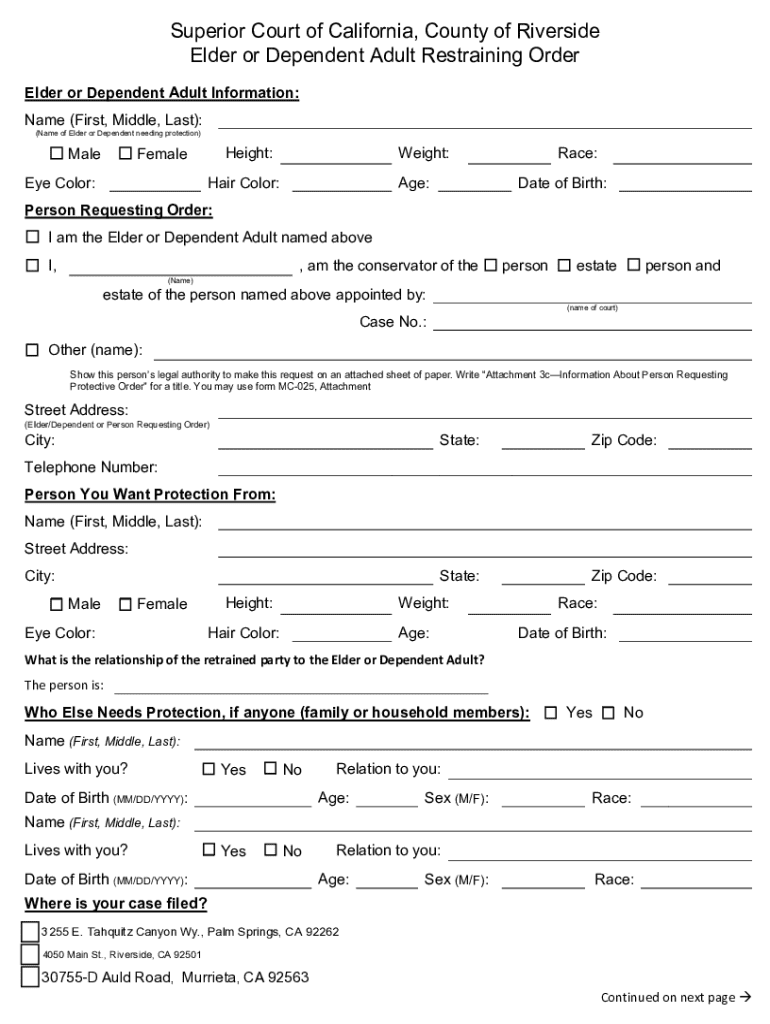
The Elder or Dependent Adult Restraining Order is a legal instrument designed to safeguard older adults or dependent individuals from abuse. Such abuse may include physical harm, financial exploitation, neglect, or emotional distress. In most cases, this order is used in California to provide vulnerable adults with legal protection and prevent further harassment or harm from perpetrators. The restraining order can cover different forms of contact, such as personal communication, electronic communication, or physical proximity. It serves as a formal directive from the court to cease any abusive conduct, ensuring the protection and well-being of the affected individual.
How to Use the Elder or Dependent Adult Restraining Order
Using an Elder or Dependent Adult Restraining Order involves adhering to specific procedures to ensure that the order is implemented effectively. Firstly, the protected person or their representative must file a request in the appropriate California court. Once the restraining order is granted, it is crucial to abide by its terms. Violating an order can lead to significant legal consequences, including arrest. Subjects of the order are typically required to maintain a preset physical distance from the protected person and avoid any contact. Any breach should be reported to law enforcement immediately to ensure the safety of the elder or dependent adult.
Steps to Complete the Elder or Dependent Adult Restraining Order
- Gather Necessary Information: Collect detailed information about the abuse, including dates, incidents, and any witnesses. This information will be vital in supporting your case.
- Complete the Necessary Forms: Fill out the Judicial Council forms like the Request for Elder or Dependent Adult Abuse Restraining Orders (EA-100). These forms require information about the petitioner, the respondent, and the details of the abuse.
- File with the Court: Submit the completed forms to the court clerk of the appropriate California Superior Court. There might be filing fees, but fee waivers are available for eligible individuals.
- Serve the Papers: Have a third party over the age of 18 who is not involved in the case serve the respondent with a copy of the paperwork. This ensures that the defendant is formally notified about the case.
- Attend the Court Hearing: Appear at the scheduled court hearing, bringing any evidence and witnesses to support your case. The judge will decide whether to grant a temporary or permanent restraining order.
Eligibility Criteria
To be eligible for an Elder or Dependent Adult Restraining Order, specific conditions must be met. The alleged victim must be 65 years of age or older or be a dependent adult between 18 and 64 years of age with certain physical or mental limitations that inhibit self-care. Additionally, the restraining order can be filed if there is evidence of abuse, whether physical, emotional, or financial, that justifies the need for legal intervention. Those seeking the order can do so on behalf of themselves or through a legal guardian or advocate if they are unable to file personally.


Legal Use of the Elder or Dependent Adult Restraining Order
The legal use of this restraining order encompasses various protective measures aimed at ensuring the safety of elders and dependent adults in California. When granted, the order can legally prohibit the respondent from engaging in certain behaviors, such as contacting, harassing, or approaching the protected individual. It serves as a legally binding document that the police can enforce, offering protection from potential abusers. Additionally, the order may be used to remove the respondent from certain shared residences or workplaces, further protecting the vulnerable party from harm.
State-specific Rules for the Elder or Dependent Adult Restraining Order
In California, state-specific rules govern the application and issuance of the Elder or Dependent Adult Restraining Order. California mandates specific forms and procedures, emphasizing the protection of its elderly populace. Important distinctions include the ability for immediate temporary orders even before a full court hearing. California also allows for the modification or extension of restraining orders, adapting to changes in circumstances over time. Those seeking protection should be mindful of filing within the designated courts and understanding how state-specific laws interact with their particular situation.
Required Documents
To successfully file an Elder or Dependent Adult Restraining Order, several documents must be prepared and submitted. These include:
- Request for Elder or Dependent Adult Abuse Restraining Orders (EA-100): Main application form.
- Confidential CLETS Information (CLETS-001): Required for law enforcement databases.
- Notice of Court Hearing (EA-109): Form detailing the scheduled court hearing date.
- Temporary Restraining Order (EA-110): A temporary order issued until the hearing, if granted.
- Proof of Personal Service (EA-200): Documentation proving that the respondent has been served.
Each document plays a vital role in the application process, aiding the court in understanding the situation and ruling accordingly.
Important Terms Related to Elder or Dependent Adult Restraining Order
Understanding the following key terms is essential when dealing with the Elder or Dependent Adult Restraining Order:
- Petitioner: The individual requesting the restraining order.
- Respondent: The person against whom the restraining order is sought.
- Abuse: Includes a variety of behaviors, such as physical harm, financial exploitation, and emotional distress.
- Temporary Restraining Order (TRO): A short-term order that provides immediate protection until a full hearing can be held.
- Permanent Restraining Order: Typically lasts up to five years and provides long-term protection.
These terms help clarify the roles and processes involved in seeking and enforcing a restraining order for vulnerable adults.