




01. Edit your form online
Type text, add images, blackout confidential details, add comments, highlights and more.

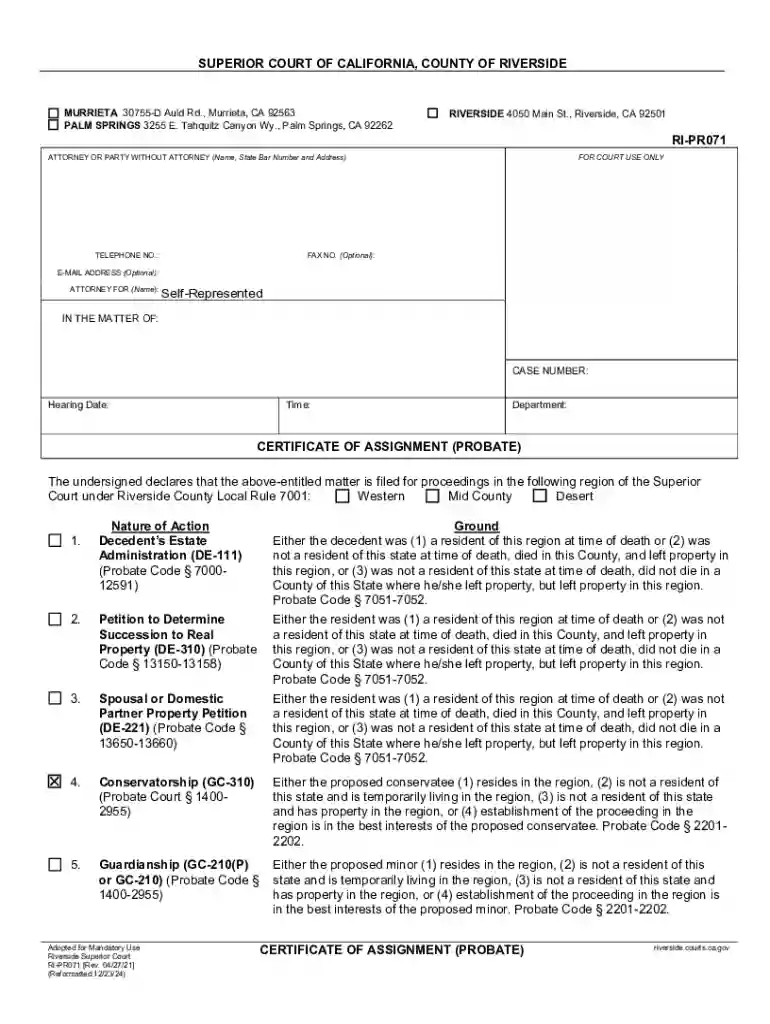
Type text, add images, blackout confidential details, add comments, highlights and more.

Draw your signature, type it, upload its image, or use your mobile device as a signature pad.

Send it via email, link, or fax. You can also download it, export it or print it out.
Conservatorship documents are legal instruments used in the United States to establish a conservatorship, providing a court-appointed individual with the authority to manage personal, financial, and/or medical affairs for someone unable to do so themselves. These documents outline the responsibilities and powers granted to the conservator over the conservatee, ensuring decisions are made in the best interest of the latter. Understanding the purpose and components of these documents is essential for those involved in this legal process.
Obtaining conservatorship documents typically involves filing a petition with the appropriate state court. This process requires gathering and completing several forms, such as a Petition for Appointment of Conservator and a Notice of Hearing. Applicants must provide necessary information about the proposed conservatee, including their condition, assets, and the reason for requiring a conservatorship. Filing fees often apply, and some courts demand additional documentation, like medical reports, to support the petition.
Complete Required Forms: Gather and accurately fill out required forms, ensuring all information aligns with the conservatee's circumstances.
File with the Court: Submit documents to the relevant court, paying any associated fees. Keep copies for personal records.
Serve Notice: Notify the proposed conservatee and other interested parties (relatives, caregivers) at least 15 days before the hearing.
Attend the Hearing: Present the case, evidencing the need for conservatorship. Interested parties may attend and express opinions.
Receive Court Decision: The court will either grant or deny the conservatorship based on the evidence presented.
Conservatorship documents contain critical sections that outline roles, responsibilities, and limitations of the conservator. Key elements include:
Details of the Conservatee: Personal and medical information relevant to the conservator's duties.
Conservator's Powers: Specifies the extent of authority over financial, medical, or personal decisions.
Duration: Indicates whether the conservatorship is temporary or permanent and under what conditions it can be terminated or extended.
Reporting Requirements: Details on how and when the conservator must report their activities to the court.
The legal framework surrounding conservatorship documents includes compliance with state-specific laws and federal guidelines. These documents must adhere to the protocols from the ESIGN Act for electronic signatures if signed digitally, ensuring authenticity and legal validity. Misuse or non-compliance with the terms outlined in the documents can result in legal penalties, making it crucial for conservators to stay informed of their obligations.
Different states have unique rules and forms for establishing conservatorships. For instance, California requires more comprehensive documentation, including a capacity declaration, than some other states. Understanding these variations is vital for ensuring comprehensive compliance with local requirements. Prospective conservators should consult state-specific guidelines or seek legal counsel to navigate these differences effectively.
Conservatorship documents are commonly used by family members or close relatives when an individual is incapacitated. This includes situations involving adults with disabilities, elderly individuals suffering from age-related illnesses like dementia, or minors whose parents can no longer care for them. Institutions like hospitals or banks might also request a conservatorship to ensure decisions regarding care or finances are made responsibly.
Each method of completing conservatorship documents offers unique advantages. Paper versions can be signed and filed in person, which some might prefer for added security. However, electronic versions simplify the process, allowing for easier edits and quicker submission. Platforms like DocHub enable secure electronic signatures and storage, which are legally binding and facilitate an efficient workflow for applicants and courts alike.
We've got more versions of the Conservatorship Documents form. Select the right Conservatorship Documents version from the list and start editing it straight away!
At DocHub, your data security is our priority. We follow HIPAA, SOC2, GDPR, and other standards, so you can work on your documents with confidence.


Initial Petition/Documents Notice of Hearing for Conservatorship GC-310 Citation for Conservatorship Confidential Supplemental Information FormRead more
Aug 24, 2023 the purpose for which the document was created, the actual use of the document, and the extent to which the creator of the document andRead more
Fillable PDF Guardianship and Conservatorship Forms Forms for Guardians of Adults Forms for Guardians of Minors Forms for Conservators National Health LawRead more


