





Definition and Meaning
The "Request for Oral Argument" is a legal document typically filed in appellate courts to formally ask for an opportunity to present oral arguments in a case. This request allows attorneys to further clarify their written submissions, highlight critical points of the case, and address any questions the judges may have. Oral argument sessions can be crucial as they provide a dynamic forum for interaction between the bench and the arguing attorneys, which can influence the court's decision-making process.
How to Use the Request for Oral Argument
To effectively use a Request for Oral Argument, attorneys must consider several strategic factors. First, an assessment of whether oral argument will likely influence the court's decision in a substantial manner is necessary. This involves determining if the case has complex legal issues that cannot be sufficiently addressed in written briefs alone. Lawyers should succinctly articulate why oral argument would provide value beyond the brief and must ensure the request is filed in accordance with the procedural rules of the relevant court.
Steps to Complete the Request for Oral Argument
-
Review Court Rules: Before completing the form, review the specific appellate court rules pertaining to oral argument requests to ensure compliance.
-
Prepare a Strong Rationale: Clearly articulate why oral argument is necessary. Emphasize how it can aid the court in understanding critical aspects of the case that are not as effectively communicated in writing.
-
Detail Key Information: Include essential case details such as the case number, title, and the attorneys of record. Indicate any specific legal issues to be addressed during the argument.
-
Filing Deadline Compliance: Ensure the request is submitted within the timeline specified by the court to avoid denial based on procedural grounds.
-
Confirmation of Submission: After filing, be vigilant in confirming receipt by the court and be prepared to provide supplemental information if requested.
Why Should You Request for Oral Argument
Requesting oral argument can provide significant benefits, particularly for cases with intricate legal theories or substantial public interest. Oral argument offers an advantage for presenting a persuasive case openly, allowing attorneys to capture the immediate attention of judges and respond quickly to their inquiries. This engagement may sometimes lead to a more favorable outcome than solely relying on written submissions.
Important Terms Related to Request for Oral Argument
- Appellate Brief: A written document submitted in an appellate court outlining the arguments and legal foundations a party relies on.
- Docket Number: The unique number assigned to a case when it is filed, used to track and identify the case.
- Amicus Curiae: Literally "friend of the court," a party that is not directly involved in the case but is allowed to provide information or advice.
State-Specific Rules for the Request for Oral Argument
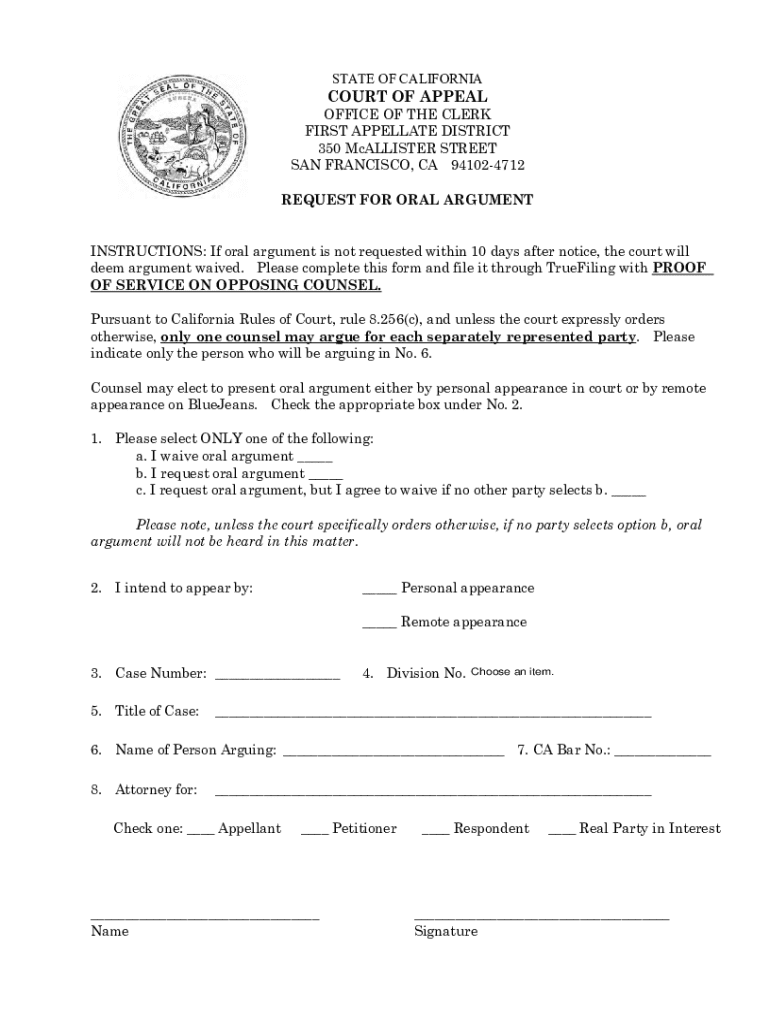
State-specific rules can significantly impact how the Request for Oral Argument is processed and granted. For instance, in California, the form encompasses detailed guidelines for both requesting or waiving oral representation and the conditions under which these may be conducted either in-person or remotely. Compliance with these rules is essential, as they dictate procedural aspects like format, timing, and eligibility.
Key Elements of the Request for Oral Argument
The Request for Oral Argument form typically includes certain key elements to ensure it meets the procedural standards:
- Case Title and Number: Essential for identifying the specific legal case associated with the request.
- Attorney Identification: Names and contact information of the attorneys involved must be listed.
- Grounds for Argument: A compelling articulation of why oral argument is essential.
- Appearance Options: Indication of how the argument will be presented, whether in-person or remote.
Examples of Using the Request for Oral Argument
Consider a case where intricate constitutional issues are at play. The attorneys involved might file a Request for Oral Argument to personally emphasize their interpretation and application of these constitutional principles in front of the judges. Likewise, in another instance, a complex commercial litigation case involving multifaceted contract interpretation might benefit from an oral argument to address potential judicial concerns directly and adjust the presentation strategy based on real-time feedback.
Form Submission Methods (Online / Mail / In-Person)
The Request for Oral Argument can usually be submitted through various methods depending on the court's facilities and technological advancements:
- Online Submission: Many courts provide electronic filing systems that expedite the submission and processing of requests. This can often include uploading directly through court portals.
- Mail: Traditional methods still apply, where forms can be mailed to the clerk of the court.
- In-Person Filing: Submitting documents personally at the court's office is also possible, allowing for immediate confirmation of receipt.
Each submission method may have specific requirements or recommended best practices to ensure successful acceptance of the form, such as format specifications or confirmation procedures.