






Definition & Meaning
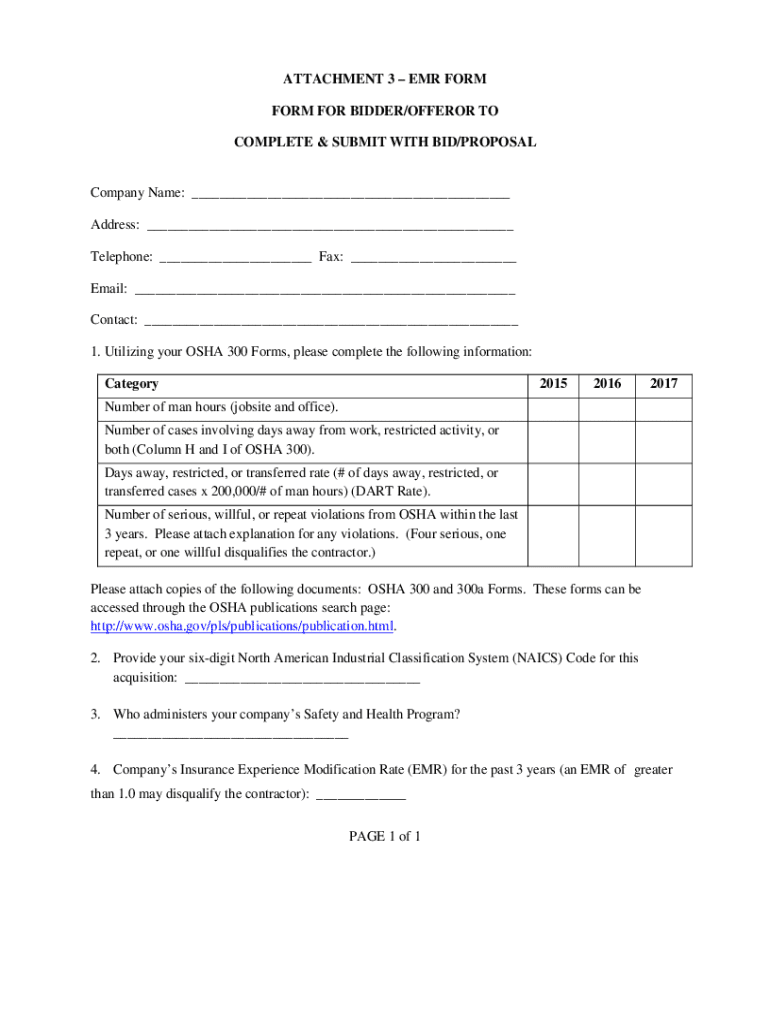
The EMR form, also known as the Experience Modification Rate form, is a critical document for businesses involved in competitive bidding, particularly within industries focused on safety and compliance. This form captures a company’s safety performance metrics, providing insights into historical safety practices and any incident-related details. Companies use the EMR form to demonstrate their commitment to safety and to qualify for bidding processes that require proof of robust safety programs.
Key Components of the EMR Form
- Safety Performance Metrics: Includes data on past safety incidents and outcomes.
- OSHA 300 Forms: Documentation of workplace injuries and illnesses.
- Man Hours: Total hours worked by all employees over a specific period.
- Violation History: Records of any safety or health-related violations.
- NAICS Code: Industry classification to align the safety data with the appropriate industry standards.
- Safety Program Details: Information about the Safety and Health Program administrator and the procedures in place.
- Insurance EMR: A rating that indicates the company's historical insurance claims related to safety incidents.
How to Use the EMR Form
The EMR form is predominantly used by companies to qualify for tenders and demonstrate safety track records. Here's how to effectively utilize the form:
- Complete Accurate Data: Ensure all sections are filled with accurate and up-to-date information.
- Attach Required Documents: Accompany with OSHA 300 forms and violation history for comprehensive safety insights.
- Submit for Bidding: Provide to relevant authorities or entities during tender submissions to outline safety compliance.
Important Considerations
- Data Verification: Regularly update and verify safety information to maintain credibility.
- Confidentiality: Handle sensitive data, such as violation history and insurance information, with care to protect company privacy and compliance.
Steps to Complete the EMR Form
Completing the EMR form requires meticulous attention to detail and comprehensive understanding of the safety parameters involved.
- Gather Relevant Documents: Collect OSHA forms, and previous violation reports.
- Fill Out Basic Information: Enter company name, NAICS code, and contact details.
- Record Safety Data: Log man hours, safety performance metrics, and incident data.
- Include Program Details: Describe the safety and health policies and administrator roles.
- Check Insurance EMR: Get the latest Insurance EMR to report accurately.
- Review for Completeness and Accuracy: Double-check all entries before submission.
Detailed Breakdown
- Man Hours Calculation: Include only the hours where safety protocols were active.
- Incident History Documentation: Attach any official reports or documentation for incidents listed.
- Update Cycle: Regularly update information, especially if applying for multiple contracts.
Legal Use of the EMR Form
The EMR form is a legally binding document that provides a formal summary of a company’s safety standing. Proper use ensures compliance with industry safety standards and legal guidelines.
Compliance Requirements
- Adhere to OSHA Standards: Ensure all reported data aligns with OSHA regulations.
- Legal Disclosures: Fully disclose any past violations or penalties to avoid legal ramifications.
- Accuracy and Honesty: Accurate presentations of safety data are mandatory to satisfy legal requirements.
Key Elements of the EMR Form
The key components of the EMR form are essential for assessing a company's safety protocols and bid eligibility.
Essential Features
- Comprehensive Safety Metrics: Captures detailed safety-related performance measures.
- Multi-year EMR Data: Provides insight into the company's safety trends over the last three years.
- Program Overview: Summarizes active health and safety strategies and administrators.
Required Documents
To complete an EMR form, prepare and submit additional documentation for a complete profile.
Document Checklist
- OSHA 300 Logs: Historical records of workplace injuries and illnesses.
- Insurance EMR: Latest statements from the insurance provider.
- Violation Records: Any notices or penalties received within the reporting period.
Document Submission
- Electronic Submission: Scan and attach documents in a digital format for convenience.
- Hard Copies: Keep physical copies as backup or for entities requiring paper submissions.
Who Typically Uses the EMR Form
The EMR form is primarily used by companies in industries where safety is a critical component of operation and compliance.


Typical Users
- Construction Firms: To demonstrate safety record and qualify for contracts.
- Manufacturing Companies: To provide safety assurances and obtain operational licenses.
- Logistics Providers: To secure partnerships and contracts by showcasing safety compliance.
Business Types That Benefit Most from EMR Form
Understanding the types of businesses that benefit the most from the EMR form can help align its completion with your strategic business goals.
Beneficiaries
- High-Risk Industries: Construction, Oil & Gas, Manufacturing where safety ratings impact bid acceptance.
- Regulatory Compliant Companies: Firms focusing on maintaining competitive safety standings.
- Large-Scale Enterprises: Businesses seeking to maintain transparency and credibility in safety records.
By recognizing the role of the EMR form and its components, businesses can better manage their safety documentation processes, ensure compliance, and enhance their competitive edge in bidding situations.