






Definition & Meaning
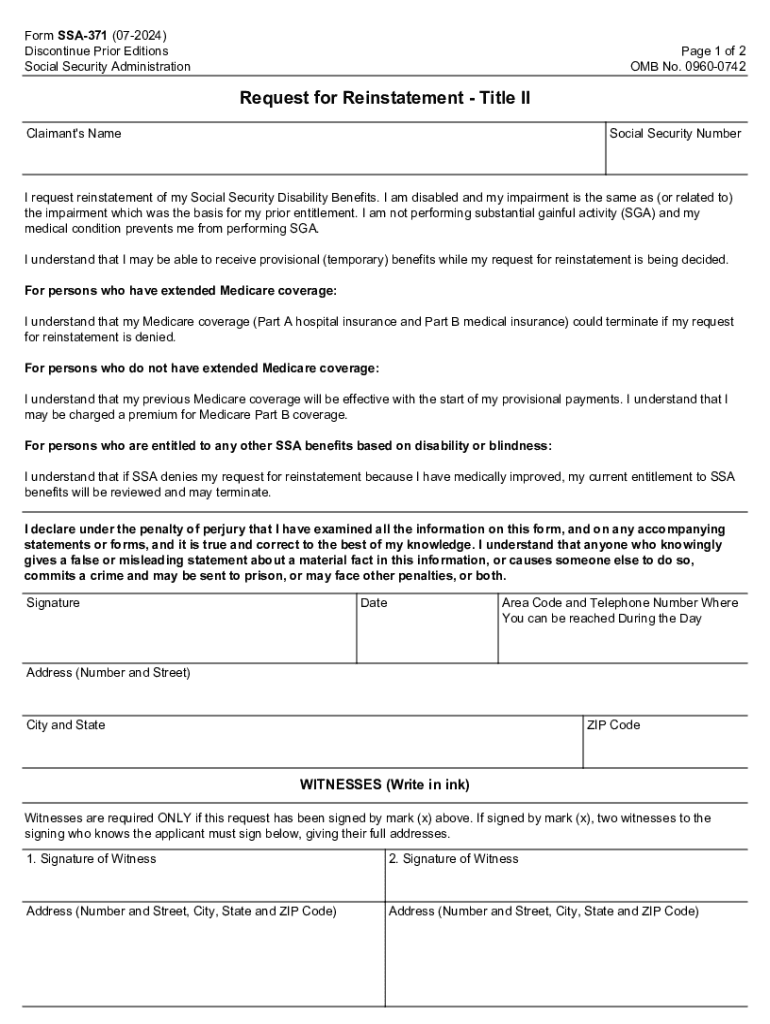
Form SSA-371, a cornerstone for those navigating the Social Security Disability Benefits ecosystem, is essential for individuals seeking the reinstatement of previously terminated benefits. Designed specifically for claimants whose disability status might have changed or who have faced interruptions in benefit sin receiving, this form clarifies the claimant's current situation. By completing the SSA-371, individuals confirm their understanding of potential changes to their Medicare coverage and provisional benefits. It requires detailed personal information, signatures, and, where necessary, witness verification, ensuring that all legal and procedural requirements are met.
How to Use the SSA-371
Understanding how to properly fill out and submit the SSA-371 is crucial for those aiming to restore their disability benefits. The form should be completed with utmost accuracy, ensuring all required fields are filled in and any instructions provided are followed. It requires claimants to detail their current disability status, which should align with the medical criteria laid out by the Social Security Administration (SSA). Once filled, claimants need to gather any additional documentation that supports their request for reinstatement. The form, along with all supporting documents, can be submitted online via the SSA website, mailed directly to the appropriate Social Security office, or delivered in person to ensure receipt and processing.
Steps to Complete the SSA-371
-
Gather Required Information: Ensure you have all necessary personal and medical documentation at hand. This includes your Social Security number, medical records, and any previous correspondence with the SSA regarding your disability claim.
-
Complete Personal Information: This section includes your full name, Social Security number, contact information, and any identification numbers relevant to your disability claim.
-
Detail Disability Status: Clearly describe the nature of your disability and how it affects your ability to work. Attach medical records or statements from healthcare providers that substantiate your claims.
-
Understanding Provisional Benefits: Indicate your acknowledgment of how the provisional benefits might temporarily change your Medicare coverage and the conditions surrounding these alterations.
-
Signatures and Witness Details: Sign the form where indicated. If necessary, have a suitable witness verify and sign the form as well. This ensures legal compliance and authenticity.
-
Submission: Decide on your preferred mode of submission—online, mail, or in-person. Ensure all supplementary materials accompany your form.
Key Elements of the SSA-371
- Personal Information Section: This is critical for identifying the claimant and connecting the current application with past records.
- Disability Status Declaration: Central to the form, this section requires an up-to-date declaration of the claimant's disability status and capability to work.
- Acknowledgment of Provisional Benefits Impact: Ensures claimants are informed about how their benefits might be temporarily adjusted.
- Signature and Witness Requirements: To validate the form, signatures confirm the authenticity of the claim, while witnesses—where applicable—add an additional layer of verification.
Required Documents
When preparing to submit Form SSA-371, claimants should compile several key documents:
- Medical Records: Documentation from healthcare providers substantiating the disability and its impact on the claimant's ability to work is paramount.
- Personal Identification: A valid Social Security number and any other identification relevant to previous claims or communications with the SSA.
- Previous SSA Correspondence: Any letters, determinations, or notifications from past interactions with the SSA regarding disability status.
Examples of Using the SSA-371
Consider John, a former beneficiary who experienced temporary improvement in his disabling condition, resulting in the cessation of benefits. As his condition worsened, John sought to reinstate benefits by accurately completing the SSA-371. He provided recent medical evaluations, filled out the form meticulously with all necessary acknowledgments, and submitted it in person to receive immediate assistance and guidance. This proactive approach helped John navigate the reinstatement process efficiently.
Eligibility Criteria
Eligibility to use Form SSA-371 primarily depends on the individual's previous relationship with the Social Security Disability Insurance program. Applicants must:
- Have previously received disability benefits which were later ceased.
- Demonstrate that their disabling condition persists or has worsened, affecting their capacity to engage in substantial gainful activity.
- Ensure submission before three years have lapsed since benefits were stopped, as this period influences the reinstatement process.


Application Process & Approval Time
Once submitted, the SSA evaluates the form and all accompanying materials to determine eligibility for benefit reinstatement. The processing time can vary significantly, often dependent on the complexity of the case and completeness of the submitted documentation. Generally, claimants should prepare for a waiting period ranging from a few weeks to several months for a final determination. During this time, maintaining regular communication with the SSA and providing any requested additional information promptly can expedite the process.
Legal Use of the SSA-371
Utilizing Form SSA-371 carries significant legal implications, as it impacts one's eligibility for receiving governmental benefits. Claimants must ensure full and honest disclosure of personal and medical information, as any falsification could result in penalties or disqualification. The form facilitates a transparent process where former beneficiaries clarify and substantiate their current disability status, ensuring compliance with all legal standards set by the SSA.