






Definition & Purpose of Elder or Dependent Adult Abuse Restraining Orders in California
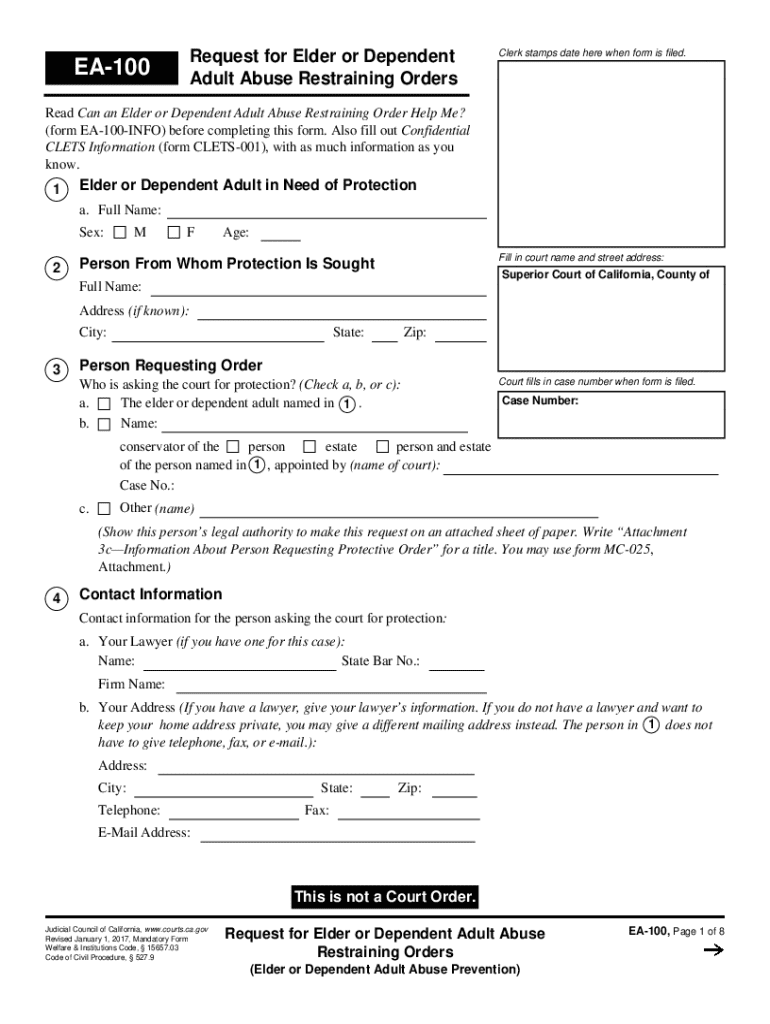
Elder or Dependent Adult Abuse Restraining Orders serve as legal safeguards designed to protect individuals over the age of 65 or dependent adults who experience abuse. The restraining order intended for such cases is delineated on form EA-100. These orders are vital instruments aimed at preventing further abuse, which can manifest in various forms—physical abuse, neglect, financial exploitation, or emotional torment. The restraining order legally prohibits the abuser from engaging in specific actions that threaten the safety and well-being of the victim, ensuring protection from the abuser's influence or proximity.
Legal Framework & Importance of Restraining Orders
The enforcement of elder or dependent adult abuse restraining orders operates within the legal context provided by California law, particularly under the Elder Abuse and Dependent Adult Civil Protection Act. This act underpins the legal rights afforded to elders and dependent adults, emphasizing the state's commitment to safeguarding vulnerable populations. Courts issue restraining orders after careful legal scrutiny to ensure that they meet statutory criteria, offering a judicial mechanism to restrict contact and any other action deemed necessary for protection.
Steps to Complete the EA-100 Form for Restraining Orders
-
Obtain the Form: The form EA-100 can be acquired from the California Courts website or at local courthouses. It is crucial to ensure that the form corresponds to your specific situation.
-
Provide Personal Information: Fill out detailed information about the protected person, and ensure clarity for easy identification.
-
Detail the Abuser's Information: Include comprehensive identification data for the alleged abuser, as accurate details aid in law enforcement’s ability to ensure compliance with the order.
-
Describe the Abuse: Offer a clear, factual narrative of the abuse experienced. This section is critical, as it supports the court’s evaluation of the necessity for a restraining order.
-
Specify Requested Orders: Indicate specific actions you would like the court to order, which may include stay-away orders, personal conduct orders, or firearms relinquishment.
-
File the Completed Form: Submit the form to the clerk of the court. You may need to serve the abuser with notice, depending on court guidance.
Necessary Documentation for Form Filing
To successfully file an EA-100 form, certain documentation may be required to substantiate claims of abuse. This includes:
- Medical records, if applicable, highlighting injuries or ongoing treatment due to abuse.
- Financial records illustrating misappropriation or exploitation.
- Witness statements or affidavits from individuals who can corroborate incidents of abuse.
- Photographic evidence capturing physical abuse or property damage.
Who Typically Uses Elder or Dependent Adult Abuse Restraining Orders
These restraining orders are predominantly used by attorneys, social workers, and family members who advocate on behalf of elder individuals or dependent adults. Health care providers and legal guardians are also likely to engage with this process, ensuring vulnerable individuals receive adequate protection against potential harm from known abusers.
Key Elements of California's Restraining Order Guidelines
- Emergency Orders: When immediate danger is present, emergency protective orders can be applied swiftly to provide urgent protection.
- Firearms Restrictions: Respondents are often required to surrender any firearms they possess, eliminating potential threats.
- Order Duration: Orders can vary in terms, lasting from weeks to several years, subject to court decisions and reassessment hearings.
- Modification and Renewal: Beneficiaries can seek to modify or renew orders as needed based on ongoing threat levels or compliance with existing orders.
State-Specific Considerations in California
California mandates specific criteria for evaluating and issuing restraining orders, recognizing the unique concerns facing elders and dependent adults. These include:
- Mandatory Reporting: Certain professionals, such as healthcare providers, are obliged to report suspected abuse cases.
- Legal Representation: The state offers resources and potentially free legal aid for low-income individuals seeking restraining orders.
- Court Jurisdiction: The jurisdictional framework allows cases to be filed in civil or criminal courts, depending on circumstances.
Application Process & Approval Time
The application process for the EA-100 form involves careful adherence to court procedures. Typical timelines for the issuance of temporary restraining orders are swift, with emergency situations accelerating procession. Full hearings to grant or deny permanent orders usually follow within a few weeks, ensuring timely resolution.
Examples and Scenarios Involving Restraining Orders
- Physical Abuse: An elder reports physical harm inflicted by a caregiver, supported by medical records documenting injuries.
- Financial Exploitation: An elder’s savings are discovered to be manipulated unlawfully by a trusted acquaintance, necessitating protective legal measures and restitution.
- Emotional or Threatening Behavior: Situations where an individual is subject to persistent harassment or threats of harm, creating justifiable fear of safety, necessitating restrictions on contact.
Versions or Alternatives of the EA-100 Form
While form EA-100 is tailored for elder or dependent adult abuse, variations exist for different circumstances, such as incipient restrains and domestic violence cases, underlining the versatility of court-provided protective orders adapted to the situation's nature.
Practical Considerations and Edge Cases
- False Allegations: Measures are in place to challenge baseless accusations; the burden of proof rests on the petitioner.
- Cultural Sensitivities: The court considers cultural backgrounds that may affect communication and understanding of abuse perceptions.
In summary, Elder or Dependent Adult Abuse Restraining Orders serve as a critical protective mechanism for vulnerable individuals, ensuring their safety and prohibiting further abuse through judicially-enforced mandates within the framework of California law.