
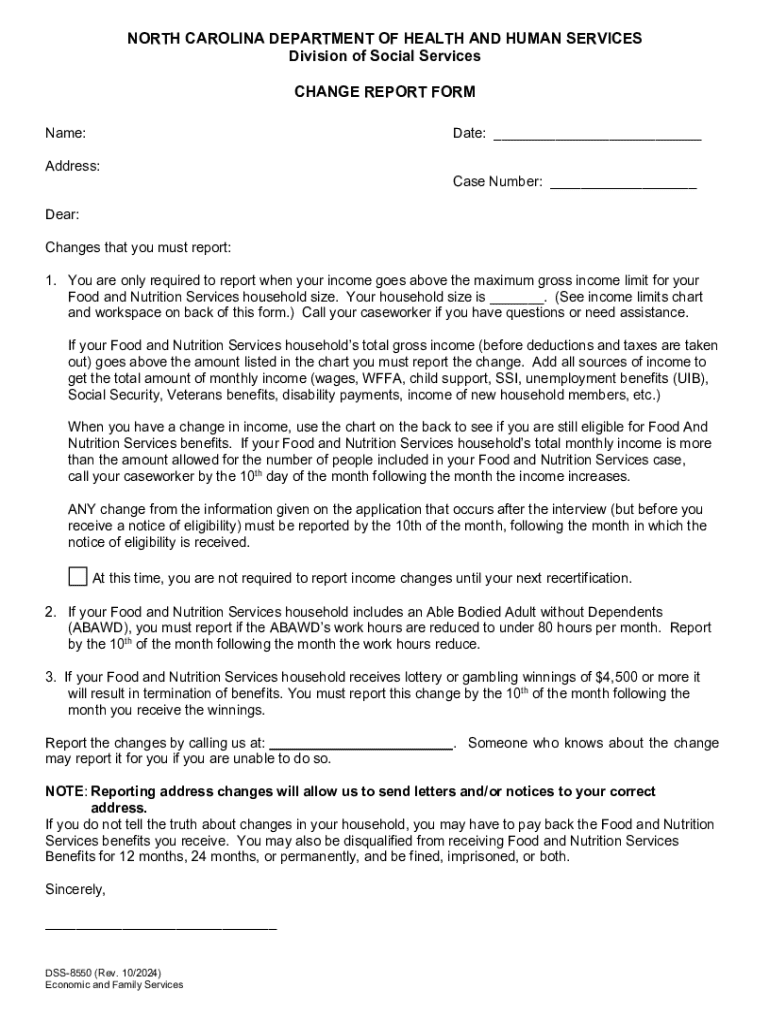







Definition and Purpose of the Change Report Form
The "Change Report Form" is a specific tool utilized to capture any changes in personal circumstances that might affect eligibility for certain benefits, such as the Food and Nutrition Services provided by the North Carolina Department of Health and Human Services. This form is essential for reporting changes in income, household members, or other factors that could influence your benefits. Understanding the form's definition and purpose is crucial as it helps ensure compliance with eligibility requirements and prevents any potential loss of benefits.
Key Changes Reported
-
Income Adjustments: Any changes in job status, salary modifications, or additional income sources need to be reported promptly. This helps in reassessing the eligibility and potential benefit amounts.
-
Household Composition: Significant changes like the addition or removal of household members, such as births or changes in residency, are necessary to report, influencing the calculation of benefits.
-
Other Relevant Circumstances: Any other factors outlined by the issuing authority that might impact service eligibility should be noted on the form.
How to Obtain the Change Report Form
Accessing the Change Report Form can typically be done through several convenient channels. Understanding how to obtain the form is crucial for prompt submission and maintaining eligibility for services.
Accessing the Form
-
Department Website: The form can often be downloaded directly from the state department’s official website. This is the fastest and most convenient method for obtaining the most current form version.
-
Local Offices: Physical copies of the form may be available at local government offices, such as the Department of Health and Human Services, which can be picked up in person.
-
Request by Mail: Some agencies might offer to mail the form upon request, though this could take additional time.
Steps to Complete the Change Report Form
Completing the Change Report Form is a straightforward process that involves several important steps. Accurate completion ensures the report's acceptance without need for revisions.
-
Read Instructions Thoroughly: Begin by carefully reviewing any instructions accompanying the form. This provides clarity on requirements and typical errors to avoid.
-
Provide Personal Information: Fill out sections requesting personal details, such as your full name, address, and contact information, ensuring accuracy.
-
Detail Changes: Document any changes in the appropriate sections, including income or household adjustments, according to the specified requirements.
-
Attach Supporting Documentation: If required, provide relevant documents to support the changes reported, such as a new pay stub or birth certificate.
-
Review and Sign: Double-check all information for accuracy, sign the form, and date it as instructed to validate the report.
Tips for Accuracy
- Use legible handwriting or type electronically to ensure clarity.
- Verify information before submission to prevent delays in processing.
Why Report Changes with the Change Report Form
Timely and accurate reporting using the Change Report Form is vital for several reasons. It helps maintain the integrity of benefit programs and ensures that individuals receive the appropriate level of support based on their current circumstances.
Benefits of Reporting
-
Maintaining Eligibility: Reporting ensures continued eligibility for programs adjusted for your current situation.
-
Avoiding Penalties: Failure to report changes accurately can result in penalties or repayment requirements for improperly received benefits.
-
Optimizing Benefits: Keeping the department updated ensures you receive the correct amount of assistance, which can be adjusted upwards if your situation justifies more support.
Who Typically Uses the Change Report Form
The primary users of the Change Report Form are recipients of public assistance programs who experience life changes impacting their benefits. By understanding who primarily uses the form, agencies can tailor assistance to ensure compliance and prevent errors.


User Demographics
-
Individuals with Changing Income: Those who experience job loss or gain, or fluctuating income levels, often use this form to report changes.
-
Households Experiencing Demographic Changes: Families welcoming new members or undergoing separations need to update their household composition to reflect their current situation.
-
Benefit Program Participants: Anyone participating in eligible assistance programs who undergo relevant life changes should use the form to keep their information current with the department.
Key Elements of the Change Report Form
Understanding the essential components of the Change Report Form can make the process of filling it out smoother and less prone to errors. The form is designed to capture specific data points crucial for re-evaluating benefit eligibility.
Main Sections
-
Personal Identification: This part collects fundamental information like name and contact details to associate the report with the correct individual or household.
-
Change Documentation: The form provides fields to specify types of changes, such as income variation, family size alterations, or employment status updates.
-
Certification and Signature: A section where the applicant certifies the accuracy of the information provided, often requiring a signature to validate the report.
Legal Use of the Change Report Form
The Change Report Form carries legal implications, as it verifies changes that affect state-run benefit programs. Understanding these legal aspects helps ensure compliant and accurate reporting.
Responsibilities and Obligations
-
Truthful Reporting: The form mandates honesty in reporting changes, emphasizing the legal obligation of truthfulness.
-
Consumer Protection: The terms protect both the state and the recipient, ensuring fair distribution of benefits while holding individuals accountable for providing accurate information.
-
Consequences of Misreporting: Misrepresenting facts can lead to penalties, loss of benefits, or legal repercussions, highlighting the importance of accuracy.
Penalties for Non-Compliance
Failing to submit the Change Report Form in a timely and accurate manner can result in serious penalties. Understanding these consequences emphasizes the importance of compliance.
Types of Penalties
-
Benefit Reduction or Termination: Non-compliance may lead to a reduction or loss of benefits, impacting individuals who rely on them for support.
-
Repayment Requirements: Improperly received benefits due to unreported changes might require repayment, creating financial strain.
-
Potential Legal Action: Severe cases of fraud or intentional misreporting can lead to legal action, underscoring the importance of honest communication with authorities.
By ensuring comprehensive understanding and correct submission of the Change Report Form, recipients of services can maintain their eligibility and avoid unnecessary complications.




