
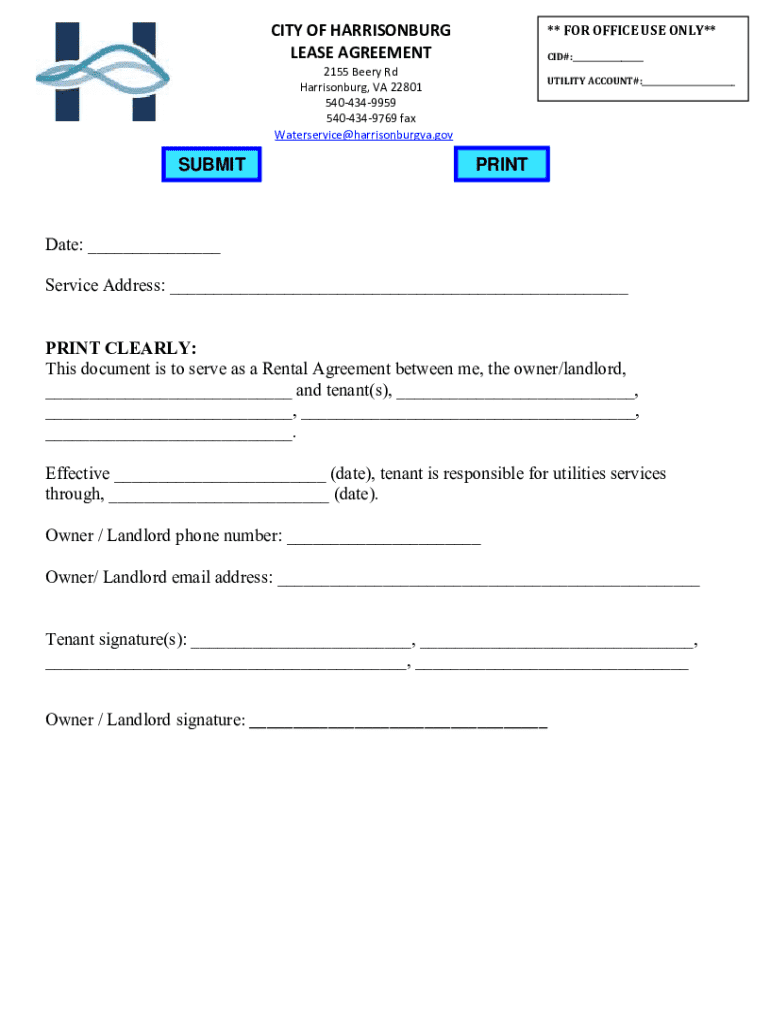







Definition and Meaning of a Lease Agreement
A lease agreement is a legally binding contract between a landlord and tenant that outlines the terms and conditions of renting a property. In the United States, this document serves as a formalization of the rental relationship, providing clear guidelines on each party's responsibilities and rights. Lease agreements typically specify the rental period, payment terms, and obligations such as maintenance and repair responsibilities. The contract is essential for preventing misunderstandings and disputes, as it details everything from rental amounts to rules on property use.
Key Components of a Lease Agreement
- Parties Involved: Identifies the landlord and tenant, including full names and contact information.
- Property Details: Describes the property being leased, including its address and a detailed description.
- Lease Term: Specifies the duration of the agreement, including the start and end dates.
- Payment Terms: Details the rent amount, due date, payment method, and late payment penalties.
- Security Deposit: Outlines the amount required, conditions for its return, and circumstances under which it may be withheld.
- Use of Property: Specifies what the property can be used for and any restrictions, such as no subletting without permission.
Steps to Complete the Lease Agreement
Completing a lease agreement involves several steps to ensure all terms are clearly defined and agreed upon by both parties. This process can help avert legal issues and set clear expectations.
- Review the Terms: Both parties should carefully read the agreement to understand the commitments and responsibilities.
- Complete Tenant Information: The tenant's information, such as name, phone number, and email, should be accurately filled in.
- Detail Rental Terms: Specify the monthly rent, due date each month, and any applicable fees.
- Include Property Rules: Outline specific rules, like pet policies or smoking restrictions, that apply to the property.
- Collect Signatures: Both parties must sign the agreement. This usually includes dates next to signatures to ensure accurate record-keeping.
- Make Copies: After signing, each party should retain a copy of the lease agreement for their records.
Key Elements of the Lease Agreement
A comprehensive lease agreement should cover all aspects of the rental relationship to prevent any potential conflicts. Key elements to include are:
- Maintenance and Repairs: Define who is responsible for maintaining the property and handling repairs.
- Utilities and Services: Details on who pays for utilities like water, electricity, and internet.
- Termination Clause: Conditions under which the lease can be terminated early by either party.
- Renewal Terms: Outline the process for lease renewal, including notice periods.
Practical Examples:
- Standard Maintenance: The tenant maintains cleanliness, while the landlord handles structural repairs.
- Split Utilities: Tenant pays electricity and gas, while the landlord covers water and sewage.
Legal Use of the Lease Agreement
The lease agreement has legal implications, serving as evidence of agreed terms if disputes occur. It upholds both parties' rights and can be referenced in legal proceedings if necessary.
- Tenant Rights: Protects rights such as peaceful enjoyment and privacy.
- Eviction Process: Provides a legal basis for eviction if terms are violated.
- Rent Control Compliance: Some states have laws regulating rent increases, which should be reflected in the lease.
Edge Cases:
- Breach of Contract: If a tenant fails to pay rent, the lease can facilitate legal eviction processes.
- Unauthorized Changes: A lease agreement can protect against unauthorized alterations or occupants.
Important Terms Related to Lease Agreement
Understanding key terms is crucial for both parties involved in a lease agreement.
- Lessee and Lessor: The tenant is the "lessee," and the landlord is the "lessor."
- Sublease: An agreement where the tenant rents out the property to another party.
- Holdover Tenant: A tenant who remains after the lease term without renewal.
- Quiet Enjoyment: The tenant's right to use the property without disturbance.
Example Definitions:
- Lessor: The property owner who grants the lease.
- Sublease: When a lessee rents out the leased property to another party.
Who Typically Uses the Lease Agreement
Lease agreements are used by various individuals and organizations, each with specific needs and purposes.
- Residential Tenants: Individuals renting homes or apartments.
- Commercial Entities: Businesses renting office spaces or retail stores.
- Property Management Companies: Firms handling property rentals for owners.
- Government Agencies: Leasing properties for official use or employee housing.


Scenarios:
- Residential Lease: A young professional renting an apartment in the city.
- Commercial Lease: A small tech startup leasing office space in a business district.
How to Obtain a Lease Agreement
There are several ways to obtain a lease agreement, ensuring accessibility for different users.
- Online Templates: Many websites offer downloadable templates.
- Real Estate Agents: Agents often provide lease agreements for a fee.
- Legal Services: Attorneys can draft customized lease agreements.
- Property Management Software: Platforms like DocHub allow you to create and manage digital leases easily.
Sources:
- Websites: Look for reliable legal and real estate websites offering templates.
- Professional Services: Consider hiring a real estate lawyer for a tailor-made contract.
State-Specific Rules for the Lease Agreement
Lease agreements may vary based on the state to comply with local regulations, ensuring legality and enforceability.
- Rent Control Laws: States like California have regulations limiting rent increases.
- Security Deposit Limits: Some states cap the amount of security deposits.
- Notice Requirements: States vary in the required notice period for lease termination.
- Tenant's Rights: Local laws might aim to strengthen tenant protections.
Examples:
- California: Requires a three-day notice for eviction due to unpaid rent.
- Texas: No statewide rent control, affecting lease terms on rent escalation.
State-by-State Differences in Lease Agreements
Leases can be influenced by distinct state laws, reflecting diverse legal landscapes across the U.S.
- Security Deposits: Different state limits and handling procedures.
- Eviction Laws: Varying requirements for notice and reasons.
- Lease Termination: Unique state conditions for terminating a lease early.
Real-World Variations:
- New York: Strict rent control laws affect lease agreements in many cities.
- Florida: More lenient eviction laws compared to other states.
Examples of Using the Lease Agreement
Real-world examples can illustrate how lease agreements function smoothly within various contexts.
- Short-term Rentals: Tourists using vacation leases with specified durations and conditions.
- Shared Accommodation: College students renting rooms within a larger property.
- Corporate Housing: Companies leasing apartments for relocating employees.
Case Studies:
- Short-term Lease: A family rents a beach house for a summer vacation.
- Shared Rental: Three friends leasing an apartment with each responsible for their share of the rent.
Software Compatibility with Digital Lease Agreements
Software provides tools for managing and composing lease agreements, adapted to modern rental needs.
- DocHub: Offers digital solutions for creating, signing, and storing leases.
- Google Workspace: Integrates with DocHub for seamless use of lease documents.
- QuickBooks: Manages lease-linked payments and receipts efficiently.
Integration Examples:
- DocHub: Use for real-time collaboration on lease agreements.
- Google Drive: Store and share lease documents with tenants or legal advisors.




