




01. Edit your form online
Type text, add images, blackout confidential details, add comments, highlights and more.

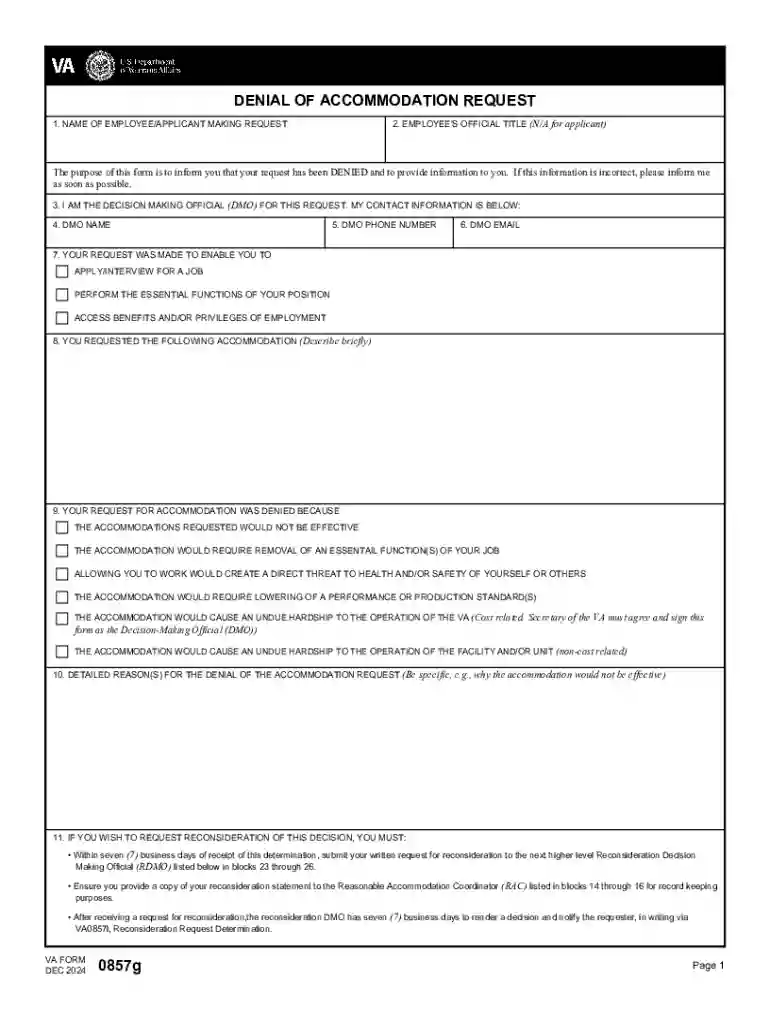
Type text, add images, blackout confidential details, add comments, highlights and more.

Draw your signature, type it, upload its image, or use your mobile device as a signature pad.

Send it via email, link, or fax. You can also download it, export it or print it out.
The "Denial of Accommodation Request" is a formal document issued when an accommodation request by an employee or applicant is denied. This document explains the rationale behind the rejection, which might include the inefficacy of the proposed accommodations or potential threats to health and safety. It serves as a definitive statement on the employer's position regarding the accommodation request. The reasons provided must align with legal standards to ensure compliance and avoid possible disputes or complaints. Understanding its meaning is crucial to recognizing its legal implications and the steps that can follow, such as reconsideration or filing grievances.
Several critical components must be present in a "Denial of Accommodation Request." These include:
These elements together help ensure the document is thorough and serves its intended legal and procedural purposes effectively.
When issuing a "Denial of Accommodation Request," employers need to maintain a structured approach to ensure clarity and legal compliance. Here are the steps involved:
Each step should be executed with precision and care to uphold the rights of both the employer and the employee.
Legally, the "Denial of Accommodation Request" must comply with pertinent laws such as the Americans with Disabilities Act (ADA) to prevent discrimination. The employer must ensure the grounds for denial are legitimate, focusing on substantial evidence and reasoning. Potential legal considerations often hinge on whether the request demanded undue hardship or posed significant safety risks. Employers should always consider soliciting legal advice when drafting denial notices to navigate these complex implications.
Primarily, human resources departments and management teams use the "Denial of Accommodation Request" to communicate the outcomes of accommodation evaluations. This form is crucial in organizations to maintain clear records and communication regarding accommodation decisions. It also can be used by legal teams for references in potential disputes. Larger corporations and public sector organizations, particularly those with extensive workforce policies, frequently encounter this form.


In real-world scenarios, a "Denial of Accommodation Request" might be issued when:
Each example highlights the importance of directly addressing why a request cannot be fulfilled while providing reasonable alternatives when possible.
The issuance of a "Denial of Accommodation Request" requires supporting documents to validate the decision. Key documents might include:
Having these documents ensures thoroughness and accountability in the accommodation request process.
The "Denial of Accommodation Request" can be distributed to the employee or applicant through various methods, each ensuring the delivery is documented:
Choosing the right method depends on the organizational context and the sensitivity of the request involved.
We've got more versions of the Denial of Accommodation Request form. Select the right Denial of Accommodation Request version from the list and start editing it straight away!
| Versions | Form popularity | Fillable & printable |
|---|---|---|
| 2024 | 4.9 Satisfied (57 Votes) |
At DocHub, your data security is our priority. We follow HIPAA, SOC2, GDPR, and other standards, so you can work on your documents with confidence.


Oct 17, 2002 A request for reasonable accommodation is the first step in an informal, interactive process between the individual and the employer. In someRead more
7 days ago Step-by-step process Step 1 Get your UDID card (if you dont already) Step 2 Track recruitment notifications Step 3 Apply with PWDRead more


