







Definition & Meaning
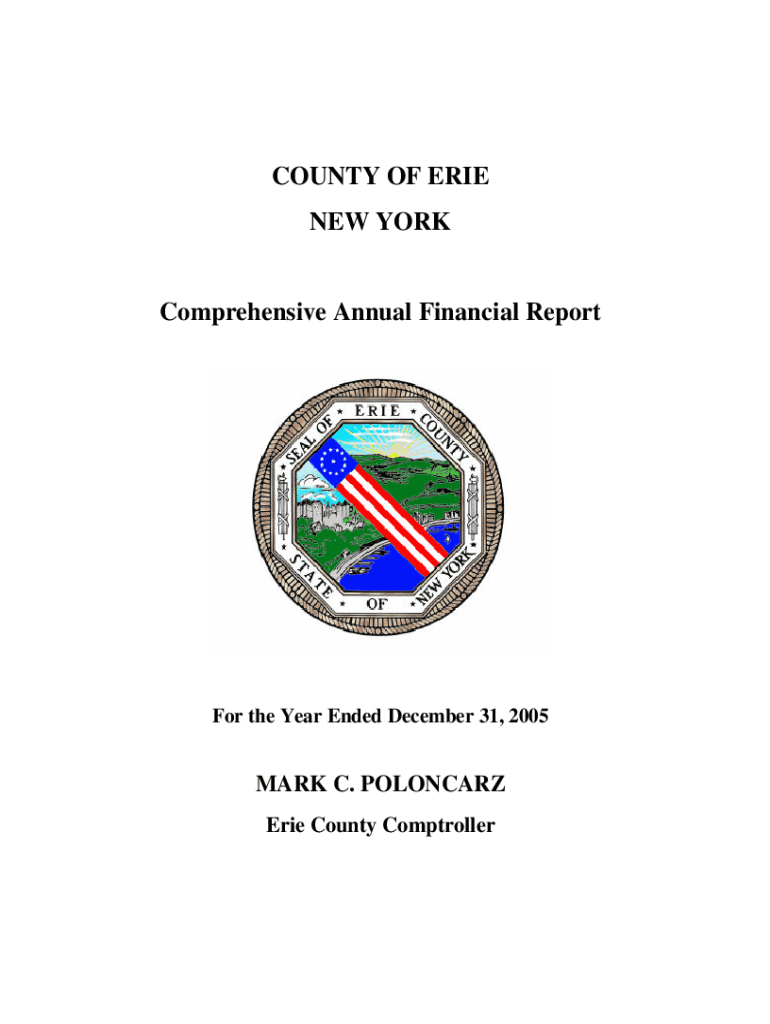
The Comprehensive Annual Financial Report (CAFR) for Erie County, New York, is an essential document that provides a detailed overview of the county's financial position and operational results. This extensive report is produced annually and contains in-depth financial statements, statistical data, and other significant disclosures related to the fiscal management of Erie County. The CAFR is critical for providing transparency and accountability to stakeholders, including government officials, citizens, and investors, about how public funds are managed and utilized.
How to Use the Comprehensive Annual Financial Report
Individuals and entities interested in understanding Erie County's financial health can leverage the CAFR for various purposes. Researchers and analysts can examine the report for insights into revenue streams, expenditure patterns, and financial efficiencies. Citizens can use it to assess how their tax dollars are being spent, while investors might analyze the report to evaluate potential risks or opportunities associated with county-issued bonds. Each section of the report, from financial statements to statistical data, serves a specific informational purpose.
How to Obtain the Comprehensive Annual Financial Report
The Comprehensive Annual Financial Report for Erie County, New York, is typically accessible through multiple channels to ensure public availability. Interested parties can download the report directly from the official Erie County government website, where it is usually offered as a PDF file. Alternatively, physical copies might be available at county offices or libraries for those who prefer hardcopies. Furthermore, some financial databases and local government offices may also provide access to these reports.
Steps to Complete the Comprehensive Annual Financial Report
While the Comprehensive Annual Financial Report itself is created by Erie County officials and their financial departments, understanding the steps involved in its preparation can provide context. The process generally includes gathering detailed financial data, such as fund balances, assets, and liabilities. This is followed by compiling and reviewing the data to ensure accuracy. The report is then structured to include sections like management's discussion and analysis, basic financial statements, and notes to the financial statements before undergoing audits and final approval.
Why Use the Comprehensive Annual Financial Report
The Comprehensive Annual Financial Report is a pivotal tool for ensuring fiscal transparency and accountability. For taxpayers and policymakers, it clarifies how public funds are being utilized and whether they are aligned with county priorities and needs. For investors and financial analysts, the CAFR offers data crucial for assessing the financial stability and creditworthiness of the county. Overall, using the CAFR supports informed decision-making by providing a reliable view of the county's financial operations and strategies.
Key Elements of the Comprehensive Annual Financial Report
Several components make up the Comprehensive Annual Financial Report. Key elements include:
- Introductory Section: Offers an overview and context of the report, including a transmittal letter from the county executive.
- Financial Section: Contains the management discussion and analysis (MD&A), government-wide financial statements, fund financial statements, and notes.
- Statistical Section: Provides detailed statistical data on various financial and economic indicators over multiple years.
- Notes to the Financial Statements: Offers essential information that supports and explains the main financial statements.
Important Terms Related to the Comprehensive Annual Financial Report
Understanding specific terminology is essential when interpreting the CAFR. Key terms often include:
- Fund Balances: The net difference between assets and liabilities in government funds.
- Bonded Debt: Long-term financial obligations for which the county has issued bonds.
- Fiscal Year: The calendar period used for reporting financial data, typically concluding on December 31 for Erie County.
- Long-term Liabilities: Debts or obligations that are due beyond one year, including bonds and pension obligations.
Legal Use of the Comprehensive Annual Financial Report
Legally, the CAFR serves as a formal financial representation of Erie County's fiscal situation, ensuring that the county complies with state and federal reporting regulations. It acts as a legal document presented to stakeholders to provide assurance about the fiscal accountability and integrity of the county's operations. The document also aligns with governmental accounting standards, which is imperative for maintaining transparency and accountability.
State-Specific Rules for the Comprehensive Annual Financial Report
In the preparation of Erie County's CAFR, compliance with New York State-specific accounting standards and financial regulations is paramount. These rules dictate the methodology for documenting financial records, reporting funds, and disclosing fiscal obligations. As such, all financial reporting in the CAFR adheres to statutes governed by New York State's Comptroller's Office, ensuring consistency with other state-issued financial documents.




