






Definition & Meaning
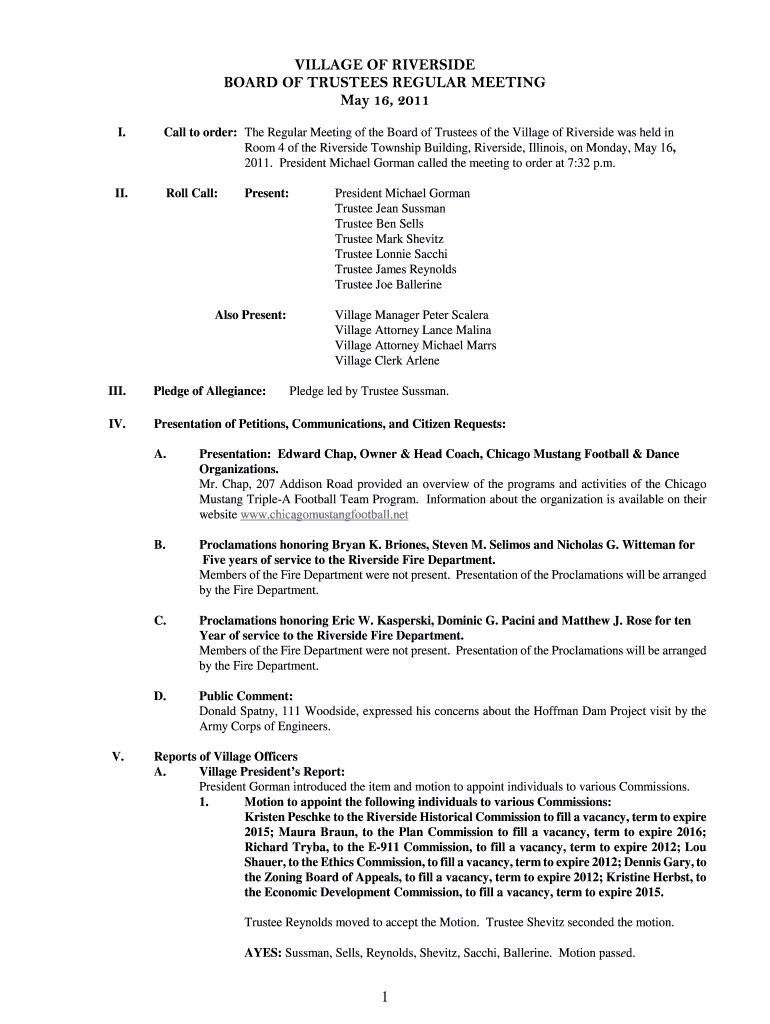
The "Roll Call: Present: Also Present: President Michael Gorman Trustee Jean Sussman Trustee Ben Sells Tr" typically refers to a format used in official meetings, such as those held by boards or trustee committees, where attendance of key members is recorded and noted. This format is used during the initial phase of a meeting to acknowledge and document who is present at the commencement of the proceedings. The inclusion of names such as President Michael Gorman and Trustees Jean Sussman and Ben Sells indicates a focus on the attendance of high-profile or essential participants within the organization's hierarchy.
Meeting minutes, especially in formal settings, often begin with a roll call to establish quorum and to formally document the key individuals in attendance. This procedure ensures that the meeting's decisions and discussions are officially recognized and validated by the presence of these stakeholders.
How to Use a Roll Call in Meetings
-
Initiate with a Formal Greeting: Start by opening the meeting with a formal greeting and call for the roll. This sets a professional tone and indicates the beginning of official proceedings.
-
Sequential Listing: As each person's name is called, they should confirm their presence. This can be done verbally or through a digital acknowledgment if the meeting is virtual.
-
Documentation: Record the responses in the meeting minutes. This includes noting absences or late arrivals. The roll call not only captures presence but also serves as a record of participation.
-
Acknowledge Special Attendees: Highlight any individuals who are attending in a special capacity, such as guest speakers or honorary chairs.
Roll call is critical for maintaining order and ensuring accountability during meetings. It is a foundational step that precedes official discussions and decisions.
Importance of Documenting Attendance
- Establishes Quorum: A roll call verifies that the minimum number of participants required to make the meeting's proceedings valid is present.
- Accountability: It holds members accountable, ensuring that those who were expected to contribute were present to do so.
- Historical Record: Attendance records serve as historical documentation, useful for future reference in case of disputes or for confirming participatory trends over time.
Key Elements of a Roll Call
-
List of Participants: Clearly enumerate all expected attendees, differentiating between mandatory participants and optional attendees.
-
Attendance Status: Mark each participant as present, absent, or represented by a proxy.
-
Special Notations: Identify non-standard roles or visitors who may not be regular attendees but are present for a specific reason.
-
Timestamp: Record the time the roll call was conducted to provide context for any late arrivals or early exits.
The roll call process is straightforward, yet it plays a pivotal role in the functionality and integrity of formal meetings.
Who Typically Uses a Roll Call?
Roll calls are a standard practice among various organizational bodies including:
- Government Bodies: Used in councils, senates, or legislative assemblies to document member attendance.
- Corporate Boards: Ensures decision-making bodies within corporations have the necessary quorum.
- Academic Institutions: Used during faculty or trustee meetings to account for all key stakeholders involved in decision-making processes.
- Non-Profits: Board of director meetings often employ roll calls to validate decision points and motions.
Each organization tailors the roll call to fit its procedural norms and the specificities of its structure.
Legal Use of Roll Call Documentation
Legal implications can arise when the proper documentation of meeting attendees is not maintained. In some jurisdictions:
- A roll call is required by law for the validation of decisions made during the meeting.
- It serves as a legal record in disputes regarding the legitimacy of meeting proceedings.
- Failure to properly record attendance may invalidate the decisions made, especially if quorum was not actually met.
Documentation of roll calls is thus not just procedural but pivotal for legal and organizational integrity.
Examples of Using Roll Calls
-
Village Meetings: At a Village Board meeting for the municipality such as the Village of Riverside, roll calls confirm the presence of trustees and validate motions passed during those meetings.
-
Corporate AGMs (Annual General Meetings): Roll calls are used to verify shareholder presence, which can impact voting outcomes on key resolutions.
Using roll calls effectively can ensure meetings are conducted smoothly, with clear documentation supporting the procedures and decisions made.