
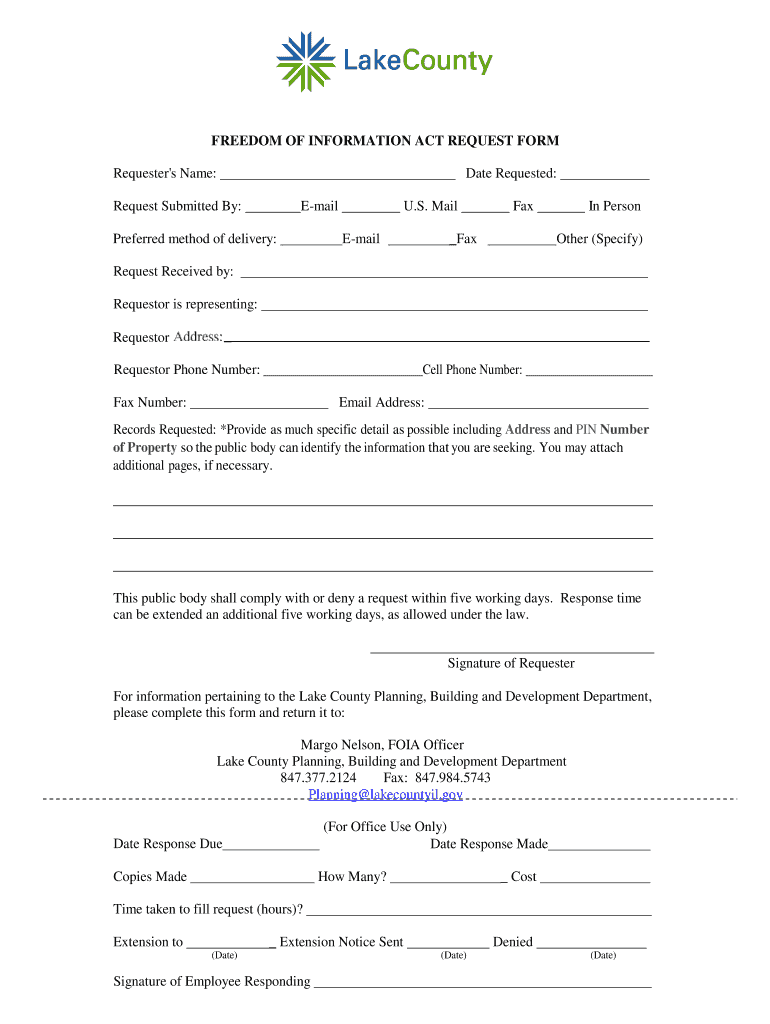







Definition & Meaning
The Freedom of Information Act (FOIA) Request Form serves as a formal inquiry tool allowing individuals to request access to federal agency records or information. Enacted to promote transparency, the FOIA empowers citizens by granting them the right to obtain governmental records. The form serves multiple purposes, from academic research to investigative journalism, and is vital in maintaining governmental accountability.
The request must describe the records sought with sufficient detail to enable agency personnel to locate them within a reasonable amount of time. The FOIA covers all federal agencies, providing insight into government operations, although certain records may be exempt from disclosure due to national security, privacy, or other defined reasons.
How to Use the FOIA Request Form
-
Identify the Records Needed: Determine specific documents or information you require. Reference past FOIA-fulfilled requests to understand commonly obtainable records.
-
Draft Your Request with Precision: Describe the records you seek accurately. Use keywords and date ranges to narrow down the search, improving chances for a successful request.
-
Submit the Request: Choose a submission method. Generally, requests can be sent via mail, fax, or electronically, depending on the agency.
-
Await Agency Response: Understand that federal agencies generally abide by a statutory 20-working-day deadline to respond, although complex requests may take longer.
How to Obtain the FOIA Request Form
The FOIA Request Form can be accessed through federal agency websites or provided upon request by the agency's FOIA officer. No universal form is required; it can be a simple letter or email containing your contact information, a description of the records you seek, and your willingness to pay applicable fees, if necessary.
- Online: Visit the respective agency's FOIA section of their website to find downloadable forms or digital submission options.
- Physical Copies: Contact the agency’s FOIA office by phone or visit in person for a printed form.
Steps to Complete the FOIA Request Form
-
Provide Personal Information: Include your full name, address, email, and phone number for agency follow-up.
-
Describe the Information Sought: Clearly explain the specifics of the records you need, with dates and keywords that ease the agency's search.
-
Specify the Format: Indicate if you prefer a digital or paper format for the records and any relevant details about delivery methods.
-
Express Willingness to Pay Fees: State your understanding of potential fees and your willingness to absorb costs if necessary, or request a fee waiver with justification.
-
Sign and Date the Form: Ensure the form is signed to validate the authenticity and intent of the request.
Why Should You Use the FOIA Request Form
The FOIA Request Form is a critical tool for ensuring oversight and transparency of federal agencies. It serves academics, journalists, and the general public interested in acquiring information housed within government archives. It empowers citizens, fosters an accountable government, and aids in checks and balances within the democratic system.
Key Elements of the FOIA Request Form
- Requester Information: Complete contact details for follow-up purposes.
- Description of Records: Detailed summary of the documents requested to ensure accurate and prompt location by the agency.
- Fee Agreement: Acknowledgment of potential costs associated with processing the request and any fee limitations or requests for waivers.
- Format Preference: Choice between digital or hardcopy formats for receiving documents.
Important Terms Related to FOIA
- Exemptions: Categories of information that are legally protected from release, including classified national defense and foreign relations information, internal agency rules, trade secrets, and more.
- Fee Waiver: A request by the applicant to avoid charges if the disclosure is in the public interest and likely to contribute significantly to public understanding.
- Expedited Processing: A request to speed up the processing time if there is a demonstrated urgency to inform the public concerning actual or alleged federal government activity.
State-Specific Rules for FOIA Requests
While the FOIA applies to federal level requests, each U.S. state has its own equivalent statute, with varying procedures and exemptions. When seeking state records, familiarize yourself with that state's public records law to ensure compliance and enhance the request’s accuracy. Examples include the California Public Records Act and the Texas Public Information Act.
Understanding these state-specific nuances aids in making successful state-level requests, providing access to public information held by local and state government entities.




