





Definition and Meaning of the Low Income Home Energy Assistance Program (LiHEAP)
The Low Income Home Energy Assistance Program (LiHEAP) is a federally funded initiative designed to assist low-income households in meeting their home energy needs. This program targets the financial burden of utility bills by providing grants to help cover the costs of heating or cooling residences. LiHEAP aims to ensure the well-being and safety of individuals, particularly during extreme weather conditions, by making energy costs more manageable for eligible families. In Illinois, this assistance can take the form of payments made directly to energy suppliers on behalf of the household or credits on utility accounts.
Eligibility Criteria for LiHEAP
Eligibility for LiHEAP is determined mainly by household income, which should generally not exceed 150% of the federal poverty level. Key considerations in Illinois include:
- Household income based on the size and composition.
- Participation in other assistance programs like Supplemental Security Income (SSI) or Temporary Assistance for Needy Families (TANF).
- Prioritization of households with vulnerable members, such as the elderly, individuals with disabilities, or young children.
Documentation requirements often include proof of income, identity verification, and documentation of current energy expenses. This ensures that grants are allocated to those who need them most.

How to Apply for LiHEAP in Illinois
Applying for LiHEAP in Illinois involves several steps, which applicants should follow carefully:
-
Gather Required Documents: Applicants will need to collect proof of income, valid identity documents, and energy utility bills.
-
Identify Local Agencies: LiHEAP applications are processed through local agencies. Illinois residents should contact their local community assistance agencies to begin their application.
-
Submit an Application: Applications can be submitted online, via mail, or in person. Most agencies prefer applicants to apply in person to verify documentation directly.
-
Await Processing and Approval: Processing times may vary, and applicants are advised to apply early. An interview may be required to complete the process.
The assistance received through the program may vary depending on available funding and individual applicant needs.
Key Elements of the LiHEAP Application
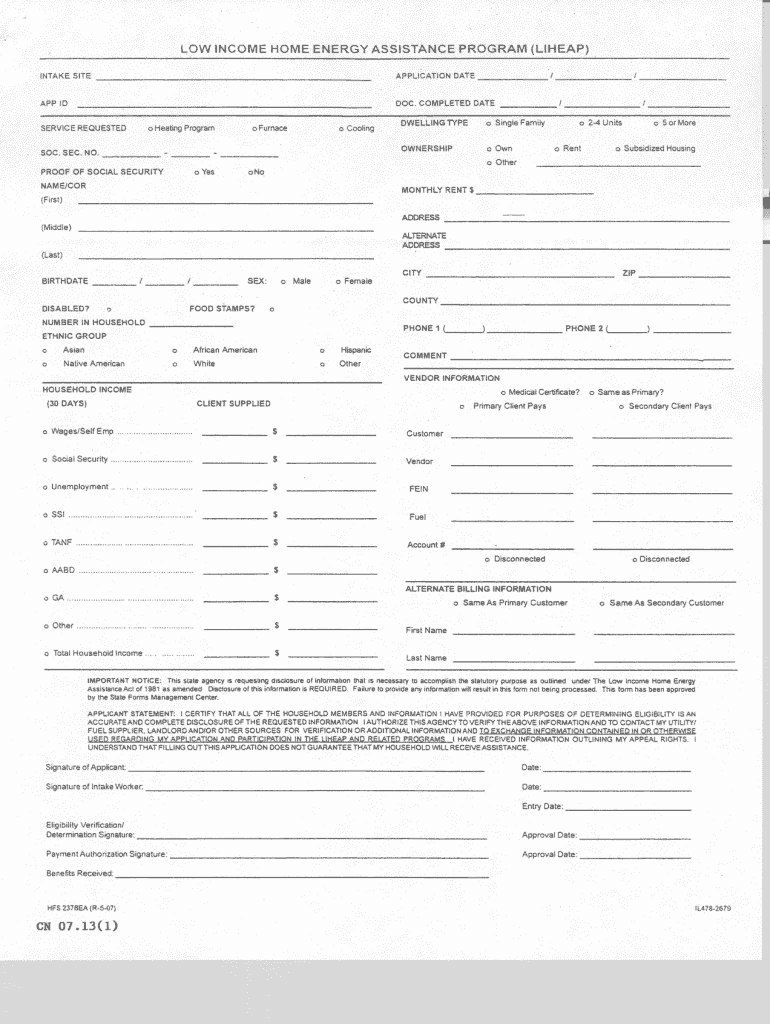
The LiHEAP application comprises several critical components that must be accurately completed for successful processing:
-
Applicant Information: This includes personal details, household members, and contact information.
-
Income Details: Comprehensive data on all forms of household income, including wages, pensions, and any other earnings, must be provided.
-
Energy Supplier Information: Applicants must provide accurate details about their energy suppliers, including account numbers and payment information.
Careful attention to these elements ensures a smoother application process and a better chance of timely approval.
Required Documents for LiHEAP Application
Applicants need to prepare and submit several key documents to support their application:
- Recent pay stubs or income statements.
- Identification, which could include a driver's license, state ID, or Social Security card.
- Current utility bills showing account numbers and outstanding amounts.
- Documentation from other assistance programs (if applicable).
These documents help verify the applicant's eligibility and need for energy assistance.
Form Submission Methods for LiHEAP
LiHEAP application submission methods provide flexibility to accommodate varying needs:
-
Online Submission: Some local agencies offer the ability to submit applications online, which can be the fastest and most convenient method.
-
Mail Submission: Traditional mail remains an option, though applicants should factor in postal delays.
-
In-Person Submission: Many applicants opt for in-person submissions at a local agency, which allows for immediate document verification and assistance with form completion.
Different submission methods may have distinct timelines and verification processes.
Important Dates for LiHEAP Application
Applicants should be aware of critical timelines to ensure their application is considered:
-
Application Opening: The LiHEAP application period typically opens in early fall, but exact dates can vary by state and local agencies.
-
Submission Deadlines: Timing for application deadlines can vary. Some agencies may operate on a first-come, first-serve basis until funds are depleted.
Applying early in the season is advisable to maximize the chance of receiving aid before funds run out.
State-Specific Rules for LiHEAP
LiHEAP rules can vary significantly depending on the state or even local-level policies:
-
Funding Allocation: Different states may allocate funds based on unique criteria, influencing the amount and type of assistance available.
-
Weatherization Programs: Some states may integrate LiHEAP with weatherization initiatives to improve home energy efficiency.
Illinois residents are encouraged to consult local agency guidelines to understand the specific application process and rules in their area.
Application Process and Approval Time for LiHEAP
Applicants should anticipate a multi-step process for completing their LiHEAP application:
-
Initial Submission: Complete and submit the application with all required documentation.
-
Verification and Interview: Some agencies require a face-to-face interview to verify document authenticity.
-
Approval Notification: After submission and review, applicants receive notification of approval or denial.
Approval times can range from a few weeks to over a month, depending on demand and processing capacity.
Examples of Using LiHEAP Assistance
Households that successfully receive LiHEAP assistance commonly benefit in several ways:
-
Direct Utility Payments: Payments made directly to the utility company can prevent service disconnection for unpaid bills.
-
Energy Credits: Energy credits on accounts help reduce future bills and maintain service continuity during peak usage times.
These examples illustrate how the program directly impacts recipients by reducing financial strain and ensuring access to essential utilities.
By carefully following the outlined steps, applicants increase their chance of successfully receiving assistance under the Low Income Home Energy Assistance Program (LiHEAP).