
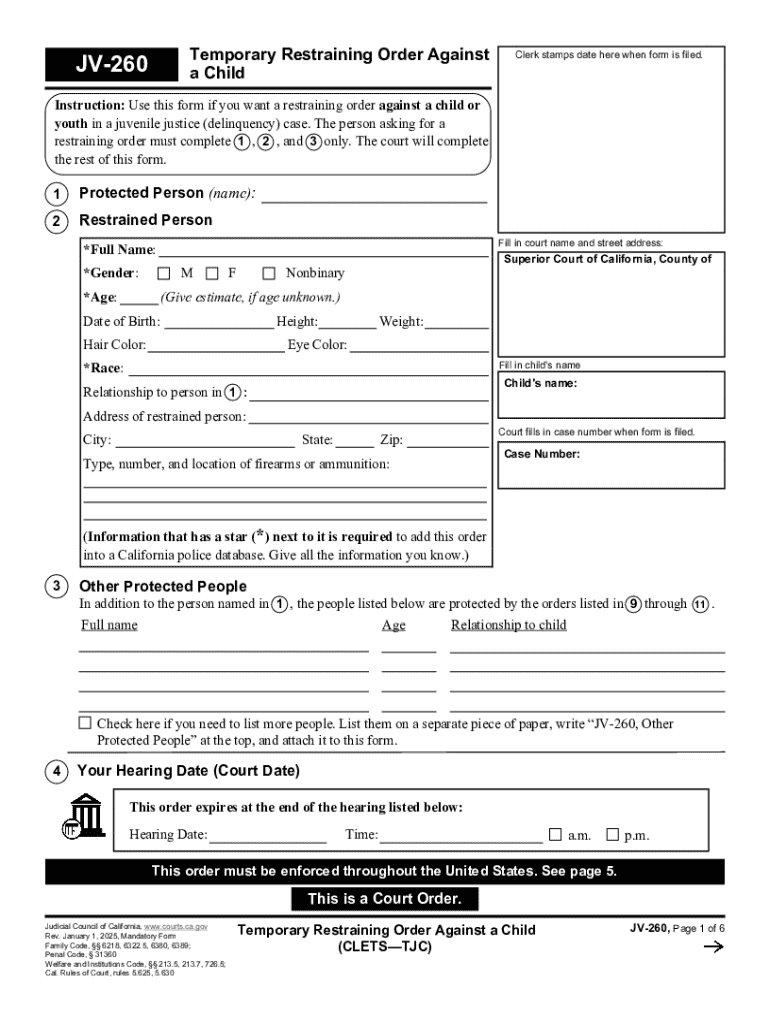







Definition and Meaning of the JV-260 Form
The JV-260 form, often referred to as a Temporary Restraining Order (TRO) application, is used in juvenile justice cases involving minors. This form is integral in requesting judicial protection for a child or youth against potential harm. A Temporary Restraining Order can include various provisions, such as restricting communication or contact with certain individuals and forbidding the possession of firearms for the restrained party. Understanding the scope and authority of the JV-260 is crucial for anyone involved in such cases.
Key Aspects of the JV-260
- Purpose: Designed to protect minors in juvenile justice cases by imposing legal restrictions.
- Scope: Includes provisions for contact limitations, weapon restrictions, and other protective measures.
- Applicability: Primarily used by legal guardians, parents, or authorized representatives seeking to ensure the protection of a juvenile.
How to Use the JV-260 Form
To utilize the JV-260 effectively, understanding the process and requirements is important. The form is filled out by individuals seeking to establish a temporary legal protection order for a minor. This form should be completed with precise and accurate information to avoid delays or issues with legal proceedings.
Steps for Utilization
- Gather Required Information: Collect all relevant data concerning both the protected and restrained individuals.
- Complete the Form: Fill out details regarding the nature of the protection required.
- Submit to the Court: File the completed form with the appropriate court for review.
How to Obtain the JV-260 Form
Accessing the JV-260 involves specific steps depending on your jurisdiction. The form can typically be obtained through the family court system or online judicial forms repositories.
Obtaining Methods
- Court Websites: Most state courts offer downloadable forms online.
- Court Clerk’s Office: Visit the courthouse to pick up a physical copy.
Steps to Complete the JV-260 Form
Completing the JV-260 form demands attention to detail and accuracy. The process involves multiple sections to be filled with pertinent information regarding the juvenile case.
Detailed Step-by-Step Process
- Fill Out Personal Information: Provide details of the individual seeking protection and the person the order is against.
- Specify the Protective Orders: Clearly outline the types of restrictions being requested.
- List Prohibited Items: Note any items, such as firearms, that the restrained person is barred from possessing.
- Include Supporting Documentation: Attach any evidence supporting the need for a TRO.
Who Typically Uses the JV-260 Form
The JV-260 is commonly used by individuals involved in juvenile justice cases. This typically includes legal guardians, attorneys, social workers, and sometimes law enforcement officers.


Users of the Form
- Legal Guardians: Seeking protection measures for minors under their care.
- Attorneys: Filing on behalf of clients for legal protection in juvenile cases.
- Social Services: Advocating for child welfare and safety within the legal system.
Key Elements of the JV-260 Form
Several critical components must be addressed when dealing with the JV-260 form. These ensure the order's relevance and enforceability in court.
Important Elements
- Identification of Parties: Complete details of both protected and restrained parties.
- Judicial Orders: Specific legal restrictions being requested.
- Timeframe: The period for which the order is sought.
Legal Use of the JV-260 Form
The legal use of the JV-260 is defined by its capacity to offer temporary protection in juvenile matters. Understanding its legal standing helps in ensuring proper application and enforcement.
Legal Framework
- Temporary Measures: Offers short-term protection pending further judicial review.
- Compliance Requirements: Legal obligations for both parties are laid out within the form.
State-Specific Rules for the JV-260 Form
Each state might have unique regulations or procedures for processing the JV-260 form. Understanding these differences is vital for proper filing and compliance.
Variation by State
- Procedural Differences: Steps varying in document filing or court hearings.
- Jurisdictional Authority: Differences in the court's power to enforce the order.
Examples of Using the JV-260 Form
Examples illustrate how the JV-260 might be applied in typical juvenile justice scenarios, providing practical insights into its use.
Practical Scenarios
- Custody Disputes: When there are concerns about the safety of a child amid custody hearings.
- School-based Incidents: Protecting a minor involved in bullying or harassment cases at school.
Form Submission Methods (Online / Mail / In-Person)
Different submission methods for the JV-260 offer flexibility depending on access to resources and time constraints.
Submission Options
- Online: Through court portals where available.
- Mail: Sending completed forms to the appropriate judicial office.
- In-Person: Direct submission at the courthouse to ensure receipt.




