Area Reno - U S Department of Veterans Affairs 2026

Get Form
Area Reno - U S Department of Veterans Affairs Preview on Page 1

Here's how it works

01. Edit your form online
Type text, add images, blackout confidential details, add comments, highlights and more.

02. Sign it in a few clicks
Draw your signature, type it, upload its image, or use your mobile device as a signature pad.

03. Share your form with others
Send it via email, link, or fax. You can also download it, export it or print it out.

Definition and Meaning

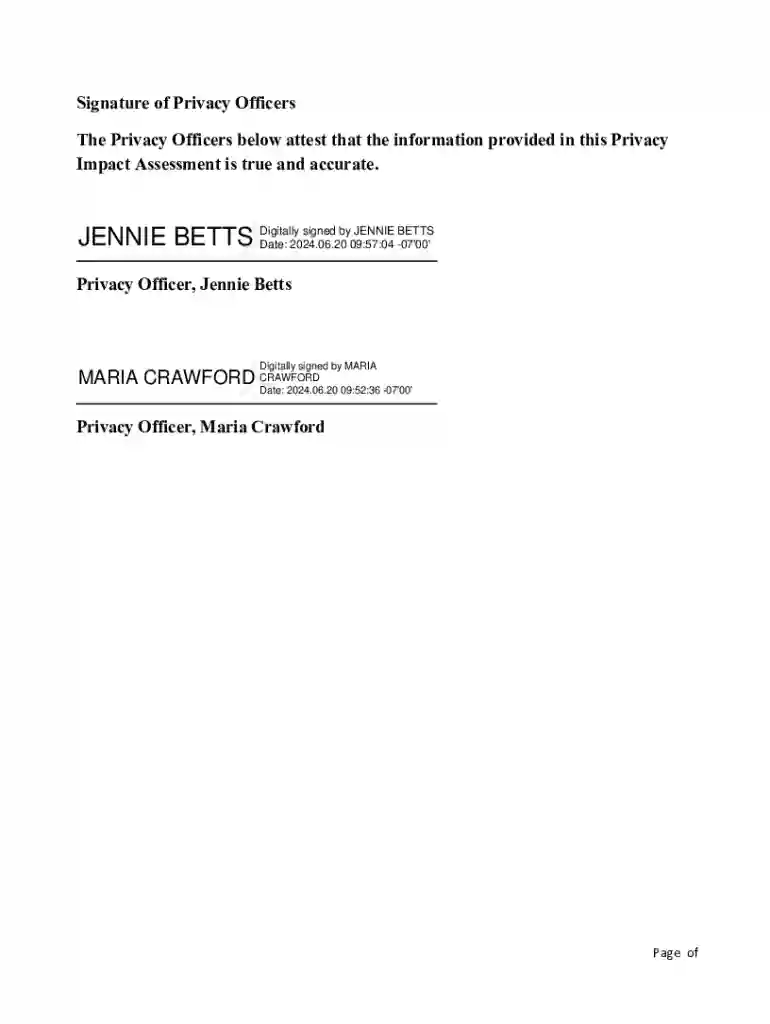
The "Area Reno - U S Department of Veterans Affairs" refers to a Privacy Impact Assessment (PIA) conducted to evaluate how Veterans Affairs (VA) facilities in the Reno area manage Personally Identifiable Information (PII) and Protected Health Information (PHI). This assessment is mandated under legal frameworks like the E-Government Act of 2002 and VA Directive 6508. The primary goal is to ensure transparency and compliance in handling sensitive information, aiming to protect veterans’ privacy rights. The document outlines information collection, usage, and sharing practices, emphasizing facilities' responsibility to safeguard PII/PHI related to healthcare and benefits administration.

How to Obtain the Area Reno - U S Department of Veterans Affairs

Interested parties can usually access the Privacy Impact Assessment documentation through official VA channels to understand data management practices in the Reno area. The document may be available online on the Department of Veterans Affairs website, providing detailed insights into the handling of PII and PHI. Those seeking access should monitor VA publications and announcements as PIAs are public documents required by law whenever a system collects sensitive data. Additionally, inquiries can be directed to the VA Reno office for more specific information about obtaining a copy.

Steps to Complete the Area Reno - U S Department of Veterans Affairs

  1. Identify Information: Gather all necessary data related to PII and PHI in the Reno area facilities.
  2. Assess Environment: Evaluate the operational environment to understand existing systems and data flows involving sensitive information.
  3. Analyze Risks: Identify potential privacy risks and develop strategies to mitigate these risks effectively.
  4. Document Policies: Compile all data handling protocols, including collection, storage, and sharing guidelines, into the PIA.
  5. Stakeholder Involvement: Engage key stakeholders to review and approve the assessment contents, ensuring all concerns are addressed.
  6. Approval and Publication: After comprehensive reviews, the final PIA document should be finalized and made publicly accessible as per legal requirements.

Key Elements of the Area Reno - U S Department of Veterans Affairs

  • Information Handling Practices: Detailed description of how PII/PHI is collected and managed within Reno area facilities.
  • Privacy Risks and Mitigation: Identification of potential privacy risks and detailed strategies to mitigate these risks, ensuring data security.
  • Stakeholder Roles: Clarification of individual roles and responsibilities in the data handling process, fostering accountability.
  • Legal Compliance: Assurance that all practices adhere to relevant laws such as the E-Government Act and VA directives.
  • Data Sharing Protocols: Guidelines for internal and external data sharing, detailing conditions and limitations to uphold privacy.

Legal Use of the Area Reno - U S Department of Veterans Affairs

The legal framework governing the PIA for the VA Area Reno ensures compliance with federal laws designed to protect sensitive information. It mandates rigorous adherence to procedures that prevent unauthorized access or misuse of PII and PHI. The PIA acts as a legally binding document outlining the VA's commitment to data protection, thereby enhancing trust among veterans and stakeholders. Legal use also involves regular updates and compliance checks to adapt to new privacy laws and technological advancements.

Who Typically Uses the Area Reno - U S Department of Veterans Affairs

The primary users of the "Area Reno - U S Department of Veterans Affairs" PIA are VA officials, privacy officers, and facility administrators responsible for overseeing data management and compliance. Additionally, the document serves as a reference for legal experts, auditors, and policymakers aiming to ensure the VA’s practices meet statutory requirements. Veterans and their representatives may also review the PIA to understand how their personal information is protected within the Reno area facilities.


decoration image ratings of Dochub

Required Documents

To conduct a Privacy Impact Assessment like the one for Area Reno, several documents are essential:

  • Data Inventory: Comprehensive list of all PII and PHI collected and processed.
  • Systems Overview: Documentation detailing the IT systems in use, including security measures.
  • Privacy Policies: Current policies on data protection and privacy practices.
  • Risk Assessment Reports: Documentation of identified risks and corresponding mitigation strategies.
  • Legal Compliance Records: Proof of adherence to federal privacy laws and VA directives.

Application Process and Approval Time

The PIA application process involves multiple stages:

  1. Preparation: Compile all necessary data and initial privacy analyses.
  2. Drafting: Develop a draft document that outlines findings and policy recommendations.
  3. Review: Conduct internal reviews with key stakeholders to ensure accuracy and completeness.
  4. Feedback: Collect feedback from stakeholders and revise the document accordingly.
  5. Approval: Finalize and submit to appropriate authorities for approval.
  6. Publication: Once approved, the PIA is published for public access, providing transparency.

Approval times can vary depending on the complexity of data systems and the extent of stakeholder involvement, but typically, this process can take several weeks to a few months to complete.

be ready to get more

Complete this form in 5 minutes or less

Get form

Got questions?

We have answers to the most popular questions from our customers. If you can't find an answer to your question, please contact us.
Contact us
The OIG hotline does not handle compensation claims, pension claims, or appeals. To request the status of an open compensation claim, pension claim, or appeal, please call VBA at 1-800-827-1000 or call the VA Hotline at 1-855-948-2311.
The U.S. Department of Veterans Affairs (VA) is under the Executive Branch of the U.S. Government. It is one of fifteen executive departments.
Veterans Affairs Central Office located in Washington, DC. The main VA office is located at 810 Vermont Ave, and the VBA office is located at 1800 G. Street NW.
The VA Central Office, located in Washington, D.C., directs the activities of the VA regional offices and VA medical centers. The Central Office dictates standard rules and procedures the regional offices and medical centers must follow when handling claims.
You can apply for pension benefits online at .va.gov/pension. To submit a paper application Pension benefits, download and complete VA Form 21P-527EZ, Application for Pension and mail it to the Pension Management Center that serves your state. For more information, visit .va.gov/pension/eligibility.

Security and compliance

At DocHub, your data security is our priority. We follow HIPAA, SOC2, GDPR, and other standards, so you can work on your documents with confidence.
Learn more
ccpa2
pci-dss
gdpr-compliance
hipaa
soc-compliance

People also ask

What is the Hardest VA Claim to Get? Mental Health Conditions (e.g., PTSD, Depression) Sleep Apnea. Tinnitus and Hearing Loss. Military Sexual Trauma (MST) Chronic Pain Without a Clear Diagnosis.
What is the difference between Veterans Services and Veterans Affairs (VA)? The Veterans Services Department administers benefits for Becket veterans which are separate and distinct from those provided by the Veterans Affairs (VA), a program of the Federal Government.
It offers education opportunities and rehabilitation services and provides compensation payments for disabilities or death related to military service, home loan guaranties, pensions, burials, and health care that includes the services of nursing homes, clinics, and medical centers.

Related links