






Definition & Meaning
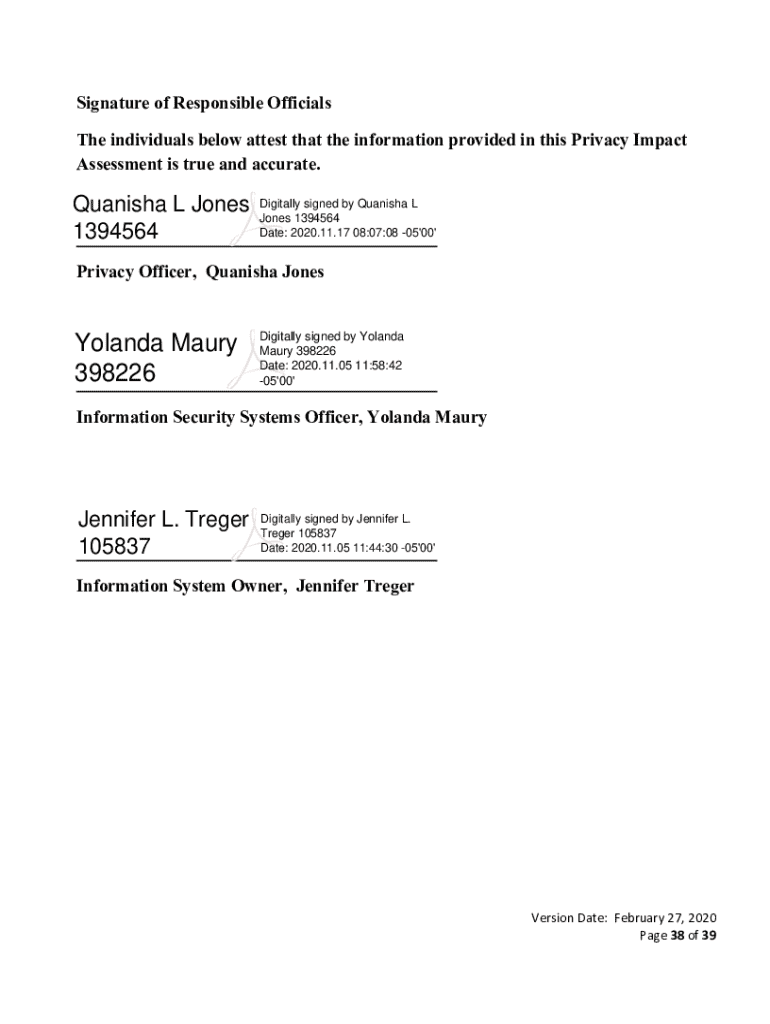
The "FY21 QTC Communications Server PIA FY2020 VA PIA Template" is a structured document used to conduct a Privacy Impact Assessment (PIA) for the QTC Communications Server, which supports the Medical Disability Examination Program for Veterans Affairs. This template delineates the processes involved in identifying and managing risks associated with the handling of Personally Identifiable Information (PII). In line with the E-Government Act of 2002 and VA Directive 6508, the PIA aims to ensure compliance with federal privacy laws, focusing on data collection, processing, and transmission related to veterans' medical examinations.
Purpose and Function
- Risk Identification: The template helps in spotting potential privacy risks throughout the System Development Life Cycle.
- Compliance Assurance: Ensures alignment with federal mandates on privacy and data protection.
- Data Management: Provides guidance on data retention policies and practices for information sharing.
- Rights Protection: Outlines individuals’ rights concerning their data, including access and correction.
Key Elements of the FY21 QTC Communications Server PIA FY2020 VA PIA Template
The template contains several essential components critical for conducting a comprehensive PIA:
Data Collection and Use
- Information Types: Details on the types of PII collected, processed, and stored by the system.
- Purpose of Collection: Justification for collecting PII, focusing on necessity and relevance.
- Information Sharing: Protocols for internal and external data sharing or disclosure.
Security Measures
- Safeguards: Describes the technical and administrative safeguards in place to protect PII.
- Access Control: Information on managing access to sensitive data, ensuring only authorized personnel can view or handle it.
Compliance and Legal Requirements
- Legal Framework: Alignment with the E-Government Act and VA Directive, detailing statutory and regulatory compliance.
- Audit Trails: Mechanisms for maintaining records of access and modifications to the PII, ensuring transparency and accountability.
Steps to Complete the FY21 QTC Communications Server PIA FY2020 VA PIA Template
Completing the PIA template involves a structured approach, requiring coordination across various departments:
- Gather Information: Collect comprehensive data about the system, including PII types and handling processes.
- Identify Risks: Analyze the collected data to identify potential privacy risks.
- Develop Safeguards: Propose measures to mitigate identified risks, ensuring data privacy and compliance.
- Stakeholder Review: Engage relevant parties for review and feedback, ensuring all concerns are addressed.
- Final Approval: Obtain necessary approvals from compliance and legal teams before implementation.
Common Challenges
- Data Accuracy: Ensuring all collected data is current and accurate for assessment.
- Interdepartmental Cooperation: Facilitating effective communication among stakeholders for thorough analysis.
Who Typically Uses the FY21 QTC Communications Server PIA FY2020 VA PIA Template
This template is mainly used by organizations and individuals involved in privacy compliance and data protection within Veterans Affairs:


Typical Users
- Privacy Officers: Responsible for overseeing compliance initiatives and data protection measures.
- Data Protection Officers: Focus on implementing security protocols and safeguards for data processing systems.
- Legal Compliance Teams: Ensure that the organization meets all legal and regulatory requirements relating to PII.
Use Cases
- New System Implementation: Utilized when introducing new systems that handle PII.
- System Upgrades: Important for assessing changes in existing systems that may affect data handling practices.
Legal Use of the FY21 QTC Communications Server PIA FY2020 VA PIA Template
The template supports legal compliance with various federal laws and policies regarding privacy and data protection:
Relevant Legislation
- E-Government Act of 2002: Mandates the use of PIAs for federal information systems handling PII.
- VA Directive 6508: Provides policy direction for PIAs within the Department of Veterans Affairs.
Enforcement and Compliance
- Regular Audits: Routine audits are conducted to ensure ongoing compliance and to rectify any identified issues.
- Penalties for Non-Compliance: Failure to properly complete a PIA can result in penalties, including fines and reputational damage.
Important Terms Related to FY21 QTC Communications Server PIA FY2020 VA PIA Template
Familiarity with specific terminology is crucial for correctly utilizing the template:
Glossary
- PII (Personally Identifiable Information): Data that can be used to identify an individual directly or indirectly.
- PIA (Privacy Impact Assessment): A formal document that evaluates how personal information is collected, managed, and protected.
- OAuth 2.0: An authorization framework that allows third-party services to exchange access tokens for restricted resources.
Software Compatibility (TurboTax, QuickBooks, etc.)
To facilitate efficient use, the template is compatible with various software and tools:
Supported Platforms
- Document Management Systems: Integration with platforms such as DocHub for editing and managing documents.
- Cloud Services: Compatibility with Google Drive, Dropbox, and OneDrive for easy data access and collaboration.
Benefits
- Streamlined Workflow: The ability to import and export data seamlessly between systems saves time and reduces administrative burden.
State-by-State Differences
While the template primarily aligns with federal guidelines, state-specific nuances can affect its application:
Variations
- Additional Requirements: Some states may have extra regulations concerning PII protection and privacy assessments.
- Differing Deadlines: State-specific deadlines for submitting PIAs can vary, requiring careful attention to timelines.
Considerations
- Consult Local Legislation: Ensure additional state laws or organizational policies are considered when completing the template.
- Tailor Assessments: Adjust assessments to address unique state requirements or concerns.