






Definition and Meaning
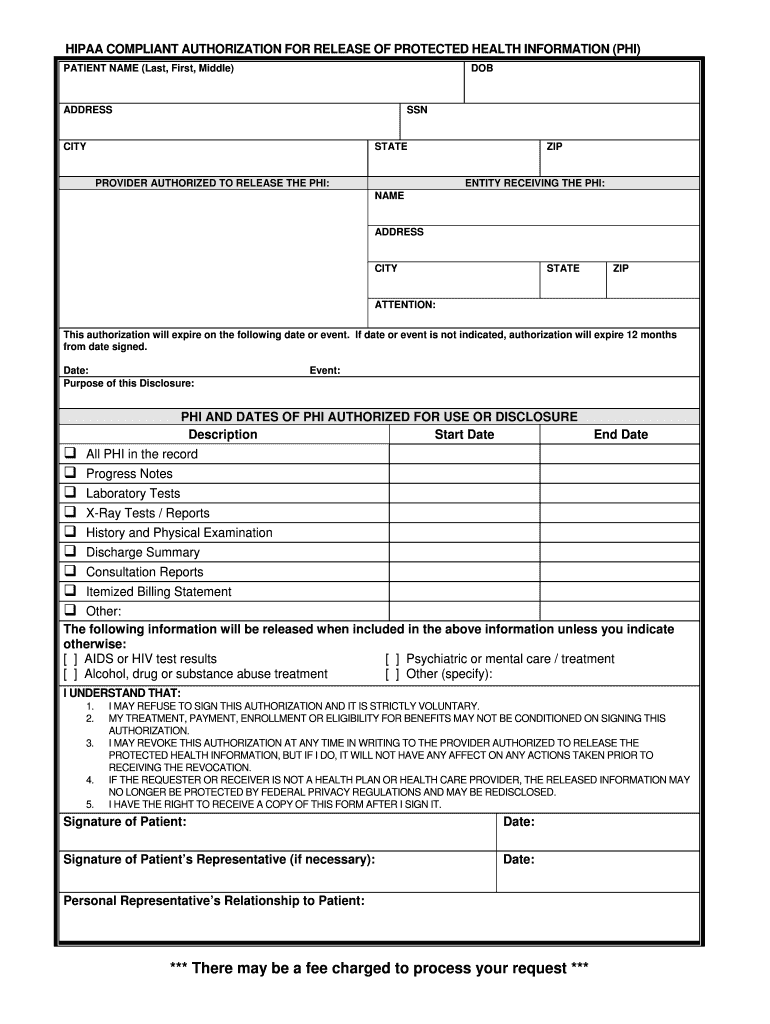
A HIPAA compliant authorization form for the release of protected health information is a document allowing a patient to permit specific entities to access their personal health data. It provides a framework within which healthcare providers can share patient information with other parties, such as specialists or family members, while adhering to HIPAA regulations designed to protect patient privacy. This authorization is essential for maintaining confidentiality and ensuring that disclosures are made only with consent.
Key Elements of the Authorization Form
The form contains several critical components required for it to be considered compliant:
- Patient Information: Includes the full name, date of birth, and contact information of the patient granting the authorization.
- Healthcare Provider Details: Identifies the provider that will be releasing the PHI.
- Recipient Information: Specifies the individual or entity that will receive the health information.
- Description of Information: Clearly outlines the specific type of information being disclosed.
- Purpose of Disclosure: States the reason for the information release, which could be for treatment, billing, or other authorized purposes.
- Expiration Date: Defines when the authorization will cease to be valid, ensuring limited access to information.
- Patient Rights: Includes statements about the patient’s rights to revoke authorization and the voluntary nature of consent.
How to Use the Authorization Form
Using the authorization form involves a few straightforward steps:
- Acquisition: Obtain the form from a healthcare provider's office or a reliable online platform that ensures HIPAA compliance.
- Completion: Fill in all required sections accurately, including personal information and specifics about the data to be released.
- Signature: Ensure that the form is signed by the patient or their legal representative. In some instances, a witness signature might be required.
- Submission: Return the completed form to the healthcare provider or organization managing your health records.
Steps to Complete the Form
Each section of the form must be filled out meticulously:
- Patient Details: Enter your name, date of birth, and any other identifiers.
- Specify the Information: Clearly define the types of health information to be shared, such as medical history or test results.
- Define Recipients: List who should receive the information and their contact details.
- Purpose of Release: State why this information is being shared.
- Authorization Period: Set an expiration date or event after which the authorization is no longer valid.
- Patient Acknowledgement: Confirm by signing and dating the form, acknowledging understanding of the terms.
Who Typically Uses the Authorization Form
This form is primarily used by:
- Patients: Ensuring control over who accesses their personal health information.
- Healthcare Providers: Complying with regulatory requirements while facilitating necessary data sharing for patient care.
- Legal Representatives: Acting on behalf of minors or incapacitated individuals to manage their health records appropriately.
- Insurers: Requiring evidence for claims or additional medical opinions.


Legal Use and Compliance
The form must adhere to strict legal standards to be considered valid:
- Voluntary Consent: The patient must sign off willingly, without any undue pressure.
- Revocable Authorization: The patient retains the right to terminate authorization at any point.
- Confidential Handling: Any shared information must continue to be protected under HIPAA rules by both the releasing and receiving parties.
State-Specific Rules
While HIPAA is a federal law, states may have additional requirements:
- Varied Expiration Norms: Some states may enforce longer or shorter periods for valid consent.
- Witness Requirement: Certain regions might mandate that a witness or notary be present during signing.
Important Terms Related to the Authorization Form
Understanding the associated terminology is crucial:
- PHI (Protected Health Information): Refers to any information about health status, provision of healthcare, or payment for healthcare that is created or collected by a covered entity.
- Covered Entity: Any organization or corporation that directly handles PHI, such as healthcare providers or insurance companies.
- Authorization: A detailed document providing legal permission to share PHI.
Form Submission Methods
Patients can submit completed authorization forms via several methods:
- Online: Many providers offer secure digital submission through patient portals.
- Mail: Sending the form via postal service to the specified office.
- In-Person: Delivering it directly to the provider's administrative office, ensuring it reaches the correct department.
Providing a comprehensive overview of the HIPAA compliant authorization form ensures that both patients and healthcare professionals understand the importance of this document in managing health information privacy effectively.