Definition & Meaning
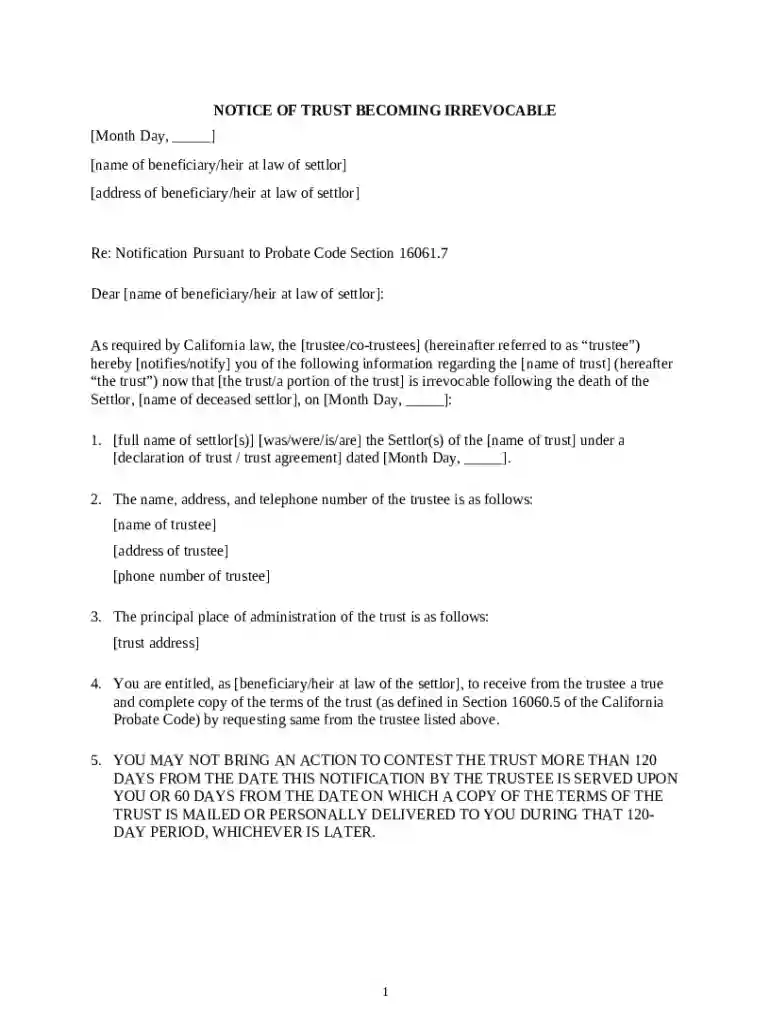
The "16061 7 Code" refers to a specific section of the California Probate Code that outlines the requirements for notifying beneficiaries about a trust becoming irrevocable. Upon the death of the settlor, a trust transitions to an irrevocable status, which legally obligates the trustee to inform beneficiaries or heirs about this change. This notification is crucial as it discloses key details about the trust, the rights of beneficiaries, and any applicable deadlines for contesting the trust.
Key Elements of the 16061 7 Code
The 16061 7 Code mandates several critical elements that must be included in the notice:
- Trustee Information: Contact details of the trustee, enabling beneficiaries to reach out with questions or requests.
- Principal Place of Administration: The location where the trust is managed, establishing the jurisdiction.
- Beneficiaries’ Rights: An explanation of the beneficiaries' right to request a copy of the terms of the trust.
- Time Limits: Specific deadlines for beneficiaries to contest the trust's terms, ensuring they have adequate time to take legal action if necessary.
How to Use the 16061 7 Code: A Guide to Trust Beneficiary Notices
Using the 16061 7 Code involves drafting a notice that adheres to the statutory requirements outlined in the code. Trustees must ensure that:
- The notice is sent within a legally specified timeframe following the settlor’s death.
- All necessary elements are included to comply with the legal obligations of the code.
- The notice is delivered to all relevant beneficiaries in a manner that can be legally verified, such as via certified mail.
Steps to Complete the 16061 7 Code Notice
To complete the 16061 7 Code notice, follow these steps:
- Gather Required Information: Collect details about the trustee, beneficiaries, and trust document.
- Draft the Notice: Include all mandatory elements such as trustee contact information and beneficiaries' rights.
- Review Legal Requirements: Ensure the notice aligns with the requirements specified in the California Probate Code.
- Distribute the Notice: Deliver the notice to beneficiaries promptly, using a verifiable method of communication.
Legal Use of the 16061 7 Code
The legal use of the 16061 7 Code is integral in the administration of a trust upon the settlor’s death. It ensures:
- Compliance with California probate laws.
- Protection of beneficiaries’ rights by informing them of their ability to contest the trust.
- The trustee fulfills their fiduciary duty in managing the trust’s transition to an irrevocable status.
State-Specific Rules for the 16061 7 Code
While the 16061 7 Code is specific to California, similar requirements may exist in other states. Trustees managing interstate trusts must:
- Verify local trust laws for similar obligations.
- Consider employing legal professionals familiar with multi-state trusts to ensure compliance.
Penalties for Non-Compliance
Failure to comply with the 16061 7 Code can result in:
- Legal challenges from beneficiaries who were not properly informed or who missed contesting deadlines.
- Financial penalties or personal liability for trustees who neglect their legal duties.
- Potential court intervention to rectify improper trust administration.
Examples of Using the 16061 7 Code in Practice
Consider a scenario where a trust is established in California with multiple beneficiaries:
- The trustee must issue a notice to each beneficiary following the settlor's death, detailing their rights and the trust's irrevocable status.
- Beneficiaries, informed of their rights, might request copies of the trust, leading to an informed decision about whether to contest the terms based on any discrepancies discovered.