






Definition & Meaning
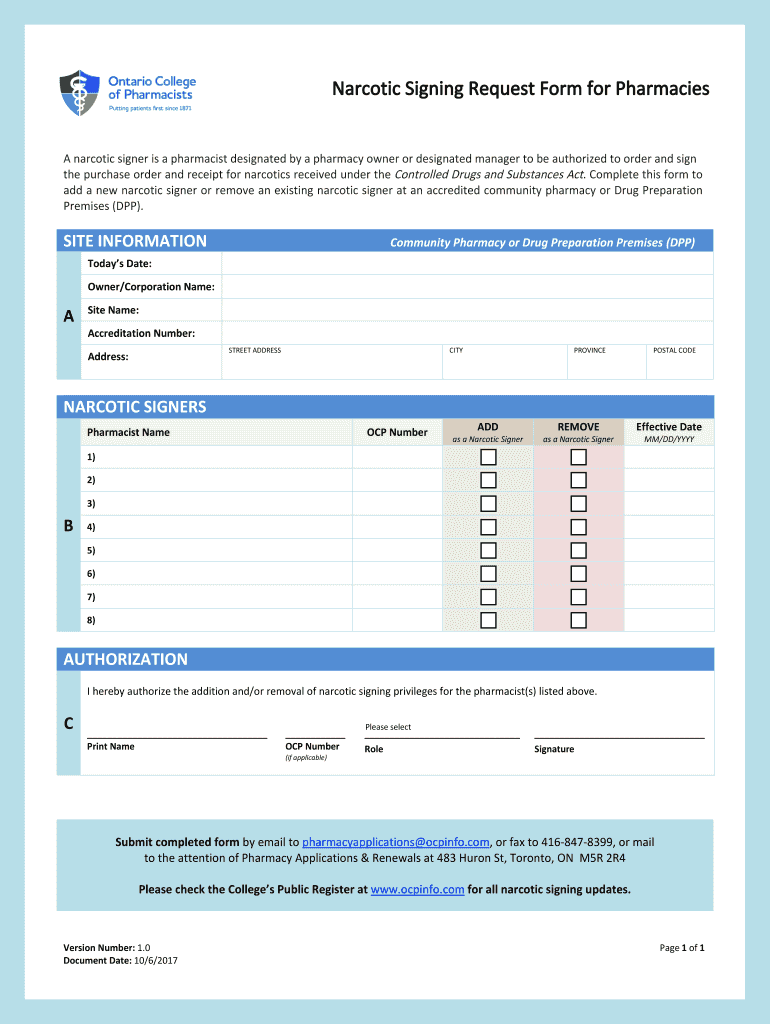
The Narcotic Signing Request Form for Pharmacies - Ontario is an essential document used within the pharmaceutical industry. It is specifically designed for the authorization of adding or removing pharmacists as narcotic signers under the Controlled Drugs and Substances Act. This form ensures that only duly authorized pharmacists are permitted to handle and manage narcotics and controlled substances, thereby maintaining compliance with legal and regulatory requirements.
Key Elements of the Form
This form comprises several critical sections, each of which gathers specific information necessary for the authorization process.
- Site Information: Details about the pharmacy, including the pharmacy's name, address, and license number.
- Pharmacist Information: Contains fields to capture details about the pharmacists involved, such as their names, license numbers, and contact information.
- Authorization Signature: A section for the signature of an authorized individual to confirm the request's legitimacy and compliance with legal requirements.
Steps to Complete the Form
Filling out the Narcotic Signing Request Form requires attention to detail. Follow these steps for accurate completion:
- Provide Pharmacy Details: Fill in the site information, including the pharmacy's legal name and address.
- List Pharmacist Information: Enter the names and license numbers of all pharmacists to be added or removed as narcotic signers.
- Gather Signatures: Ensure that an authorized officer signs the form to validate the request.
- Review for Accuracy: Double-check all entries for accuracy to prevent any delays in processing.
- Submission: Submit the completed form via the prescribed methods - email, fax, or mail.
How to Obtain the Form
Pharmacies can obtain the Narcotic Signing Request Form through various official channels:
- Visit the respective regulatory or governing body's website to download the form.
- Contact the relevant department via email or telephone to request a copy.
- Some pharmacies may have direct access through their internal document management systems.
Who Typically Uses the Form
The primary users of the Narcotic Signing Request Form are pharmacy managers and authorized professionals within a pharmacy setting. It is crucial for those overseeing the administrative and compliance functions to engage with this document, as it pertains directly to the handling of controlled substances.


Purpose and Importance
The fundamental purpose of this form is to maintain precise control over who is authorized within a pharmacy to sign for narcotics and controlled substances. This ensures compliance with the Controlled Drugs and Substances Act, preventing the misuse or mishandling of these substances.
- Compliance: Helps the pharmacy adhere to legal requirements and prevent unauthorized handling of narcotics.
- Accountability: Creates a traceable record of who is responsible for controlled substances within the pharmacy premises.
Legal Use
The form’s usage is legally mandated for pharmacies involved in dispensing controlled substances. It ensures that only pharmacists who have been officially documented and approved can partake in narcotic-related activities.
- Regulation Alignment: Aligns with federal and provincial laws governing controlled substances.
- Risk Mitigation: Reduces risks associated with unauthorized access or distribution of narcotics.
Important Terms Related to the Form
A few key terms define the user interaction and intent behind this form:
- Authorization: Permission given to pharmacists to sign for and handle narcotics.
- Compliance: Adherence to legal standards set forth by regulatory bodies.
- Controlled Substances: Drugs that are regulated under the Controlled Drugs and Substances Act due to their potential for abuse.
Form Submission Methods
There are several ways to submit the Narcotic Signing Request Form:
- Email: Send the completed form to the designated email address provided by the authority.
- Fax: Some agencies may still accept faxes for document submissions based on legacy systems.
- Mail: Traditional mailing is an option, although it may take longer for the form to be processed compared to digital methods.
Digital vs. Paper Version
With advancements in technology, pharmacies have the choice between digital and paper versions of the form:
- Digital Version: Offers easy access and the ability to submit instantly via email, enhancing efficiency.
- Paper Version: Suitable for those who prefer traditional methods or where digital access is limited.
Examples of Using the Form
Consider scenarios where the form must be completed:
- New Pharmacist Addition: When a new pharmacist joins the pharmacy, this form will be used to authorize them as a narcotic signer.
- Pharmacist Removal: If a pharmacist leaves the organization or their authorization changes, the form must be updated and resubmitted to reflect this change.
As comprehensively covered, the Narcotic Signing Request Form for Pharmacies - Ontario plays a pivotal role in pharmacy operations, ensuring compliance and accountability in handling narcotics.