







Definition and Meaning
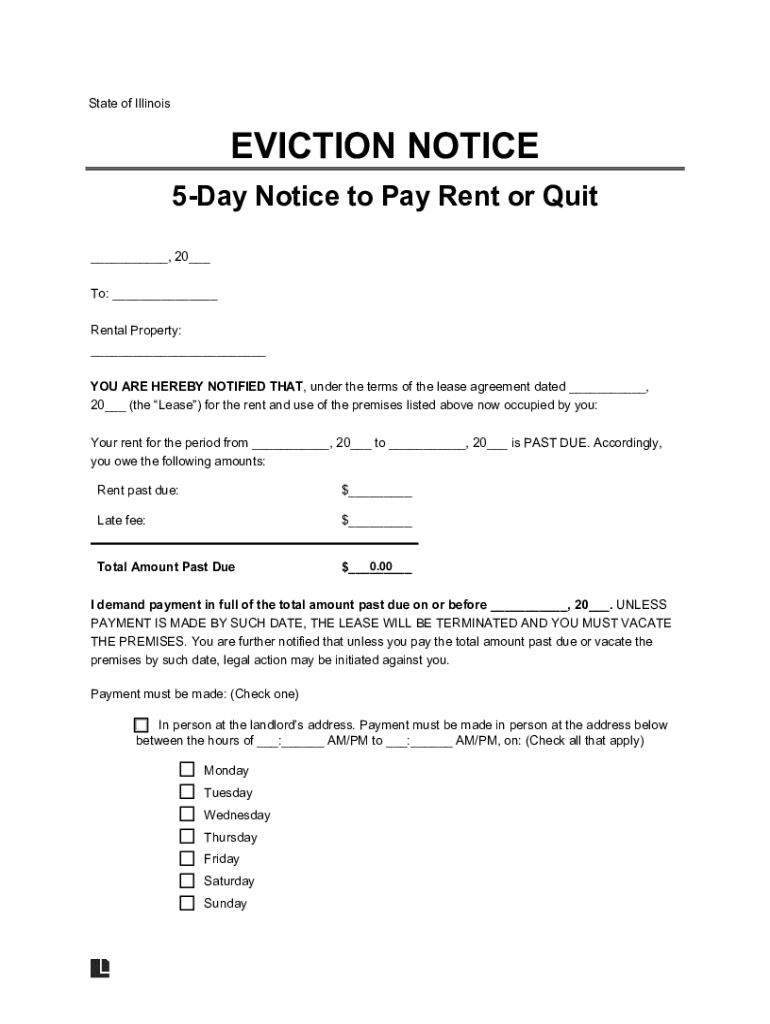
An "Eviction Notice - 5-Day Notice to Pay Rent or Quit" is a legal document used by landlords to notify tenants that their rent is overdue. The notice serves as an official demand for the tenant to pay the outstanding rent within five days or vacate the rental property. This form is essential in protecting the landlord’s rights and initiating legal eviction proceedings if necessary. The five-day timeframe is typically mandated by state laws, making it crucial for landlords to adhere to this period for the notice to be legally effective.
How to Use the EVICTION NOTICE - 5-Day Notice to Pay Rent or Quit
Utilizing this eviction notice involves a series of steps, each pivotal to ensuring the document's validity:
- Verify Delinquency: Confirm that the rent is indeed overdue according to the lease agreement.
- Fill Out the Notice Accurately: Include all necessary details, such as the tenant's name, the rental property address, the amount owed, and the final deadline for payment.
- Service of Notice: Deliver the notice to the tenant. The method of delivery may vary by state but typically includes personal delivery, mailing, or posting at the property.
- Document Delivery: Keep a record of how and when the notice was delivered. This documentation can serve as evidence if eviction proceedings become necessary.
Steps to Complete the EVICTION NOTICE - 5-Day Notice to Pay Rent or Quit
To complete this notice accurately, follow these detailed steps:
- Gather Information: Collect the tenant’s contact information, details of the lease agreement, and calculations of the total rent owed.
- Fill Out Tenant Information: Clearly state the full names of all parties involved in the lease.
- Detail the Payment Demand: List the precise amount overdue and specify the deadline for payment adherence. Include any late fees if applicable.
- Include Landlord Information and Signature: Add the landlord’s or property manager's contact information and sign the notice to authenticate it.
- Provide Contact for Questions: Offer a means for the tenant to reach out to discuss the notice or payment plan options.
Legal Use of the EVICTION NOTICE - 5-Day Notice to Pay Rent or Quit
This eviction notice serves not only as a means to recuperate overdue payments but also as a legal precursor to further eviction actions. The primary function is to alert the tenant of the legal consequences of non-payment. If the tenant fails to pay or vacate within the stipulated timeframe, the landlord may proceed to file an eviction lawsuit. Compliance with state-specific regulations concerning eviction notices is pivotal to its enforceability.
Key Elements of the EVICTION NOTICE - 5-Day Notice to Pay Rent or Quit
Several critical components must be included for the notice to serve its purpose effectively:
- Precise Statement of Amount Due: Clearly outline the total rent due, inclusive of any applicable fees.
- Uniform Deadline for Compliance: A consistent five-day period for the tenant to resolve the issue.
- Clear Instructions for Payment: Guide the tenant on how and where the payment should be made.
- Consequences of Non-Compliance: Explicitly state potential legal actions if the tenant fails to comply.
State-Specific Rules for the EVICTION NOTICE - 5-Day Notice to Pay Rent or Quit
While the basic structure of the eviction notice remains the same, individual state laws can influence the specifics:
- Notice Length: Although commonly five days, some states may require slightly longer periods.
- Delivery Methods: States have unique regulations on acceptable service methods.
- Tenant Protection Laws: Certain states might have additional tenant protection acts that could affect the notice’s enforceability.
Examples of Using the EVICTION NOTICE - 5-Day Notice to Pay Rent or Quit
Real-world scenarios illuminate the practical use of this notice:
- Commercial Properties: A business tenant falls behind on rent during economic downturns. The landlord issues an eviction notice to prompt immediate payment or occupancy release.
- Residential Tenancies: In cases where tenants face temporary financial hardships, landlords use the notice to initiate conversations around payment plans.
Penalties for Non-Compliance
Failure to comply with the provisions laid out in this eviction notice can lead to severe consequences:
- Forced Eviction: Tenants who do not pay or vacate may be legally evicted from the premises.
- Credit Impact: Unresolved rent delinquencies could be reported to credit agencies, affecting the tenant's credit score.
- Legal Costs: Both parties may incur significant legal expenses should the matter escalate to court.
Versions or Alternatives to the EVICTION NOTICE - 5-Day Notice to Pay Rent or Quit
In certain jurisdictions, landlords might utilize alternative or supplementary notices based on specific circumstances:
- Three-Day Notice to Pay or Quit: Used in states where quicker resolution is permissible by law.
- Ten-Day Notice: Offers tenants extended timeframes to meet their obligations in states with more lenient laws.
Who Typically Uses the EVICTION NOTICE - 5-Day Notice to Pay Rent or Quit
Primarily used by landlords and property management companies, this notice is essential for:
- Individual Landlords: Small property owners ensuring timely rent collection.
- Property Management Firms: Companies overseeing numerous properties maintaining operational efficiency.
- Real Estate Investment Trusts (REITs): Large-scale property operations protecting investor interests by adhering to rental agreements.


Important Terms Related to EVICTION NOTICE - 5-Day Notice to Pay Rent or Quit
Understanding important legal terms associated with this notice enhances compliance:
- Delinquency: Failure to make payments as agreed upon in a lease contract.
- Notice of Intent: A formal declaration by the landlord outlining potential actions for unmet obligations.
- Legal Process: The procedural steps required should eviction proceedings advance to court.




