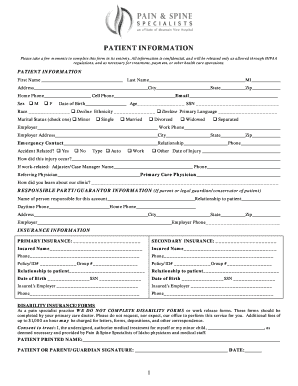
Definition and Purpose of the Claim Form General Information
The "Claim Form General Information" refers to the fundamental details required during the submission of a claim, especially in contexts like insurance. It typically includes information about the claimant, the nature of the claim, and any necessary documentation supporting the claim's validity. In the case of ASPCA Pet Health Insurance, this form is crucial because it requires detailed descriptions of the pet, incident reports, and medical records. This information is essential for ensuring accurate and efficient processing of the claim, as well as for verifying the authenticity of the submitted details.
Steps to Complete the Claim Form General Information
Completing the claim form necessitates a step-wise approach to ensure all necessary information is accurately provided.
-
Gather Required Information: Before initiating the form, collect all needed documents, such as medical records and invoices.
-
Fill Personal Details: Provide comprehensive details about yourself and your pet, including your policy number and contact information.
-
Describe the Incident: Offer a detailed account of the incident that led to the claim, making sure to note dates, locations, and any witnesses.
-
Attach Supporting Documents: Ensure all required documents are attached, including an itemized invoice and any relevant medical records.
-
Review and Submit: Double-check your entries for accuracy and completeness before submitting the form through your preferred submission method.
Submission Methods for the Claim Form General Information
Submitting the completed claim form can be done in several ways to accommodate different preferences and needs. Common submission methods include online, mail, or in-person interactions:
- Online Submission: This is the most efficient method, allowing claimants to upload digital copies of the form and supporting documents via the insurer's platform.
- Mail Submission: This traditional approach involves mailing physical copies of the completed form and attachments to the designated address of your insurer.
- In-Person Submission: Visiting the insurer's office to submit documents can be beneficial for those who require immediate confirmation of receipt.
Required Documents for the Claim Form General Information
Several documents are typically required when submitting a claim form. Ensuring you have all necessary documentation ready will help prevent delays:
- Medical Records: Detailed veterinary records that document the pet’s condition and any treatments received.
- Itemized Invoice: A breakdown of costs associated with veterinary services provided to the pet, facilitating transparent processing.
- Incident Report: A written account that documents the circumstances under which the pet required medical attention.
Important Terms Related to Claim Form General Information
When dealing with claim forms, familiarity with specific terminology can enhance comprehension and accuracy:
- Claimant: The person submitting the claim and seeking reimbursement.
- Incident Date: The specific date when the event causing the claim occurred.
- Coverage Limit: The maximum amount the insurance will reimburse for a covered event.
Legal Use of the Claim Form General Information
Completing and submitting insurance claim forms should always be done with integrity and accuracy, as fraudulent submissions are subject to legal penalties. Each claim must genuinely reflect the incident and be supported by legitimate documentation. Commitment to truthful reporting ensures compliance with insurance regulations and protects claimants from potential legal repercussions.
State-Specific Rules for the Claim Form General Information
Insurance laws and requirements can vary significantly by state, impacting the submission and processing of claim forms. Claimants must stay informed about specific state regulations that could affect their claims, such as documentation standards or deadlines for filing. Consulting state insurance guidelines can provide clarity on any additional requirements beyond the standard form instructions.
Penalties for Non-Compliance with Claim Form Requirements
Failure to properly complete and submit the claim form can lead to several penalties, ranging from simple processing delays to outright denial of the claim. In more severe cases, such as fraudulent claims, legal consequences including fines or prosecution may apply. Ensuring compliance with all requirements and truthful submission is essential to avoid these potential issues.