







Definition & Meaning
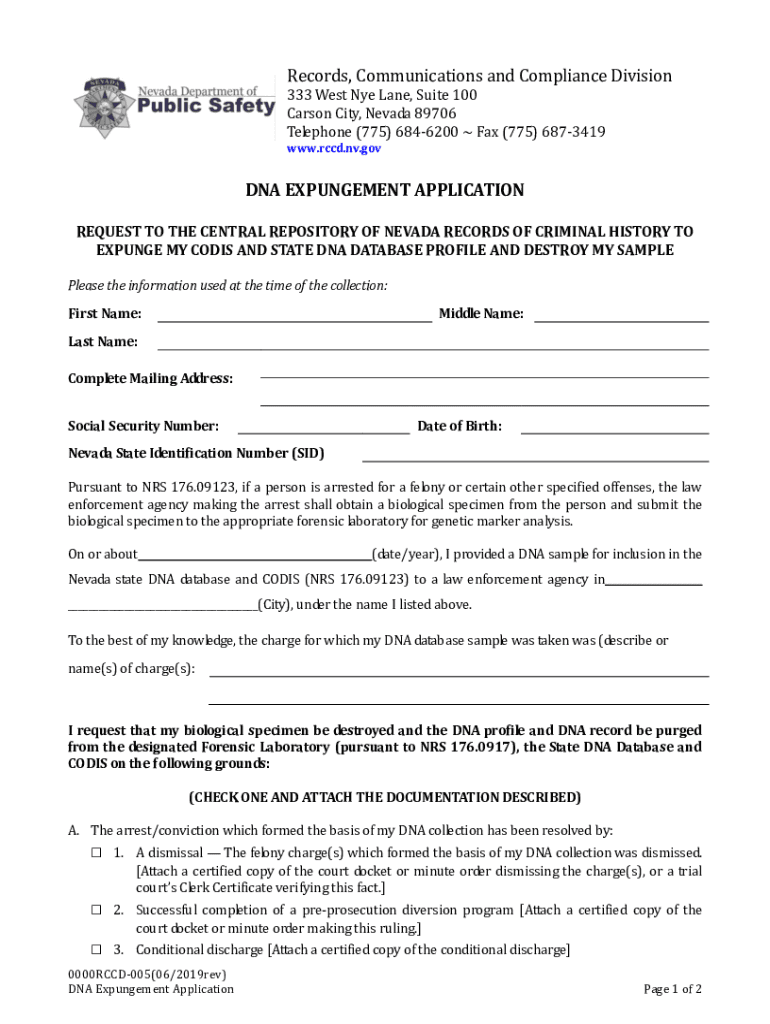
The DNA Expungement Application is a formal document submitted to the Central Repository of Nevada Records of Criminal History. It allows individuals to request the removal of their DNA profile and the destruction of their biological sample from the Nevada state DNA database and CODIS. This application is grounded in specific legal circumstances, such as the dismissal of charges, an acquittal, or the completion of diversion programs. The document is crucial for safeguarding personal privacy by ensuring that DNA records are removed when certain conditions are met.
Key Elements of the DNA Expungement Application
The DNA Expungement Application consists of several important sections, each requiring detailed attention. Key elements include:
- Personal Information: This section requires the applicant’s full name, date of birth, and contact information.
- Legal Grounds: Applicants must specify the reason for the expungement request, such as charge dismissal or program completion.
- Supporting Documentation: Necessary documents to validate the request, which may include court orders or legal certifications.
- Applicant’s Signature: A mandatory section requiring the applicant's consent and acknowledgment of the information provided.
Steps to Complete the DNA Expungement Application
- Gather Necessary Information: Collect personal details and any supporting documents that justify the expungement request.
- Complete the Application: Fill out each section of the form carefully, ensuring that all information is accurate and complete.
- Attach Supporting Documents: Include required documents like legal certificates or orders that support the application.
- Review and Sign: Double-check the completed form for errors or omissions before signing the application.
- Submit the Application: Follow the specific instructions provided for submission, whether online, by mail, or in person.
Who Typically Uses the DNA Expungement Application
The application is primarily utilized by individuals who wish to have their genetic information removed from law enforcement databases. Typical users include:
- Individuals whose criminal charges have been dismissed or resulted in acquittal.
- Participants who have successfully completed court-mandated diversion programs.
- Legal representatives or attorneys acting on behalf of eligible clients.


Legal Use of the DNA Expungement Application
Using the DNA Expungement Application is governed by state-specific legal frameworks. In Nevada, the application serves a legal function by allowing qualified individuals to invoke their right to privacy in genetic information under approved conditions. Applicants must meet legal criteria and fulfill documentation requirements to ensure the expungement process is conducted lawfully.
Eligibility Criteria
Eligibility for filing a DNA Expungement Application typically hinges on fulfilling specific legal conditions, including:
- Case Resolution: The legal case must be resolved in a manner that qualifies for DNA record removal.
- Documentation: Adequate proof of legal status, such as a court order.
- State Regulations: Compliance with specific state guidelines and legal requirements.

Required Documents
Applicants must provide specific documents along with their application to establish their eligibility:
- Court Orders: Proof of case dismissal or acquittal.
- Completion Certificates: Documentation of finishing a diversion or rehabilitation program.
- Government-issued ID: Identification to verify the applicant’s identity.
Submission Methods
Applicants have several options for submitting the DNA Expungement Application:
- Online Submission: Through an online portal or email, if supported.
- Mail: Sending the completed form and documents via postal service.
- In-Person: Submitting directly at a designated government office.
State-Specific Rules for the DNA Expungement Application
Nevada-specific guidelines require that applicants adhere to precise rules when filing for DNA expungement:
- Jurisdiction: Only applicable within Nevada for records held by the state.
- Legal Representation: It may be beneficial, though not required, to seek legal expertise to navigate state regulations.
- Process Timeframes: Understanding the general processing time to manage expectations regarding how long the expungement might take.
These comprehensive sections guide individuals through the application process while ensuring they meet legal and procedural obligations for efficient DNA record expungement.




