






Definition & Meaning
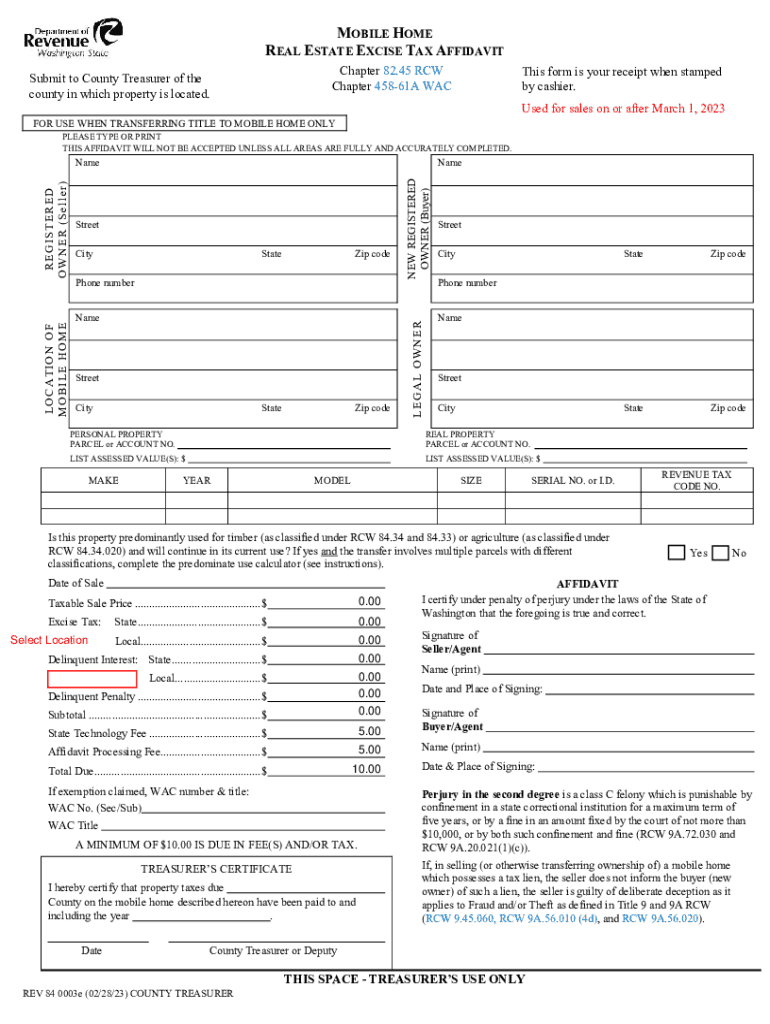
Chapter 82.45 of the Revised Code of Washington (RCW) pertains to the excise tax on real estate sales. This specific tax is imposed on the sale of real property within Washington State. It serves as a transfer tax that is generally paid by the seller of the property at the time the deed is filed for recording. The primary purpose of this tax is to generate revenue for the state, which can be used for various public services and infrastructure projects. It is critical for sellers and buyers to understand the implications of this tax to ensure compliance.
Key Elements of the Tax Code
The excise tax on real estate sales under Chapter 82.45 RCW consists of several critical components:
- Tax Rate: The tax rate applied can vary based on the value of the real estate transaction. This rate structure may include both state and local components, leading to different effective rates depending on the jurisdiction.
- Applicability: The tax applies to the transfer of ownership interests in real property. This includes outright sales, transfers via gift deeds, and other scenarios where a change in ownership occurs.
- Exemptions: Some transactions may qualify for exemptions, such as transfers between spouses or when the property is transferred due to inheritance. Specific qualifying conditions must be met to claim any exemption.
Steps to Complete the Chapter 82.45 RCW Transaction
Completing a transaction under Chapter 82.45 RCW involves a series of steps:
- Calculate the Tax: Determine the applicable excise tax rate for the transaction based on the location and value of the property.
- Prepare Documentation: Gather all necessary documents, including the real estate sales affidavit and any applicable exemption certificates.
- Payment Submission: The seller is responsible for ensuring the tax is paid. This can usually be done at the County Treasurer's office or through authorized online systems.
- Recording the Deed: Submit the deed along with proof of tax payment for recording at the county level, which finalizes the transfer of ownership.
Who Typically Uses This Form
The form related to Chapter 82.45 RCW is primarily used by:
- Real Estate Sellers: Individuals or entities selling property in Washington State.
- Title Companies: Businesses assisting in the closure of real estate deals by managing funds and ensuring compliance with state tax regulations.
- Legal Professionals: Attorneys involved in real estate transactions to ensure all statutory requirements are fulfilled.
Important Terms Related to the Tax
Familiarity with these terms is important for understanding and applying Chapter 82.45 RCW:
- Grantor: The seller or transferor of the real estate property.
- Grantee: The buyer or transferee who receives the property.
- Consideration: The total value or sales price agreed upon for the property, which forms the basis for calculating the excise tax.
- Exemption Certificate: A document that proves eligibility for any claimed tax exemptions.
Legal Use and Compliance
Compliance with Chapter 82.45 RCW is legally mandatory for real estate transactions in Washington:
- Filing Obligations: Must be fulfilled by the deadlines specified by state and local governments to avoid penalties.
- Audit Rights: The Washington Department of Revenue retains the right to audit transactions to ensure tax compliance.
- Penalties for Non-Compliance: Failing to report, underpay, or misrepresent the transaction details can result in fines or additional interest charges.
State-Specific Rules
Washington has specific rules concerning real estate excise tax:
- Uniformity Across Counties: While the state establishes a baseline tax rate, counties might impose additional local taxes.
- Updates and Amendments: The RCW can be amended, impacting how the excise tax is applied. Keeping current with these changes is crucial for accurate compliance.
- County Regulations: Each county might have distinct processes for filing and payment, requiring interaction with local treasurers.
Penalties for Non-Compliance
Failing to comply with Chapter 82.45 RCW can lead to serious repercussions:
- Late Payment Penalties: After the due date, accrued interest is added daily until the tax is paid in full.
- Misrepresentation Fines: Intentional misinformation in documentation can result in severe fines and legal actions by state authorities.
- Impact on Title Transfer: Non-compliance can delay the recording of the deed, affecting the legal transfer of property rights.
Examples of Using the Tax Code
Real-world scenarios can enhance understanding:
- Residential Property Sale: A homeowner selling their single-family property calculates the excise tax based on the sales price and pays it during the closing process.
- Commercial Real Estate Transfer: A corporation selling a commercial building must account for the excise tax in its transaction costs, ensuring all financial documents align with tax payments.
- Inheritance Transfers: When real estate is transferred due to inheritance, legal documentation is required to claim any applicable exemptions from the excise tax.