
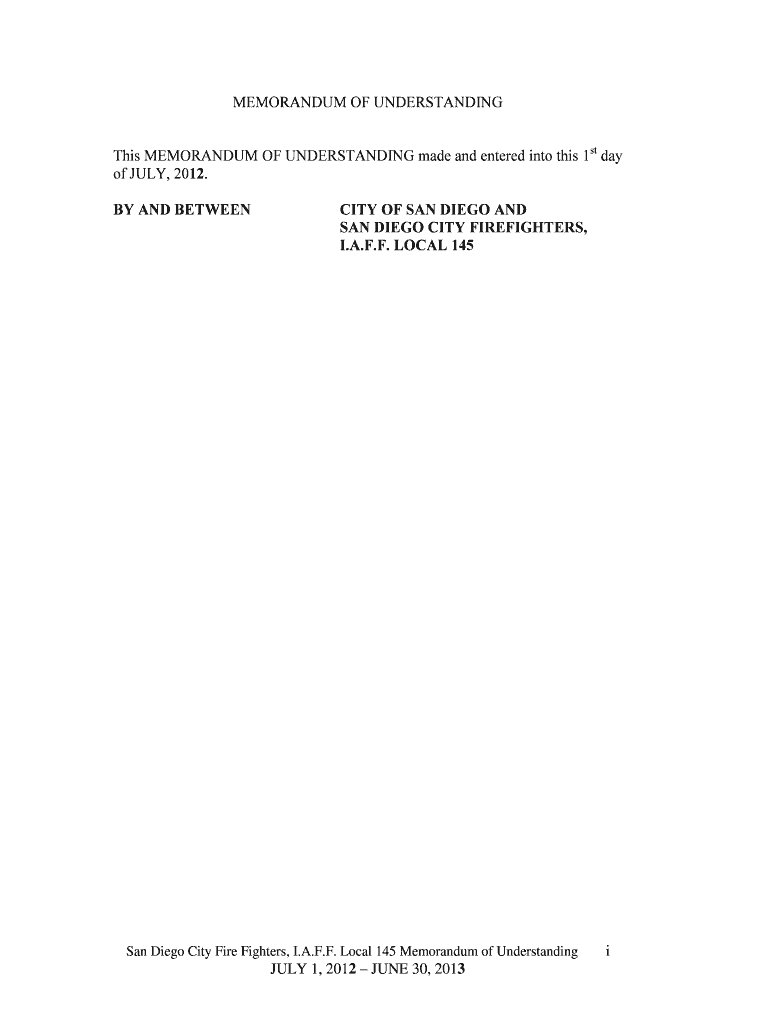







Definition & Purpose of a Memorandum of Understanding
A Memorandum of Understanding (MOU) is a formal agreement between two or more parties. It delineates the roles, responsibilities, and expectations each party has regarding a particular project or partnership. Unlike a contract, an MOU is typically not legally binding, but it signifies the commitment and intent of the parties involved to work collaboratively towards a shared goal. MOUs are commonly used in both public and private sectors and are crucial for outlining the scope and framework of both short-term and long-term collaborations.
Examples of Common MOUs
- Agreements between city governments and local unions to establish working conditions.
- Collaborations between educational institutions and businesses for internship programs.
- Partnerships between international organizations and NGOs for developmental projects.
Steps to Complete a Memorandum of Understanding
Completing an MOU requires careful attention to detail to ensure all aspects of the agreement are clearly articulated. Below are the essential steps involved:
- Identify the Parties: Clearly state the entities involved in the agreement, including full legal names and contact information.
- Define Objectives: Outline the aims and objectives of the collaboration. Ensure these are specific, measurable, and achievable within the MOU's framework.
- Delineate Roles and Responsibilities: Clearly specify the obligations and duties of each party involved, including timelines and deadlines where applicable.
- Terms of the Agreement: Specify the duration of the MOU, renewal options, and any conditions for termination.
- Signatures and Dates: Ensure all participating parties sign and date the document to formalize their commitment.
Key Elements of the Memorandum of Understanding
An MOU must contain specific components to be effective. These elements ensure all parties are on the same page and help preclude any future misunderstandings or disputes.
- Introduction: A brief preamble that provides context and reasons for the MOU.
- Scope of Work: Detailed description of the work to be undertaken and the desired outcomes.
- Dispute Resolution: A procedure for resolving any issues or disagreements that might arise during the term of the agreement.
- Confidentiality Clause: Protect sensitive information exchanged between parties during the collaboration period.
- Amendments: Process for making changes to the MOU as circumstances evolve.
Important Terms Related to Memoranda of Understanding
Understanding key terms used in MOUs can help clarify the purposes and expectations embedded within the document.
- Parties Involved: The individuals or organizations that enter into the agreement.
- Deliverables: Specific outputs or results each party agrees to provide.
- Timeline: The schedule outlining when tasks or obligations are to be completed.
- Termination Clause: Conditions under which the agreement can be ended prior to its expected conclusion.
Legal Use of the Memorandum of Understanding
Though an MOU is not legally enforceable like a contract, it holds moral and ethical significance. Using an MOU legally:
- Defines Intentions: Establishes the mutual intentions of the involved parties, which can be particularly useful in negotiations.
- Supports Contract Development: Acts as a preliminary step that can facilitate the drafting of a more formal, legally enforceable contract.
- Reduces Misunderstandings: By clearly outlining expectations and responsibilities, an MOU helps prevent potential disputes.
Who Typically Uses a Memorandum of Understanding
MOUs are versatile instruments utilized by various entities. Below is an overview of typical users.
- Government Agencies: To coordinate actions with other governments or organizations.
- Corporations: To establish joint ventures or partnerships with other businesses.
- Educational Institutions: To form collaborations with industry partners for research and development.
- Non-Profits: To engage in partnerships with other non-profits or governmental bodies for community projects.
State-Specific Rules for MOUs in the United States
While signing an MOU, it is crucial to consider any state-specific regulations that might apply. The application and interpretation of an MOU can vary based on jurisdictional laws.
- In some states, MOUs may need to be reviewed by a legal entity before execution.
- State laws might influence what constitutes a legally binding agreement, even if an MOU typically is not.
- Certain industries might have regulatory frameworks that an MOU needs to align with, particularly in heavily regulated sectors like healthcare or finance.
Examples of Using MOUs Effectively
MOUs provide a flexible framework for cooperation across sectors. Here are some examples of successful applications:
- Public-Private Partnerships: Governments and private companies collaborate on infrastructure projects using MOUs to outline contributions and shared goals.
- Research Collaborations: Universities use MOUs to partner with technology firms, facilitating research innovations and commercial applications.
- International Agreements: Countries often employ MOUs to foster international cooperation on environmental issues, despite differing legislative systems.
Utilizing an MOU strategically allows parties to work together beneficially while laying down a foundation for more formalized agreements in the future.




