






Definition & Meaning
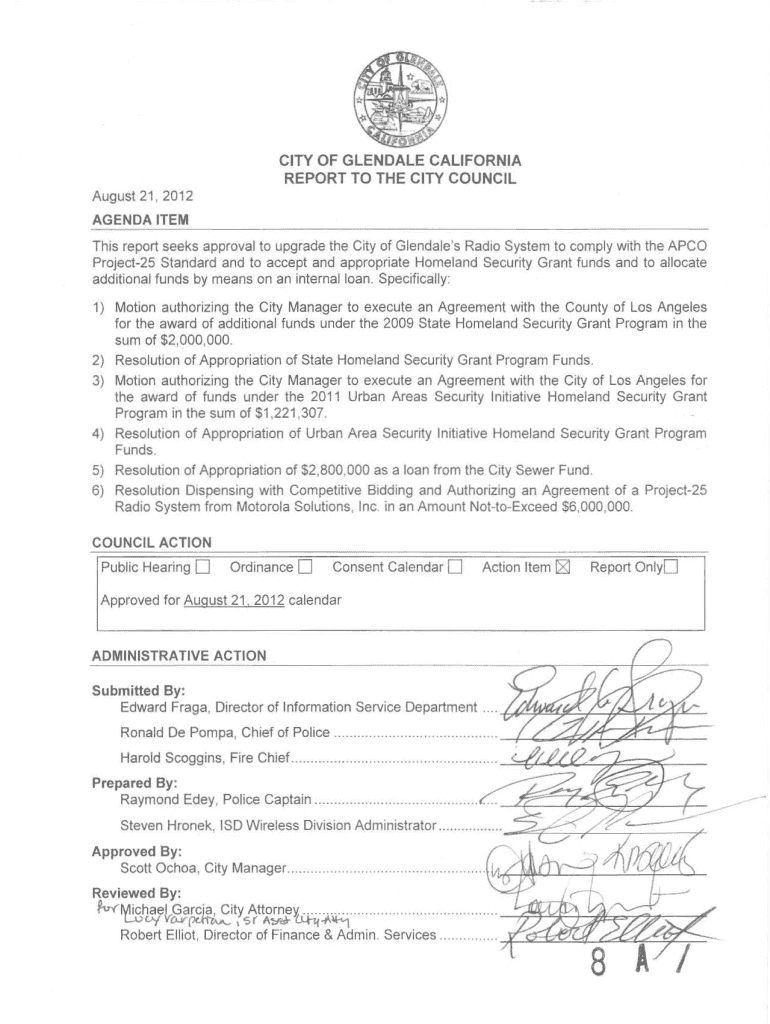
The "Report to the City Council" is a formal document submitted to a municipal legislative body, like Glendale City Council, to provide pertinent information, request approvals, or discuss proposals essential for governmental operations. These reports are vital in ensuring transparency and informed decision-making in local governance. For instance, a report may propose infrastructure upgrades or request funding for public safety improvements. It serves as an official record of discussions and decisions that impact the community, highlighting key issues that require council attention and deliberation.
How to Use the Report to the City Council
Utilizing a report effectively involves understanding its structure and purpose. Start by identifying the primary goal of your report, such as proposing a new ordinance or request for funding like in the Glendale City Council case for a radio system upgrade. Ensure you include clear and concise arguments supported by data or case studies. It's critical to incorporate financial implications, potential benefits, and the urgency of the issue. The report should be laid out logically to guide council members through the content seamlessly, encouraging informed decision-making.
Steps to Complete the Report to the City Council
- Identify the Objective: Clearly define the purpose of the report, such as securing funding through grants.
- Gather Necessary Information: Compile all relevant data, including financial details and potential impacts.
- Draft the Report: Use a structured approach with sections like introduction, body, and conclusion.
- Introduction: State the purpose and summarize the main points.
- Body: Detail the proposal, supporting evidence, and financial aspects.
- Conclusion: Reinforce the need and request council action.
- Review and Edit: Ensure clarity and precision, free from jargon unless required.
- Submit for Approval: Follow city-specific submission processes, and attend council meetings if necessary for explanations.
Who Typically Uses the Report to the City Council
This document is primarily used by city officials, project managers, municipal planners, and department heads responsible for public projects and policy changes. Public safety officials, like those from police or fire departments, often submit reports requiring council approval for urgent upgrades or investments. For business-related matters, reports might originate from economic development offices aiming to boost local commerce.


Key Elements of the Report to the City Council
- Objective Statement: Clear articulation of the report's purpose.
- Background Information: Contextual data or prior decisions influencing the current proposal.
- Financial Analysis: Breakdown of costs, funding sources like grants, and financial forecasts.
- Impact Assessment: Evaluation of potential outcomes, benefits, and risks.
- Supporting Evidence: Data, charts, or case studies to support recommendations.
- Conclusion and Recommendations: Summary of findings and proposed actions for council consideration.
Important Terms Related to Report to the City Council
- APCO Project-25 Standard: A set of standards for ensuring communications systems interoperability, crucial in public safety communications.
- Homeland Security Grants: Funds allocated for enhancing local safety and emergency preparedness.
- Sewer Fund: A municipal financial resource typically earmarked for wastewater management, sometimes used for internal loans for public projects.
- Interoperability: The ability of different systems and organizations to work together seamlessly.
Examples of Using the Report to the City Council
A report seeking approval for major city infrastructure leveraging grants from Homeland Security illustrates direct application. By detailing funding needs and leveraging existing municipal resources like the Sewer Fund, officials can illustrate the importance of timely council intervention. Moreover, reports can address environmental concerns and economic contributions, like how a new park could increase local tourism. Alternative energy projects, like solar street lighting proposals, often highlight community, economic, and environmental benefits.
Legal Use of the Report to the City Council
Legal use involves adhering to municipal governance laws concerning public meeting transparency and decision-making processes. The reports must comply with the city's regulations on formatting, content disclosure, and submission timelines. They contribute to the public record, ensuring that decisions on spending public funds or changing urban policy withstand legal scrutiny. Furthermore, this transparency aids in preventing misuse or misunderstandings related to resource allocations or legislative proposals.