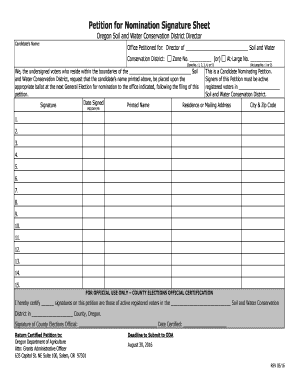
01. Edit your form online
Type text, add images, blackout confidential details, add comments, highlights and more.

Type text, add images, blackout confidential details, add comments, highlights and more.

Draw your signature, type it, upload its image, or use your mobile device as a signature pad.

Send it via email, link, or fax. You can also download it, export it or print it out.
The PPQ Form 505, associated with Charles M Schayer and Company, plays a significant role in the documentation required for importation of plant and plant products under U.S. regulations. This form is specifically tailored to meet compliance requirements outlined by laws such as the Lacey Act Amendments of 2008. Importers must provide accurate data regarding plant origin, species, and other specific shipment details. This ensures transparency and legal adherence during the import process.
Completing the PPQ Form 505 involves several critical steps to ensure compliance:
Gather Required Information: Importers must collect information on plant origin, species, and volume.
Accurate Entry: Carefully enter all required data into the form, ensuring that there are no discrepancies that may lead to penalties.
Review Legal Compliance: Confirm compliance with the Lacey Act Amendments to avoid legal issues.
Submission: Submit the completed form to the relevant authorities, typically after the shipment clears customs.
Retain a Copy: Keep a copy of the submitted form for future reference and potential audits.
Primarily, this form is utilized by importers involved in the trade of plant materials. Entities such as logging companies, agricultural businesses, and nurseries often interact with this document to ensure all plant imports align with U.S. law. By maintaining compliance, these businesses avoid legal complications and ensure a smooth importation process.


Legally, the PPQ Form 505 serves as a formal declaration of the details surrounding imported plants. It is governed by the Paperwork Reduction Act and the Lacey Act Amendments. These statutes mandate the disclosure of specific information to protect against illegal trafficking and ensure that ecological and conservation principles are maintained during plant trade operations.
The form requires several critical pieces of information:
These elements are essential for a comprehensive assessment and to meet legal standards.
Failing to correctly complete and submit the PPQ Form 505 can lead to significant penalties. These may range from fines to more severe consequences like shipment seizure or revocation of import privileges. Ensuring accuracy and diligence in form completion is vital to avoid such outcomes.
While the PPQ Form 505 operates under federal regulations, individual states may have additional requirements or variations in related procedures. Importers must be aware of any state-specific rules that may apply to their shipments, particularly in regions with heightened agricultural controls or conservation concerns.
Alongside the form itself, importers may need to provide supporting documents, such as:
Collecting and attaching these documents ensures compliance with both federal and state regulations.
Consider a nursery importing orchids from abroad. They must accurately complete the PPQ Form 505, detailing every plant's species and origin. Another example might be a timber company importing hardwoods, where the form is crucial for documenting the legal acquisition and transport of these materials into the United States.
At DocHub, your data security is our priority. We follow HIPAA, SOC2, GDPR, and other standards, so you can work on your documents with confidence.