
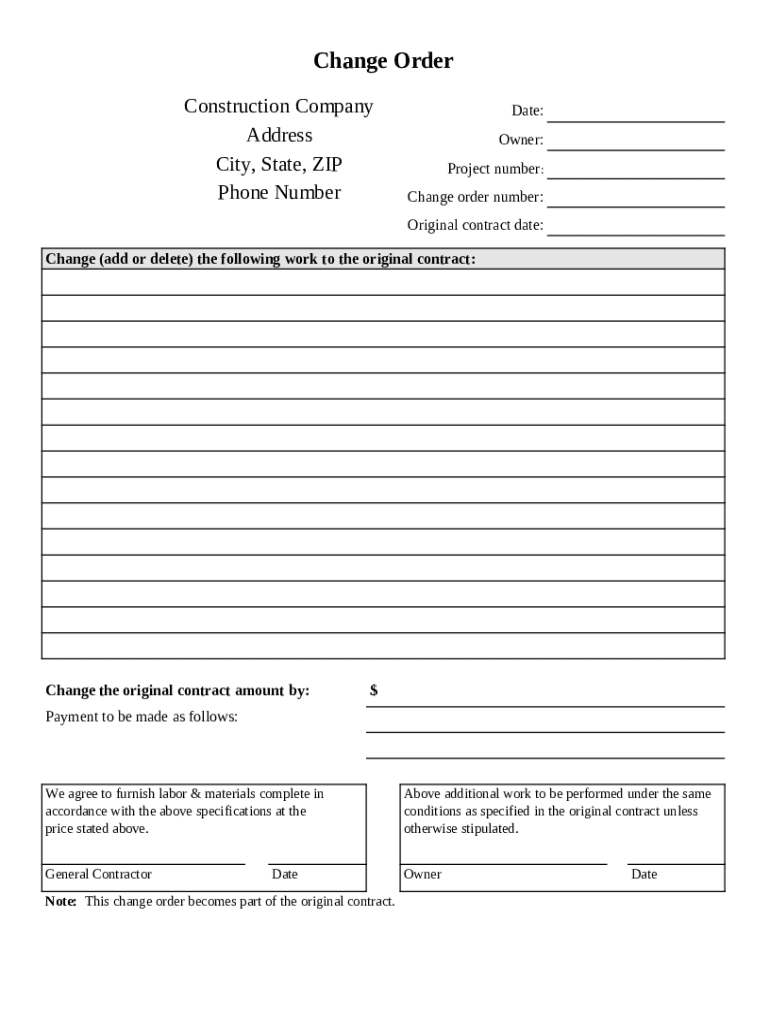







Definition and Meaning of Change Order
A Change Order is a formal document used in the construction industry to modify the original contract of a project. It can involve adding or removing work as well as adjusting the project's timeline or financial terms. The Change Order serves as a mutual agreement between the involved parties, typically the general contractor and the project owner, outlining alterations to the originally agreed-upon scope of work or contract amount. This document ensures clarity and consensus among parties, minimizing disputes and providing a clear framework for implementing changes.
Key Components of a Change Order
- Project Number: Identifies the specific project to which the Change Order applies.
- Change Order Number: A unique identifier for tracking the change among multiple amendments.
- Details of Changes: Thorough description of the work being added or removed, including specific tasks, materials, and labor involved.
- Adjustments: Modifications to the contract amount, including any financial increase or decrease resulting from the change.
- Impact on Timeline: Explanation of how the change affects the project schedule, including any extensions or new deadlines.
- Approval Signatures: Signatures from both the contractor and the owner to signify agreement and formalize the modifications.
How to Use the Change Order
Understanding the process of using a Change Order effectively is crucial for managing changes during a construction project.
Steps to Implement a Change Order
- Identify the Need for Change: Recognize the circumstances or requirements that necessitate a change in the original contract, such as unforeseen site conditions or client requests for additional features.
- Draft the Change Order: Document the details of the proposed change, including scope, cost, and time implications. Ensure that the explanation is clear and quantifiable.
- Review and Approval: Submit the drafted Change Order to the relevant stakeholders, including the project owner and contractor, for review and approval.
- Document Execution: Once all parties agree to the changes, obtain signatures from the authorized personnel to execute the Change Order.
- Implementation: Integrate the changes into the project workflow, ensuring that all team members and subcontractors are informed and prepared for the revised tasks and timelines.
Practical Example
Consider a scenario where bad weather delays a construction project. A Change Order is issued to extend the project deadline by ten days, along with the associated cost implications for additional labor and equipment rentals.
Steps to Complete the Change Order
Completing a Change Order involves several methodical steps to ensure accuracy and approval.
Detailed Steps
- Gather Information: Collect all relevant details about the change, such as the reason for modification and any potential budgetary impacts.
- Fill Out Form: Enter information on the Change Order form accurately, including project numbers, descriptions, and affected aspects of the project.
- Financial Adjustments: Calculate and document any financial implications, ensuring transparency in how the adjustments will influence the overall budget.
- Seek Approvals: Present the completed form to stakeholders for review and obtain necessary signatures to formalize the change.
- Disseminate Information: Share the approved Change Order with all relevant personnel, ensuring everyone involved in the project is informed of the changes.
Key Elements of the Change Order
Understanding the various components of a Change Order helps in managing it efficiently.
Essential Elements
- Description of Change: Adequately describes what is being modified, added, or removed in the contract.
- Impact on Contract Sum: Details any financial changes due to the Change Order.
- Changes to Schedule: Specifies adjustments to the project’s timeline, including new deadlines if applicable.
- Approval and Signatures: Confirms agreement with authorized signatures from both parties.
Importance of Each Element
- Ensures complete understanding and agreement on the project's scope and responsibilities.
- Clarifies financial impacts, fostering transparent financial management.
- Maintains accountability by requiring formal approval for each modification.
Legal Use of the Change Order
Change Orders are legal documents and must be managed with precision to avoid disputes.
Legal Considerations
- Contractual Basis: Change Orders are tied to the original contract and serve as legal amendments. They must align with the terms and conditions originally agreed upon.
- Signatory Authority: Require proper signatures from authorized representatives to ensure legal enforceability.
- Dispute Resolution: Clear documentation helps mitigate litigation risks by providing evidence of mutual consent to changes.
Real-World Implications
If a contractor incurs additional costs due to unforeseen circumstances and those costs are addressed through a Change Order, the legal enforceability of the Change Order protects the contractor’s right to additional compensation.
Important Terms Related to Change Order
Familiarity with specific terminology used in Change Orders helps in their effective management.
Key Terms
- Addenda: Additional documents modifying the contract part way through execution.
- Contingency: Pre-allocated funds for unforeseen changes in scope, managed through Change Orders.
- Work Scope: Defines the tasks or deliverables subject to modification in the Change Order.
Understanding Terms in Context
- Addenda augment the contract by formally recording adjustments and should be understood in conjunction with foundational contract terms.
- Contingency is a crucial budget element that supports flexibility without breaching contractual limits.
Common Examples of Using the Change Order
Understanding practical scenarios in which Change Orders are used can illustrate their utility.
Scenarios
- Material Substitution: A Change Order is issued when there is a need to substitute materials due to availability issues, impacting cost and timelines.
- Design Changes: If an owner decides to upgrade the design, a Change Order is created to document and agree to new specifications and costs.
- Regulatory Compliance: Changes required to meet unexpected regulatory requirements, altering project plans or materials.
Case Study
In a commercial building project, a Change Order might be used to accommodate additional floors requested by the client, necessitating revisions to structural plans, budget, and schedule.
Who Typically Uses the Change Order
Understanding the users of Change Orders can help define the context and necessity of their use.


Primary Users
- General Contractors: Frequently initiate Change Orders to address necessary changes and keep the project on track.
- Project Owners: Engage in the Change Order process to request modifications or approve changes suggested by contractors.
- Architects and Engineers: May recommend Change Orders based on performance or safety considerations, ensuring project compliance with professional standards.
Benefits of Understanding Users
- Ensures proper communication and alignment between stakeholders.
- Facilitates smoother project execution by addressing the needs and responsibilities of each party.
By providing comprehensive information, these sections collectively offer a complete overview of Change Orders, ensuring clear understanding and proper utilization in construction projects.




