01. Edit your form online
Type text, add images, blackout confidential details, add comments, highlights and more.

Type text, add images, blackout confidential details, add comments, highlights and more.

Draw your signature, type it, upload its image, or use your mobile device as a signature pad.

Send it via email, link, or fax. You can also download it, export it or print it out.
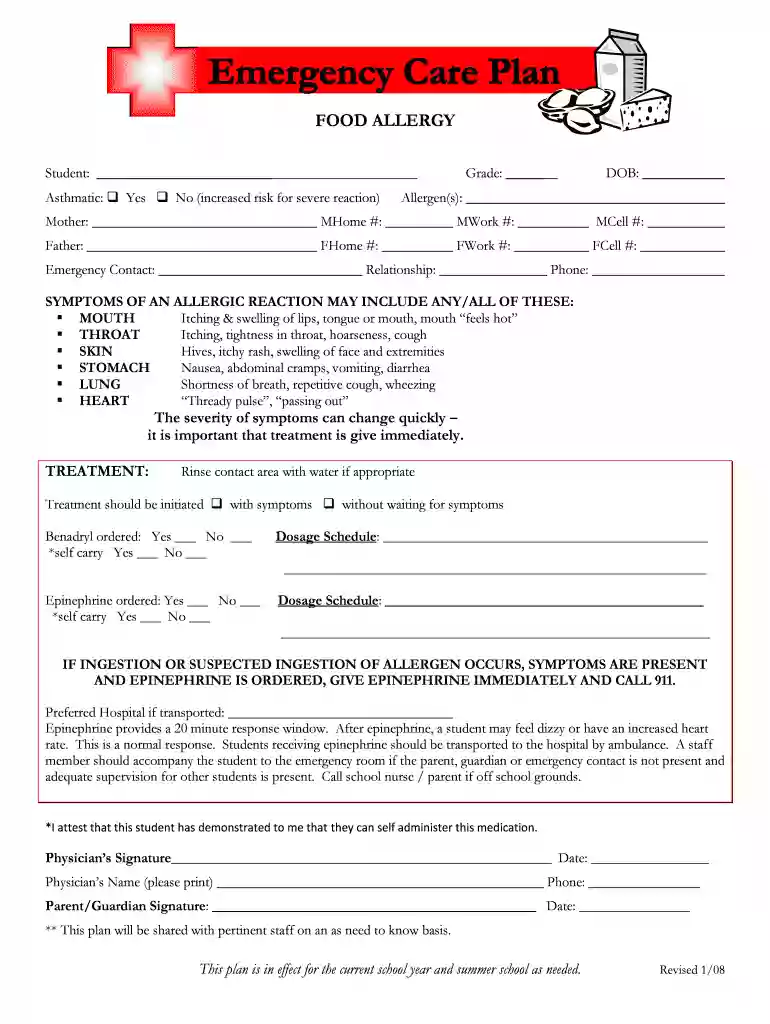
The "Food Allergy Guidelines for Michigan Schools - State of" is a comprehensive set of instructions and standards aimed at helping schools manage and accommodate students with food allergies. These guidelines provide detailed procedures to identify potential allergens, recognize symptoms of an allergic reaction, and implement immediate treatment solutions. The primary objective is to ensure the safety and well-being of students by fostering an environment that is aware and prepared to handle food allergy situations effectively.
The guidelines incorporate several critical elements to ensure student safety:
Identification of Allergens: Schools are required to maintain a list of common food allergens and any student-specific allergies documented during enrollment or through medical records.
Symptom Recognition: The guidelines detail the symptoms associated with food allergies, ranging from mild reactions like hives to severe anaphylactic reactions.
Emergency Response Protocols: Schools are provided with protocols outlining the immediate steps to take during an allergic reaction, including administering medications such as Benadryl and epinephrine.
Education for Staff and Students: Training programs are recommended to ensure that staff and students understand the importance of allergy awareness and can recognize the signs of an allergic reaction.
To effectively implement these guidelines, schools and staff should:
Review the Guidelines Thoroughly: Ensure all staff members are familiar with the procedures outlined in the guidelines.
Identify At-Risk Students: Collaborate with parents and healthcare providers to identify students with known allergies.
Establish An Emergency Response Plan: Develop a clear action plan for allergic reactions, including roles and responsibilities during an incident.
Conduct Training Sessions: Regularly schedule training for staff on recognizing allergy symptoms and administering first aid.
Communicate with Parents and Guardians: Ensure open lines of communication with parents regarding their child’s allergies and any incidents that occur.
Gather Necessary Information: Collect student health records to identify those with food allergies.
Develop a Management Plan: Outline how the school will manage food allergies, including avoidance strategies and emergency procedures.
Train School Personnel: Conduct training sessions for teachers, nurses, and cafeteria staff.
Implement Monitoring Systems: Establish methods to monitor allergen exposure in the school environment.
Regular Review and Update: Periodically review and update the guidelines to reflect current best practices and new information.
Michigan has specific rules intertwined with the federal guidelines to handle food allergies, which include:
Epinephrine Auto-Injector: Schools are required to stock epinephrine auto-injectors and have trained personnel to administer them.
Parental and Healthcare Provider Involvement: Parents and healthcare providers must be actively involved in creating and maintaining the allergy action plans for their children.
Record Keeping: Detailed records of incidents involving allergic reactions must be maintained for accountability and analysis.
Epinephrine: A medication used to treat severe allergic reactions.
Anaphylaxis: A severe, potentially life-threatening allergic reaction.
Cross-Contamination: When allergens are unintentionally transferred to a food item that is allergen-free.
These guidelines have legal implications, as they must align with federal laws like the Americans with Disabilities Act (ADA) that mandate reasonable accommodations for students with disabilities, which can include severe allergies. Compliance with these guidelines helps schools demonstrate their commitment to providing a safe educational environment.
For example, a school might have a student with a peanut allergy:
Action Plan: The school maintains an emergency action plan tailored for this student.
Staff Training: All teachers, especially those in contact with the student, are trained to use epinephrine auto-injectors.
Communication: Parents are kept informed of any incidents and preventive measures taken.
The guidelines are essential for:
School Administrators: To ensure compliance and safety protocols are in place.
School Nurses: As they are primarily responsible for managing health emergencies related to allergies.
Teachers and Staff: They need to recognize symptoms and know the immediate steps to take.
Parents: To understand the safety measures the school takes to protect their children.


At DocHub, your data security is our priority. We follow HIPAA, SOC2, GDPR, and other standards, so you can work on your documents with confidence.