






Definition & Meaning
The National Shellfish Sanitation Program (NSSP) Guide for the Control of Molluscan Shellfish: 202319 Re provides detailed guidelines and procedures to ensure the safety and sanitation of shellfish in the United States. This guide is part of an initiative to prevent health issues arising from the consumption of contaminated shellfish by establishing standards for water quality, monitoring, and harvesting practices.
How to Use the NSSP Guide
Using the NSSP Guide involves understanding the protocols and compliance requirements outlined for shellfish harvesting and processing. Users should carefully review sections relevant to their operations, paying close attention to guidelines on water sampling techniques, proper documentation, and product traceability. Regular consultation with the guide ensures adherence to best practices and legal standards, critical for maintaining certification and avoiding potential health hazards.
Steps to Complete the NSSP Guide
-
Review Current Requirements: Begin by familiarizing yourself with updated standards and regulations as detailed in the 202319 revision.
-
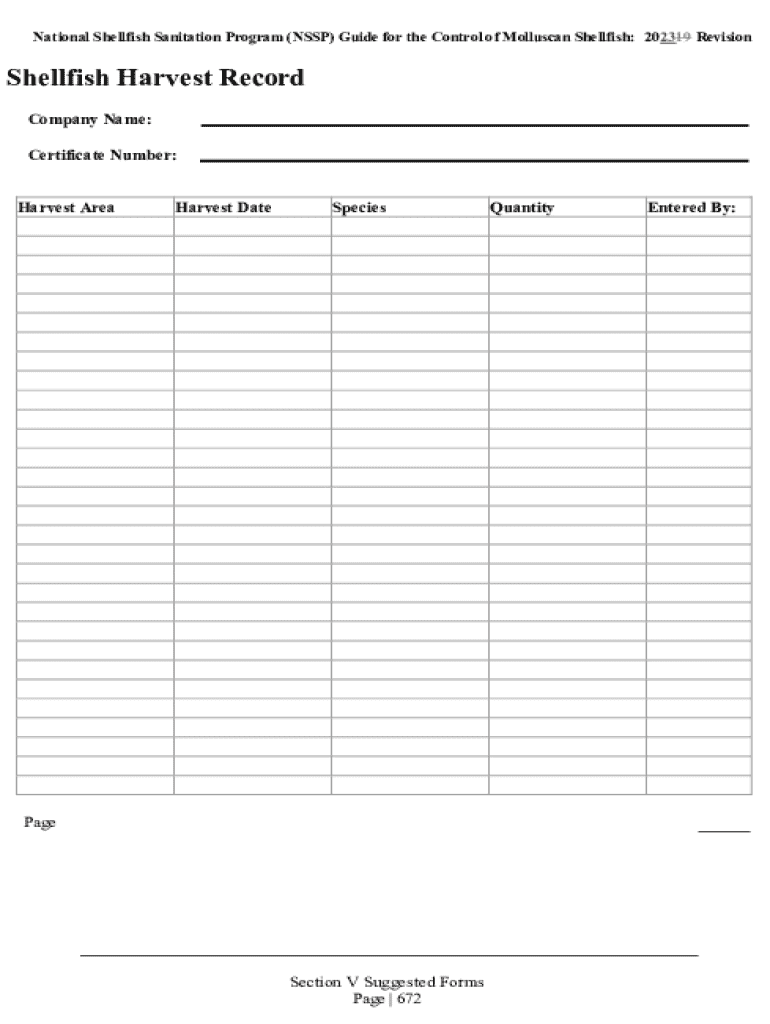
Document Preparation: Gather essential information such as company name, certificate number, and details of the harvest area.
-
Data Entry Compliance: Accurately complete the shellfish harvest record, including the date, species, and quantity.
-
Certification Verification: Ensure your certificate is current and valid, reflecting your compliance status.
-
Guideline Implementation: Regularly apply the guidelines during the harvesting process to ensure sanitation standards are met.
Legal Use of the NSSP Guide
The NSSP Guide acts as the legal framework for shellfish operations, helping to fulfill federal and state requirements. Adhering to this guide is not optional; ignoring these protocols can lead to severe legal consequences, including fines or shutdowns for non-compliance. It is essential to understand legal obligations and integrate them into daily operations.
Key Elements of the NSSP Guide
- Shellfish Harvest Record: Critical for tracking and traceability.
- Certification & Licensing: Must be up to date to operate legally.
- Sanitation Standards: Parameters for water quality and handling practices.
- Monitoring & Reporting: Regular inspections and reports as required.
State-Specific Rules for the NSSP Guide
Each state might interpret the guidelines slightly differently, emphasizing specific local conditions. It is crucial for operators to engage with state authorities to understand unique local regulations, which can affect operating licenses and area-specific compliance measures.
Important Terms Related to the NSSP Guide
- Molluscan Shellfish: Includes all shell-bearing mollusks like clams, oysters, and mussels.
- Certification Number: A unique identifier for compliant shellfish operations.
- Harvest Area: Geographic zone from which shellfish are collected, with specific environmental requirements.
- Traceability: Ability to track the origin and journey of shellfish products.
Examples of Using the NSSP Guide
Real-world applications of the NSSP Guide include its use in annual audits by regulatory bodies to evaluate a company's compliance. For instance, a shellfish processing company might reference the guide to implement better hygiene practices following a minor infraction in a previous inspection. Another example could involve a new start-up using the guide to develop training materials for employees about essential sanitation practices.
Penalties for Non-Compliance
Businesses failing to meet NSSP guidelines risk significant penalties. These can include financial fines, suspension of operations, or even permanent closure. Such penalties underscore the importance of strict adherence to the guide's protocols, emphasizing regular internal audits and employee training to continually meet standards.
Who Typically Uses the NSSP Guide
The NSSP Guide is primarily used by shellfish industry professionals, including harvesters, processors, and quality control personnel. Additionally, regulatory officials may refer to it during inspections and audits to determine compliance levels. Environmental scientists and safety consultants might also use the guide to advise shellfish businesses on aligning with current regulations.


Business Types That Benefit Most from the NSSP Guide
- Shellfish Harvesters: Ensure sustainable and sanitary collection.
- Processing Facilities: Maintain safety during processing and packaging.
- Quality Control Laboratories: Analyze sanitation standards and product safety.
- Traders and Exporters: Certify product safety for domestic and international markets.
Required Documents
Operational compliance requires maintaining detailed records, including harvest area maps, water quality tests, certification documents, and the shellfish harvest record. These documents facilitate traceability and verification processes during audits.
Digital vs. Paper Version
Increased reliance on digital platforms means that many businesses now prefer the digital version of the guide for ease of access and real-time updates. However, some operations may still use the paper version, especially in areas with limited digital infrastructure. Each format has its advantages, with digital platforms providing immediacy and paper versions offering a tangible reference.
Form Variants
The 202319 revision of the NSSP Guide does not exist in isolation; earlier versions provide historical context and highlight changes over time. Awareness of prior revisions helps operators understand the evolution of standards and rationales behind updates, ensuring full compliance with current expectations.