






Definition & Meaning
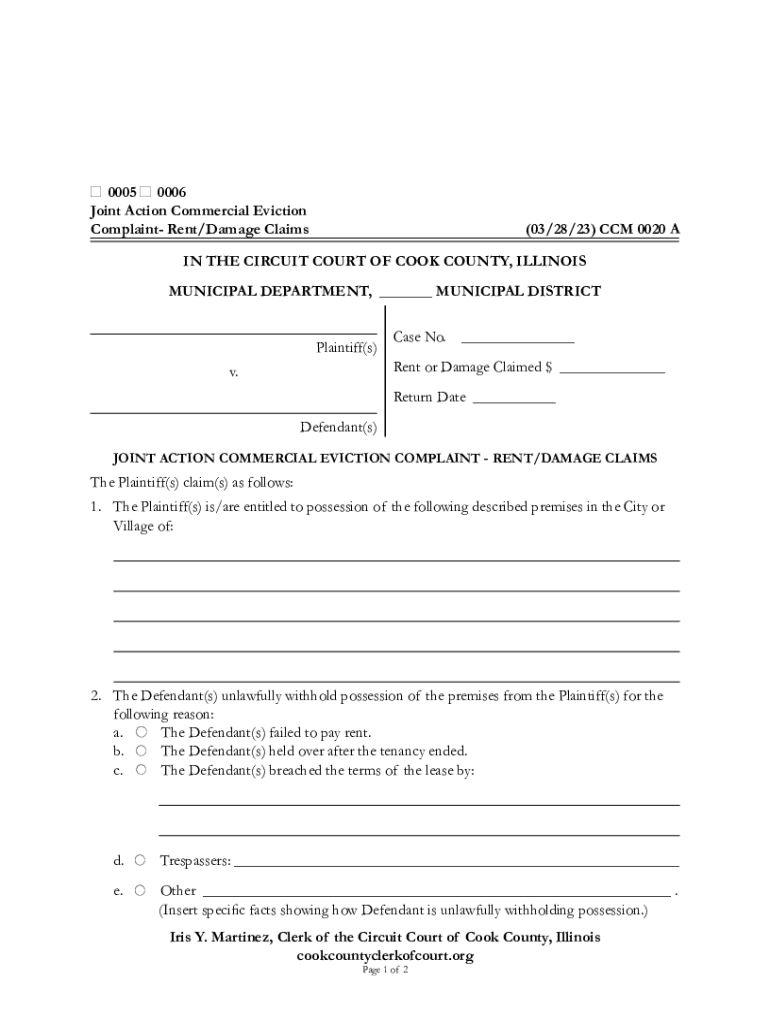
The "0 Joint Action Commercial Eviction Complaint" is a legal document typically filed in the Circuit Court of Cook County, Illinois. It serves as a formal complaint lodged by a landlord (plaintiff) against a tenant (defendant) regarding the unlawful possession of rental premises. This complaint arises mainly from non-payment of rent, overstaying after the lease has expired, or other breaches of the lease agreement. Its primary function is to seek judicial intervention to evict the tenant and recover any outstanding rent or related damages.
How to Use the 0 Joint Action Commercial Eviction Complaint
To effectively utilize the Joint Action Commercial Eviction Complaint, landlords should follow a systematic approach. First, the landlord should thoroughly review the lease agreement to pinpoint specific breaches. Legal counsel is often beneficial in ensuring that all procedural requirements are met, including the accuracy of details provided in the complaint. Once the form is prepared, it must be filed with the appropriate court, generally accompanied by a filing fee. Proper service of this complaint to the tenant is crucial, and it requires adherence to state-specific regulations concerning method and timing.
How to Obtain the 0 Joint Action Commercial Eviction Complaint
This form can usually be obtained from the Clerk’s office of the Circuit Court of Cook County or their official website. Accessing it online allows individuals to fill it out digitally, which can streamline any subsequent edits or submissions. For those preferring physical copies, visiting the local courthouse remains an option. It's critical to ensure the form is the latest version, as procedural updates might render older forms obsolete for court proceedings.
Steps to Complete the 0 Joint Action Commercial Eviction Complaint
Completion of the eviction complaint involves several key steps:
- Filling Out Applicant Information: Clearly input the landlord’s details, including name, address, and contact information.
- Tenant Information: Accurately capture the tenant’s name and current address.
- Property Details: Specify the location of the rental property, ensuring that any identifiers like unit numbers are correct.
- Reason for Eviction: Detail the grounds for eviction, such as non-payment or lease violation, including dates and relevant background.
- Signature and Notarization: Most jurisdictions require the complaint to be signed in the presence of a notary public to validate the submission.
Key Elements of the 0 Joint Action Commercial Eviction Complaint
This legal form consists of several critical components:
- Plaintiff and Defendant Identification: Clearly defines both parties involved.
- Lease Agreement Details: Provides context by summarizing the lease terms and the nature of the breach.
- Supporting Documentation: Includes rent payment history, communication records, and previous notices that illustrate the grounds for the complaint.
- Relief Sought: Specifies what the plaintiff is asking the court to grant, primarily eviction and financial compensation related to unpaid rent.
Legal Use of the 0 Joint Action Commercial Eviction Complaint
The legal use of this complaint involves initiation of court proceedings to evict a tenant. It must strictly comply with the local jurisdiction’s rules on landlord-tenant disputes. An improperly filed complaint can lead to dismissal, additional costs, and an inability to evict the tenant. Consulting with a property lawyer is often advisable to ensure all submissions meet legal standards and maximize the likelihood of a favorable outcome.
State-Specific Rules for the 0 Joint Action Commercial Eviction Complaint
For use in Illinois, particularly in Cook County, several state-specific rules apply:
- Notice Requirements: Tenants must be provided with adequate notice regarding lease violations before filing the complaint.
- Review of Local Ordinances: Some areas might have additional tenant protection laws that modify eviction procedures.
- Filing Fees: These vary by county and are subject to change, requiring verification before submission.
Examples of Using the 0 Joint Action Commercial Eviction Complaint
Consider a landlord who has a commercial tenant failing to pay rent for six consecutive months. Filing the Joint Action Commercial Eviction Complaint becomes necessary to reclaim the owed money and regain possession of the property. In another example, if a tenant refuses to vacate despite lease termination, the landlord may rely on this complaint to legally expedite the removal process through court intervention.
Important Terms Related to the 0 Joint Action Commercial Eviction Complaint
- Breach of Lease: Failure by the tenant to adhere to terms set forth in the lease agreement.
- Unlawful Detainer: Legal term describing a tenant’s possession of property after the expiration of a lease.
- Summary Judgment: A legal move to quickly resolve a case without a full trial, often sought in clear-cut eviction cases.
By understanding and correctly applying the Joint Action Commercial Eviction Complaint, landlords can efficiently address tenant disputes and uphold their rights under the lease agreement.