






Definition and Purpose of Form 556
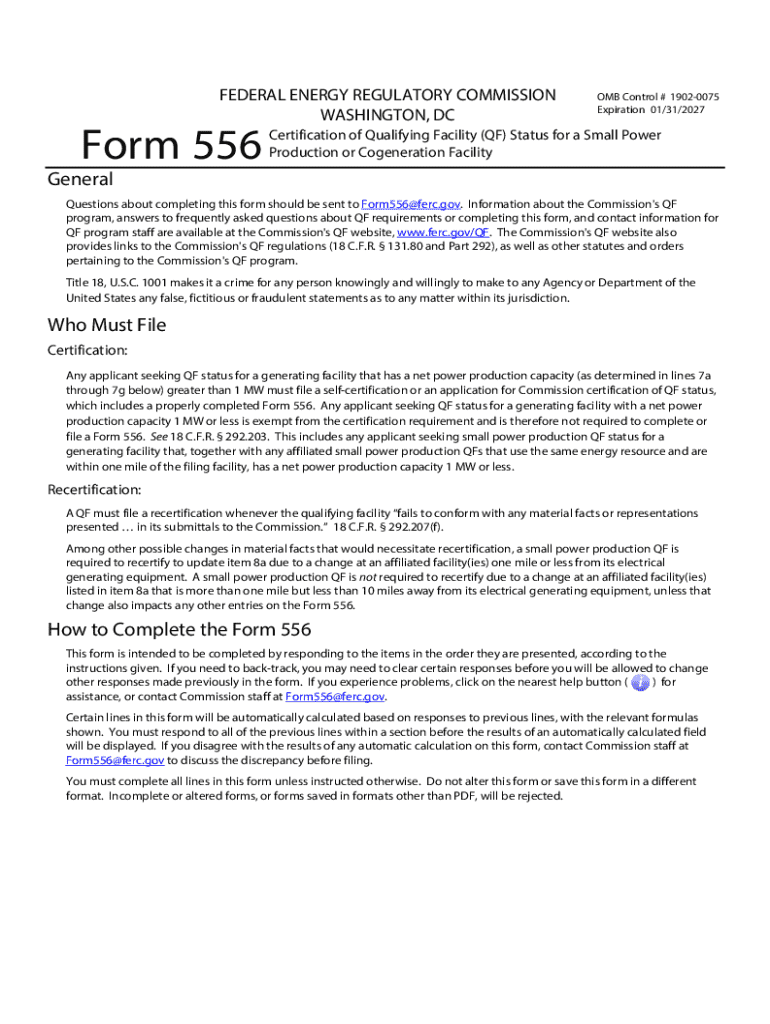
Form 556 by the Federal Energy Regulatory Commission is essential for small power production and cogeneration facilities seeking Qualifying Facility (QF) status. This form certifies facility eligibility, streamlining the self-certification or application process for QF designation. Understanding its core function and precise requirements offers clarity to applicants in navigating the complexities associated with energy facility certifications.
Key Features of Form 556:
- QF Status Application: Intended for facilities aiming to obtain or renew their QF status, allowing them to benefit from specific regulatory advantages.
- Energy Sector Focus: Addresses cogeneration and small power production facilities, emphasizing sustainable energy practices.
- Detailed Information Provision: Ensures applicants provide comprehensive data on ownership, energy inputs, and production capabilities.
How to Use Form 556
Using Form 556 involves understanding its various parts and filling out each section with accuracy. The form ensures applicants adhere to the Federal Energy Regulatory Commission standards by accurately documenting facility characteristics and operational standards.
Step-by-Step Process:
- Download the Form: Access the official form via the Federal Energy Regulatory Commission’s website.
- Gather Necessary Information: Collect detailed data about the facility, including energy production stats, ownership details, and operational methods.
- Complete Each Section: Fill out required sections meticulously to avoid rejections due to incomplete submission.
- Review for Accuracy: Double-check all entries to ensure they match the required standards and completion guidelines.
- Submit Accordingly: Submit through the appropriate channel, either electronically or by mail, ensuring adherence to submission deadlines.
Obtaining Form 556
Accessing Form 556 is straightforward, provided you know where to look and what resources are available. Having access to the most recent version ensures compliance with any regulatory changes.
Where to Find:
- Federal Energy Regulatory Commission Website: Form 556 is available for download directly from the commission’s site.
- Online Document Platforms: Websites such as DocHub offer tools to fill and sign Form 556 digitally.
Completing Form 556
Completing Form 556 can initially seem daunting, given its detailed requirements. However, clear understanding and organization help streamline this process.
Components to Complete:
- Facility Details Section: Provides exhaustive information about the facility’s location, ownership, and type.
- Operational Data: Enter specific details about energy sources, cogeneration conditions, and power production capabilities.
- Ownership History: Detail on any changes in the ownership structure or operational control.
Legal Use of Form 556
Ensuring the legal use of Form 556 involves compliance with federal regulations and understanding the permissions required for submission.
Compliance and Obligations:
- Adherence to the ESIGN Act: If submitting electronically, ensure the electronic signature is valid and compliant with legislative requirements.
- Protect Privileged Data: Safeguard sensitive information, ensuring it remains confidential unless explicit consent is given for disclosure.
Key Elements of Form 556
Understanding the core components of Form 556 is critical for applicants seeking QF status. Each section of the form serves to establish the qualifications of the applying facility.
Critical Sections Include:
- Facility Classification: Differentiates between cogeneration and small power production entities.
- Certification Requirements: Specifies what documentation or evidence is necessary to prove compliance with QF parameters.
- Input Fuel Analysis: Offers a detailed breakdown of the types and sources of energy inputs utilized by the facility.
Submission Methods for Form 556
Submitting Form 556 accurately is as crucial as filling it out. Several methods cater to different applicant preferences and ensure timely acceptance.
Available Submission Options:
- Electronic Submission: Ideal for applicants comfortable with online platforms, offering a quicker processing time.
- Manual Submission via Mail: Traditional method allowing for a physical paper trail.
Penalties for Non-Compliance
Ignoring compliance requirements can lead to significant repercussions, affecting a facility’s operations and its ability to obtain necessary statuses.
Consequences of Non-Compliance:
- Revocation of QF Status: Non-compliant facilities risk losing their qualifying privileges.
- Legal Implications: Potential fines or regulatory actions for breaching federal energy regulations.