






Definition and Purpose of TTB F 5110.75 Alcohol Fuel Plant Report
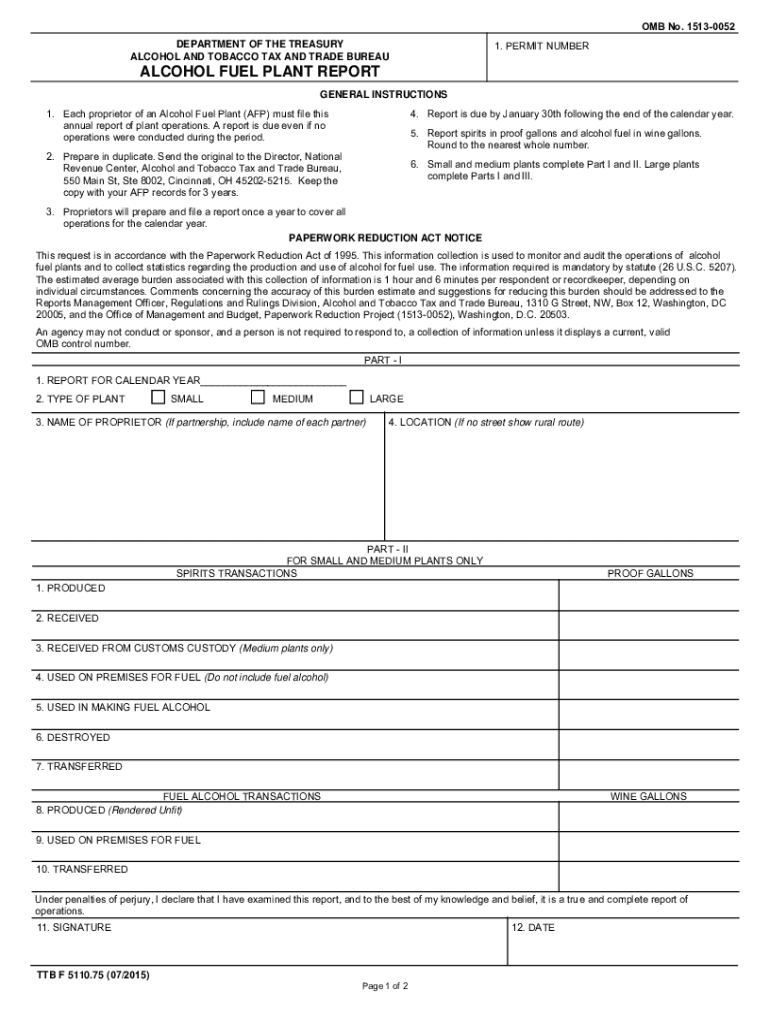
The TTB F 5110.75 Alcohol Fuel Plant Report, overseen by the Alcohol and Tobacco Tax and Trade Bureau (TTB), is a mandated annual filing for proprietors of Alcohol Fuel Plants (AFPs) within the United States. The primary objective of this report is to document the production and utilization of spirits and fuel alcohol, ensuring compliance with federal regulations. It plays a vital role in maintaining oversight of alcohol fuel production, tracking quantities produced and used, thereby promoting legal compliance and safety standards in the alcohol fuel industry.
How to Obtain the TTB F 5110.75 Report
To acquire the TTB F 5110.75 report, applicants can access it directly from the Alcohol and Tobacco Tax and Trade Bureau's official website. The form is usually available as a downloadable PDF that can be printed or filled out electronically. Applicants may also request a physical copy by contacting the TTB office directly, ensuring they adhere to guidelines that stipulate how the form is to be obtained and submitted.
Steps to Complete the TTB F 5110.75 Report
-
Complete Proprietor Details: Enter your Alcohol Fuel Plant's name, address, and registration number accurately.
-
Input Production Data: Record the quantities of spirits produced and used in the preceding year, breaking down data by month to ensure clarity and compliance with reporting requirements.
-
Identify Plant Size: Specify whether the plant is classified as small, medium, or large; this classification dictates certain specific reporting details.
-
Review and Submit: Carefully review all entries for accuracy, then sign and date the form. Submit either electronically as specified or by mail to the designated TTB address.
Who Typically Uses the TTB F 5110.75 Report
This report is primarily utilized by operators and proprietors of Alcohol Fuel Plants. These include small-scale biodiesel producers, commercial ethanol manufacturers, and large-industrial alcohol fuel producers. The users range from individual proprietorships to larger, corporate entities, all of whom must ensure compliance by submitting this comprehensive annual report.


Key Elements of the TTB F 5110.75 Report
- Proprietary Details: Information identifying the plant owner and location.
- Production Metrics: Detailed documentation of total production and consumption of alcohol fuels.
- Compliance and Classification: Statement of plant size affecting the scope of reporting obligations.
- Certification: Signature and date confirming the accuracy and completeness of the provided data.
Filing Deadlines and Important Dates
For the TTB F 5110.75 report, the critical compliance date is January 30th of each year, which aligns with the federal requirement for annual submissions. Regardless of operational status during the reporting year, this deadline ensures that all pertinent data is collected and filed in a timely fashion, with significant attention required to avoid penalties for late filings.
Legal Use and Compliance
Legal compliance with the reporting requirements of the TTB F 5110.75 is governed by the Alcohol and Tobacco Tax and Trade Bureau. The mandatory nature of this form is reinforced by compliance with the Paperwork Reduction Act. Ensuring correct filing underlines the proprietor's adherence to legal obligations concerning alcohol fuel production, with comprehensive guidelines demanding transparent and complete disclosure of all production-related statistics.
Penalties for Non-Compliance
Failure to submit the TTB F 5110.75 report by the prescribed deadline may result in substantial penalties. Non-compliance can lead to fines, increased scrutiny from federal agencies, and potential revocation of operating permits for Alcohol Fuel Plants. Maintaining awareness of these consequences underscores the importance of punctual and precise form submission.
By adhering to these guidelines and ensuring complete and timely submission of the TTB F 5110.75 report, alcohol fuel plant operators can effectively comply with federal regulatory requirements, thus promoting safe and lawful production practices in the industry.