






Definition & Meaning
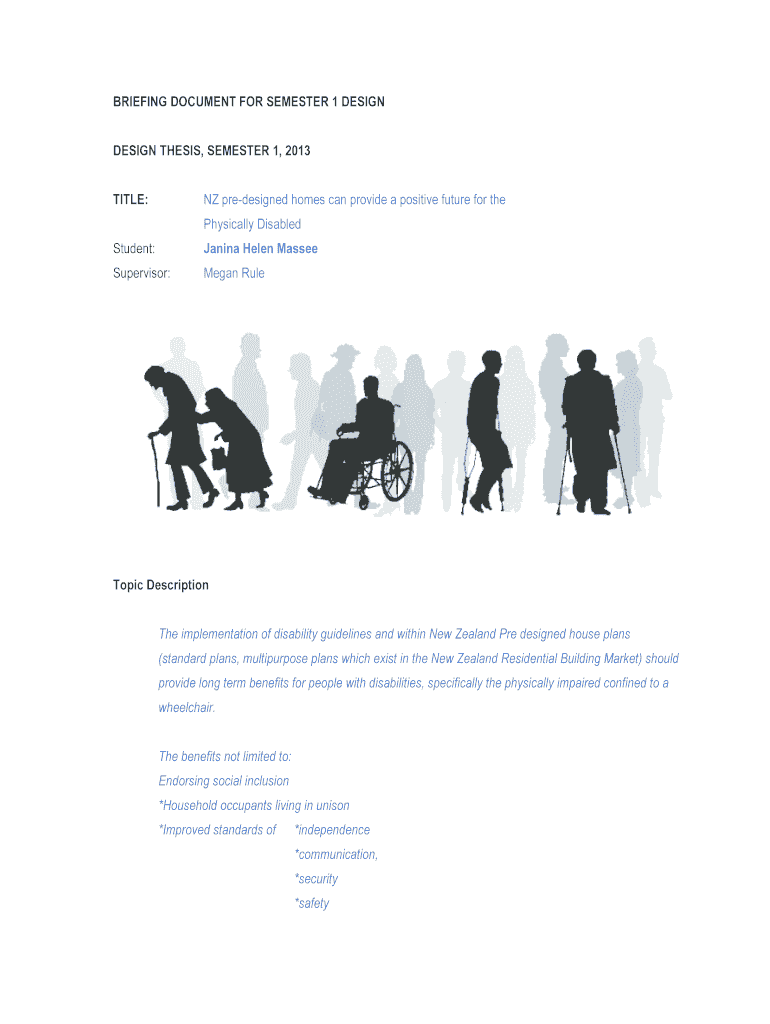
The form titled "NZ Predesigned Houses Can Provide a Positive Future - MArch(Prof) - marchprofthesis2013 soapsites cr" stems from a research-focused thesis based on architectural design principles. It explores how pre-designed homes in New Zealand can be adapted to meet the needs of individuals with physical disabilities, fostering an inclusive society. This academic work incorporates guidelines for accessible design into standardized housing plans, aiming to enhance independence and living conditions for wheelchair users in particular.
Key Elements of the Thesis
The thesis highlights several core components necessary for integrating accessibility into pre-designed homes. Key elements include:
- Inclusion of Universal Design Principles: Ensuring that designs are usable by everyone, regardless of ability or disability.
- Compliance with Accessibility Standards: Adhering to national and international guidelines for disability access.
- Cost-Effectiveness: Evaluating the economic feasibility of implementing these designs in the housing market.
- Customization Possibilities: Allowing for adjustments based on specific needs of residents.
- Community and Social Impact: How the designs promote social inclusion and interaction.
Important Terms Related to the Thesis
The field of accessibility in architecture involves several critical terms, such as:
- Universal Design: A design framework for creating products and environments accessible to all people.
- Barrier-Free Design: Removing obstacles to access to ensure usability for everyone.
- ADA Standards: Regulations complying with the Americans with Disabilities Act, critical for designs applied in the U.S.
- Accessible Routes: Pathways within homes that wheelchair users can navigate easily.
Steps to Implement Accessibility in Housing Design
- Conduct a Needs Assessment: Determine the specific accessibility needs of the target demographic.
- Develop Design Specifications: Create architectural plans incorporating accessibility standards and guidelines.
- Prototype Development: Construct a prototype of the housing design to test for practical functionality.
- Feedback and Revision: Collect user feedback, particularly from individuals with disabilities, to refine designs.
- Finalize Plans: Produce final design documents incorporating improvements based on feedback.
Why Focus on Accessibility in Pre-Designed Homes
Incorporating accessible design into pre-designed homes is crucial for several reasons:
- Social Equity: Equal access to housing is a basic human right.
- Demographic Changes: Increasing numbers of elderly and physically disabled individuals highlight the need for accessible housing.
- Market Demand: A housing market that values inclusivity can attract a broader clientele.
- Regulatory Compliance: Meeting legal requirements for accessibility, particularly in public housing sectors.
Examples of Implementing Accessible Design
Some real-world instances where accessible design principles have been applied include:
- Inclusive Housing Developments: Communities designed with features such as ramps, wide doorways, and lever handles.
- Custom Home Modifications: Tailoring existing home designs to meet individual accessibility needs without extensive renovation.
- Public Infrastructure Projects: Incorporating barrier-free elements in public buildings to improve accessibility for all citizens.
Legal and Ethical Considerations
The design and construction of accessible homes must address several legal and ethical aspects:
- Regulatory Compliance: Adhering to laws such as the ADA or New Zealand's Building Act.
- Ethical Responsibility: Ensuring that all residents have equal access to living environments that are safe and accommodating.
- Liability Issues: Avoiding potential legal challenges by complying with mandated accessibility standards during construction.
Software Compatibility and Use in Design Processes
The role of software in designing accessible homes includes:
- Architectural Software Applications: Tools like AutoCAD and Revit are essential for creating detailed architectural designs that incorporate accessibility features.
- Compatibility with Digital Signatures: Platforms like DocHub can be used for reviewing and signing design documents digitally, ensuring secure collaborations.
- Design Simulation Tools: Programs that simulate user movement within virtual environments to test accessibility and usability of spaces.
State-Specific Rules for Construction and Design
Each state may impose different accessibility requirements for home construction:
- Local Building Codes: Understanding variations in state and local regulations regarding accessible housing.
- Permit Requirements: Necessary paperwork for construction must often include accessibility compliance confirmations.
- Financial Incentives: Certain states offer grants and subsidies for constructing homes with enhanced accessibility features.