
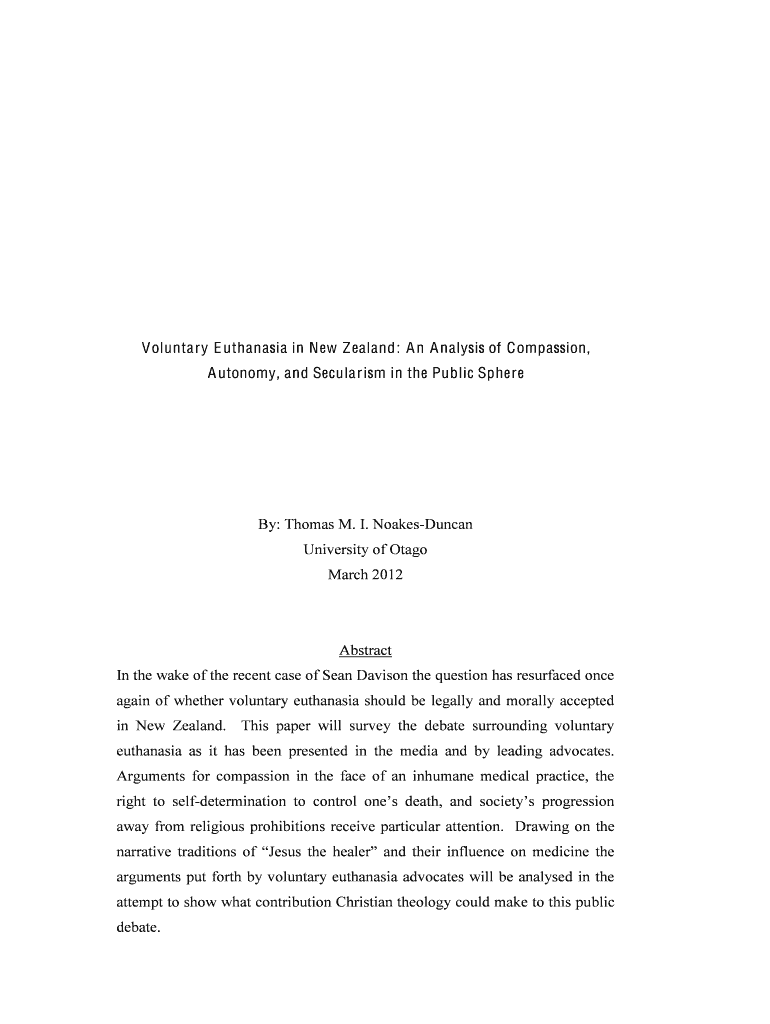







Definition & Meaning
Voluntary euthanasia in New Zealand explores the debate revolving around the ethical and moral implications of allowing individuals to end their lives in the face of unbearable suffering. It focuses on key themes such as compassion, autonomy, and secularism, examining whether individuals have the right to choose death over prolonged pain. This analysis underscores the ongoing discussion about the role of personal freedom and societal values in shaping end-of-life decisions.
Key Elements of the Analysis
The analysis of voluntary euthanasia in New Zealand hinges on several critical elements. These include the perspectives of both advocates and opponents of the practice, the influence of religious and secular viewpoints, and the potential social consequences of legalizing euthanasia. It considers whether euthanasia undermines societal care for vulnerable populations, like the elderly and terminally ill, and how it might impact the collective moral compass of society.
Legal Implications of Voluntary Euthanasia
The legal dimensions surrounding voluntary euthanasia often involve complex considerations of rights and responsibilities. The laws regulating euthanasia are designed to ensure that the choice to die is made freely, without coercion, and with full understanding of the implications. Legal frameworks seek to balance individual autonomy with ethical concerns, and in New Zealand, these regulations are still evolving, reflecting broader societal debates.
Ethical Considerations
Ethical considerations in voluntary euthanasia include discussions on the value of life and human dignity. This analysis questions whether modern secular views address these values adequately. While some argue that euthanasia demonstrates compassion by alleviating suffering, others contend that it contradicts the societal duty to protect life. These ethical discourses reveal the tension between personal choice and societal norms.
Influence of Christian Theology
Christian theology significantly affects perspectives on voluntary euthanasia. Many Christian denominations oppose euthanasia, viewing it as contradictory to the sanctity of life. This theological stance raises questions about the compatibility of religious beliefs with secular laws, especially in societies with diverse beliefs. The analysis delves into how religious views influence public policy and personal choices regarding end-of-life care.
Secularism and Voluntary Euthanasia
The role of secularism in the euthanasia debate revolves around the idea of separating religious influences from public policy. Secular arguments for euthanasia often focus on personal autonomy and the reduction of suffering. Evaluating whether secularism provides a comprehensive ethical framework for euthanasia is crucial, as it reflects broader questions about the authority of religious versus non-religious ethical systems.
Compassion in End-of-Life Decisions
Compassion is a pivotal theme in discussions of voluntary euthanasia. Proponents argue that allowing euthanasia is an act of mercy for those enduring insufferable pain, promoting human dignity at the end of life. This perspective emphasizes empathy as a guiding principle for making end-of-life decisions. Critics, however, worry that framing euthanasia as compassionate might overlook societal responsibilities to improve palliative care options.
Autonomy and Self-Determination
Autonomy is central to the arguments supporting voluntary euthanasia, emphasizing the individual's right to choose their fate. This analysis considers whether autonomy should have limits when it comes to irreversible decisions like euthanasia. Balancing self-determination with other ethical and societal considerations is a challenge addressed in ongoing debates about the legalization and practice of euthanasia.
Social Impact of Legalizing Euthanasia
Legalizing voluntary euthanasia may have significant social ramifications. The potential normalization of euthanasia could alter how society views life, death, and medical care. Concerns persist regarding whether legalization might pressure vulnerable individuals into choosing euthanasia. The analysis explores what societal shifts might occur, assessing whether these changes align with broader ethical and cultural norms.
Examining Case Studies and Real-World Scenarios
Real-world case studies of voluntary euthanasia provide valuable insights into its practical application and consequences. Examining situations where euthanasia was considered or enacted helps to illuminate the moral dilemmas faced by individuals, families, and healthcare providers. These case studies illustrate the complexities of euthanasia, offering a nuanced understanding of how theory translates into practice.




