







Definition & Meaning
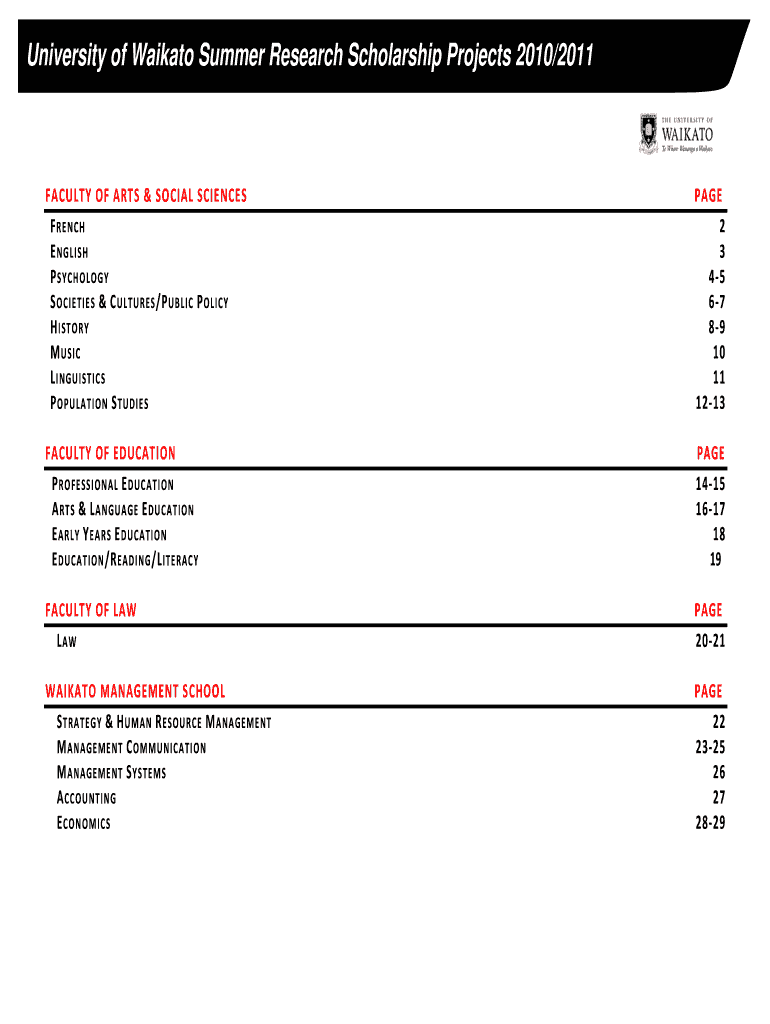
The University of Waikato Summer Research Scholarship Projects for the 2010/2011 academic year within the Faculty of Arts & Social Sciences is an initiative aimed at engaging students in hands-on research experiences. This program provides students with the opportunity to work directly with faculty mentors on diverse projects, enhancing their practical understanding of various subjects.
Key Elements of the Scholarship Projects
- Research Topics: Projects encompass a broad range of subjects including Pacific history, New Zealand literature, and environmental economics.
- Project Structure: Each includes a title, field of study, supervisor details, and a detailed abstract outlining objectives and expected outcomes.
- Participant Requirements: Students need to meet specific academic criteria and demonstrate a keen interest in research.
Steps to Complete the Scholarship Application
- Review Available Projects: Begin by thoroughly reviewing the list of available projects to identify areas of interest.
- Prepare Application Documents: Compile required documents such as your academic transcripts, a statement of interest, and any faculty endorsements.
- Submit Application: Ensure your application is submitted through the prescribed method, whether online or in-person, by the stipulated deadline.
- Participate in Interviews: If shortlisted, you may need to attend an interview with your potential faculty supervisor.
How to Obtain the Scholarship Projects Form
- University Website: Visit the University of Waikato's official website to access the application form directly from the Faculty of Arts section.
- Faculty Offices: Physical copies of the form can often be procured from faculty offices on campus.
- Student Portals: Registered students may also find the form available in their student account portals for easy download.
Who Typically Uses the Scholarship Projects
- Undergraduate Students: Primarily used by second or third-year undergraduates seeking to gain research experience.
- Faculty Supervisors: University faculty use these projects as a platform to mentor and collaborate with emerging scholars.
- Academic Advisors: Advisors play a crucial role in guiding students through the application process and ensuring alignment with academic goals.


Examples of Using the Scholarship for Academic Growth
- Personal Development: Participating students often report enhanced research skills and a deeper understanding of their chosen field.
- Career Advancement: Completing a research project can provide a competitive edge in both graduate applications and job markets.
- Network Building: Students create valuable connections with faculty and peers that can support future academic and professional endeavors.
Application Process & Approval Time
- Application Deadline: Check specific dates each academic year, but generally, applications are due several months before the start of the summer period.
- Review Period: Applications are usually reviewed by a faculty panel within four to six weeks.
- Notification of Outcome: Successful candidates are notified promptly to allow ample time for project preparations.
Eligibility Criteria
- Academic Standing: Students must meet minimum GPA requirements demonstrated by their academic transcripts.
- Program Enrollment: Applicants need to be enrolled in a program within the Faculty of Arts & Social Sciences.
- Research Interest: A demonstrated interest or relevant background in the proposed research area is often required.

Important Terms Related to Scholarship Projects
- Abstract: A brief summary of the research project detailing objectives and anticipated outcomes.
- Supervisor: A faculty member responsible for guiding the student through the research process.
- Scholarship Award: Financial and academic support provided to successfully selected applicants during the research period.
Required Documents for Application
- Academic Transcripts: Official records of the student's academic performance.
- Statement of Interest: A personal essay explaining the applicant's interest and suitability for the project.
- References: Letters of recommendation from academic mentors or faculty members.
Each of these sections provides a detailed understanding of the University of Waikato Summer Research Scholarship Projects for 2010/2011, focusing on delivering informative, applicable insights for prospective applicants.




