






Definition and Meaning of the Ages and Stages Questionnaire PDF
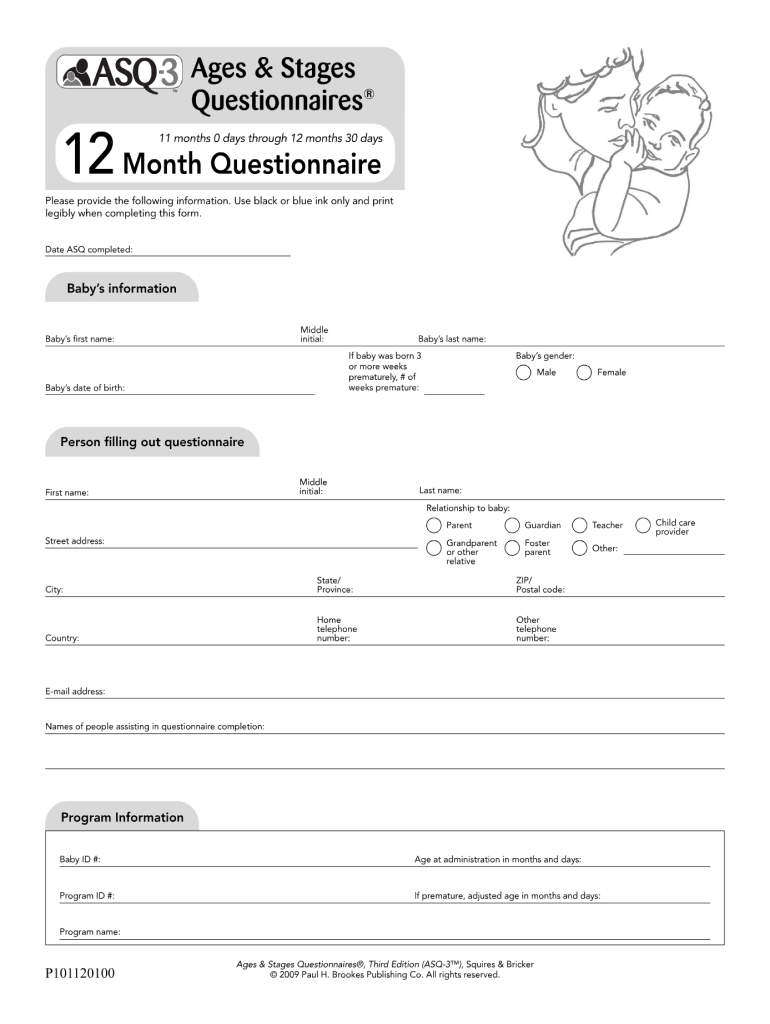
The Ages and Stages Questionnaire (ASQ) is a developmental screening tool that helps assess a child's growth and development in various domains. Typically used for children from one month to six years, the ASQ evaluates five key areas: communication, gross motor, fine motor, problem-solving, and personal-social skills. By identifying developmental milestones, this questionnaire aids parents, caregivers, and professionals in understanding a child's progress and addressing any concerns early on.
The ASQ PDF format provides a convenient way to access the questionnaire, allowing parents and educators to print it or fill it out digitally. This accessibility ensures that more families can utilize the tool effectively, fostering better developmental outcomes for children.
How to Obtain the Ages and Stages Questionnaire PDF
Accessing the Ages and Stages Questionnaire PDF is straightforward. The questionnaire is often available through several channels:
-
Official Websites: Many pediatric healthcare providers and community organizations provide downloadable ASQ forms directly on their websites. Checking reputable health resources or child development organizations can yield the PDF.
-
Educational Institutions: Some schools and early childhood programs offer the ASQ to parents. These institutions may have prepared copies available for distribution.
-
Local Health Departments: Government health departments often provide the ASQ as part of their early childhood services. Parents can contact local offices to request access to the PDF.
Once obtained, users can choose to fill out the questionnaire digitally or print it for manual completion.
Steps to Complete the Ages and Stages Questionnaire PDF
Completing the Ages and Stages Questionnaire PDF involves a structured approach to ensure accuracy. Here is a step-by-step guide to effectively complete the form:
-
Review the Instructions: Start by reading any introductory guidelines included with the ASQ PDF. This information can clarify how to interpret the questions and score the responses.
-
Gather Information: Have your child’s relevant age-related information on hand. The questionnaire is age-specific, so you will need to select the appropriate version based on your child’s age.
-
Fill Out the Questionnaire: The ASQ poses various developmental questions in a series of activity prompts. Respond to each item based on your child's abilities, selecting the option that best represents your child's level of functioning.
-
Score the Questionnaire: After completing the questionnaire, evaluate your answers against the scoring guide provided. Calculate the scores for each area to identify any sections that may require further attention.
-
Consult a Professional: If your scores indicate potential developmental delays or concerns, consider scheduling a follow-up with a pediatrician or child development expert for further assessment and guidance.
By meticulously following these steps, parents or caregivers can ensure that the assessment is thorough, accurate, and conducive to their child's developmental monitoring.
Who Typically Uses the Ages and Stages Questionnaire PDF
The Ages and Stages Questionnaire PDF is widely utilized by various groups involved in early childhood development. Key users include:
-
Parents and Caregivers: They often use the ASQ to assess their child’s development and identify areas that may need additional support or intervention.
-
Healthcare Professionals: Pediatricians and child development specialists frequently employ the ASQ during check-ups and evaluations to monitor a child's developmental trajectory.
-
Educators: Early childhood educators and childcare providers use the ASQ to tailor learning experiences and ensure that educational practices meet each child’s developmental needs.
-
Community Health Organizations: These entities leverage the ASQ as part of their outreach and support programs, providing resources that promote healthy child development across populations.
By understanding the diverse users of the ASQ, one can appreciate its significance as a tool not only for individual assessment but for community-wide developmental support.


Important Terms Related to the Ages and Stages Questionnaire PDF
Familiarity with key terminology improves understanding and effective use of the Ages and Stages Questionnaire PDF. Essential terms include:
-
Developmental Milestones: Specific skills or abilities that children typically achieve within a defined age range. Examples include walking by 15 months or speaking simple words by 12 months.
-
Screening: The process of assessing a child’s development through tools like the ASQ. Screening helps identify potential delays or areas needing further evaluation.
-
Scores: Numerical values assigned based on the responses within the ASQ. Scores provide insight into a child’s performance across different developmental domains.
-
Follow-Up: The process of seeking additional evaluations or interventions based on ASQ results, typically involving consultations with healthcare providers.
-
Age Range: The specific age intervals for which the ASQ is designed, ensuring that it is applied appropriately based on the child's developmental stage.
By understanding these terms, users of the Ages and Stages Questionnaire can navigate the tool more effectively and engage in meaningful discussions about child development with professionals.
Examples of Using the Ages and Stages Questionnaire PDF
The Ages and Stages Questionnaire PDF serves various purposes in real-life applications. Here are several practical examples:
-
Identifying Developmental Delays: A parent notices that their child is not meeting expected communication milestones. By completing the ASQ, they can quantify their concerns, leading to a pediatric evaluation and early intervention if necessary.
-
Tracking Growth Over Time: A childcare provider can administer the ASQ at multiple intervals (e.g., 12 months, 24 months, 36 months) to track the developmental progress of children in their care, adjusting activities based on the findings.
-
Guiding Educational Approaches: Educators can utilize ASQ results to inform individual learning plans. For instance, if a child displays fine motor delays, tailored activities like cutting and pasting can be incorporated into their curriculum.
-
Community Health Initiatives: A local health clinic integrates the ASQ into its services for families, providing materials during vaccination appointments to promote developmental monitoring among parents.
Utilizing the ASQ in these diverse contexts illustrates its versatility and significance in fostering healthy development in children.
Legal Use of the Ages and Stages Questionnaire PDF
When using the Ages and Stages Questionnaire PDF, understanding the legal aspects ensures responsible application and adherence to ethical standards:
-
Informed Consent: Parents or guardians should be informed about the purpose of the ASQ and its implications for their child’s development. Consent is critical before administration, especially in clinical settings.
-
Confidentiality: Data obtained from the ASQ should be kept secure and confidential, respecting the privacy rights of families. Information should only be shared on a need-to-know basis with relevant professionals.
-
Compliance with Regulations: Users must comply with local and state regulations surrounding child development assessments. This compliance typically involves adhering to guidelines set forth by pediatric associations and child welfare organizations.
-
Appropriate Use: The ASQ should be used solely for its intended purpose: to screen and monitor child development. Misapplication, such as using it for unrelated assessments, could lead to inappropriate outcomes.
By understanding these legal considerations, professionals and caregivers can ensure that the Ages and Stages Questionnaire is used appropriately, protecting both the rights of the child and the integrity of the assessment process.