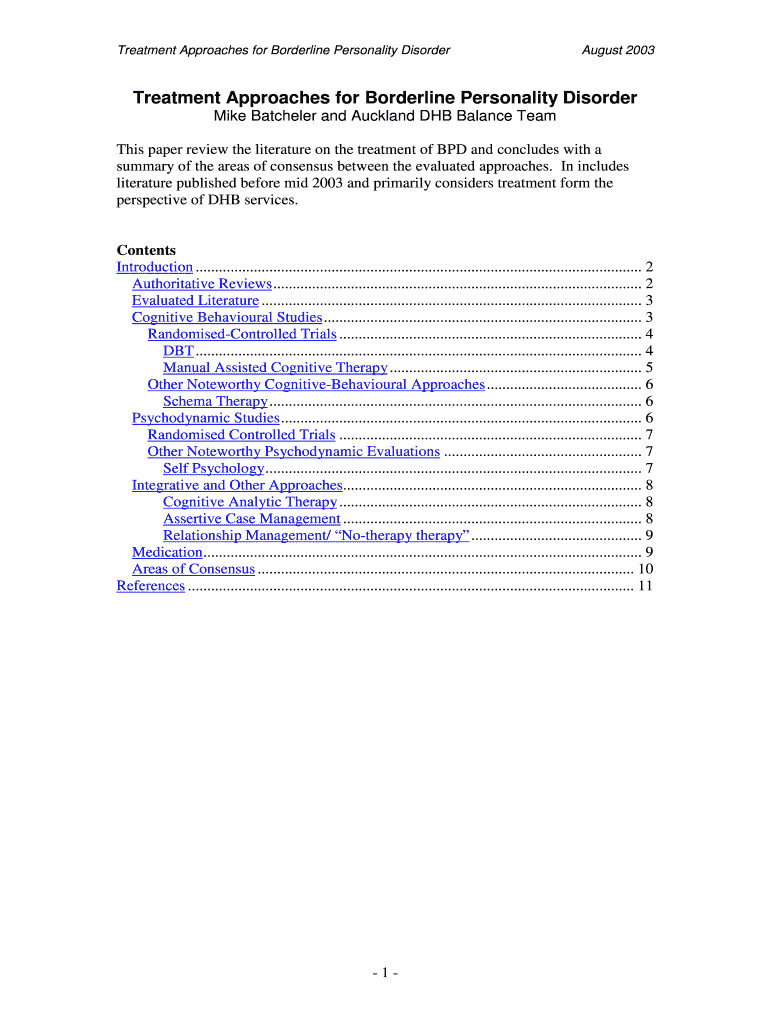







Definition and Meaning of Borderline Personality Disorder (BPD)
Borderline Personality Disorder (BPD) is a complex mental health condition characterized by persistent patterns of mood instability, interpersonal difficulties, impulsive behavior, and distorted self-image. Individuals with BPD often experience intense emotions and struggle with regulating them, which can lead to challenges in maintaining stable relationships and achieving personal or professional goals. The disorder is also associated with co-morbidities such as depression, anxiety, and substance abuse disorders, adding further layers of complexity to diagnosis and treatment.
Key Elements of Treatment Approaches for BPD
There are various treatment approaches for managing Borderline Personality Disorder, notably psychotherapeutic techniques. Dialectical Behavior Therapy (DBT) stands out as the most extensively researched and effective therapy, incorporating mindfulness, distress tolerance, emotion regulation, and interpersonal effectiveness skills. Other noteworthy approaches include schema therapy, which targets maladaptive thought patterns, and psychodynamic therapies focusing on the unconscious processes influencing behavior. Pharmacotherapy is often used as a supplemental treatment to address symptoms like mood swings and impulsivity, although it should not replace psychotherapy as the primary treatment method.
Steps to Complete the Treatment Plan for BPD
- Assessment: Conduct a comprehensive assessment to confirm the BPD diagnosis and evaluate any co-morbid conditions.
- Treatment Agreement: Develop a treatment agreement outlining goals, expectations, and responsibilities for both the patient and therapist.
- Therapy Selection: Choose an appropriate psychotherapeutic approach—most commonly DBT—based on individual needs and treatment goals.
- Medication Management: If needed, incorporate pharmacotherapy to manage symptoms under the guidance of a psychiatrist.
- Monitoring Progress: Regularly monitor the patient's progress through consistent therapy sessions and adjust the treatment plan as necessary.
- Crisis Management: Establish a crisis management plan to address potential self-harming behaviors or emotional crises.
- Ongoing Support: Provide ongoing support and resources, including support groups or family therapy, to reinforce the therapeutic process.
Implementation Examples for BPD Treatment Approaches
Real-life scenarios of BPD treatment highlight the flexibility and adaptability required to meet individual needs. For instance, a young adult with severe mood instability may benefit significantly from DBT's structured skill-building, while someone with deep-seated belief patterns might find schema therapy more effective. Case studies frequently illustrate the combination of therapies and the gradual improvement in emotion regulation and social interactions over time, underscoring the importance of a personalized approach.
Important Terms Related to BPD Treatment
- Dialectical Behavior Therapy (DBT): A cognitive-behavioral approach that focuses on skill-building in four key areas to manage intense emotions and reduce self-destructive behaviors.
- Schema Therapy: A therapy that identifies and transforms deeply ingrained beliefs and behavioral patterns.
- Psychodynamic Therapy: Focuses on uncovering unconscious processes that impact current behavior.
- Pharmacotherapy: Use of medications to alleviate specific symptoms such as depression or anxiety.
Digital vs. Paper Version of Treatment Documentation
Digital documentation of a BPD treatment plan can enhance accessibility and convenience, allowing patients and therapists to share information seamlessly. Platforms like DocHub can be employed to maintain secure digital records of treatment agreements, progress notes, and therapy sessions. The ability to annotate and update documents in real time ensures that the treatment plan remains dynamic and responsive to changes in the patient's condition.
Legal Considerations in BPD Treatment
Adhering to legal and ethical standards is crucial in the treatment of BPD. Confidentiality and patient consent must be maintained at all stages of treatment. Therapists need to adhere to guidelines set by professional organizations, such as the American Psychological Association, and comply with legal requirements like HIPAA for patient privacy. Documenting informed consent, treatment plans, and any agreed-upon crisis management strategies are essential legal steps.
Software Compatibility for Managing Treatment Documentation
Platforms like DocHub offer compatibility with various file formats, ensuring that treatment-related documents can be easily integrated into existing workflows. Compatibility with tools like Google Workspace allows for seamless collaboration and storage. This integration is especially beneficial for therapists working in team settings, ensuring that all contributors are updated with the latest treatment plans without format conversion issues.
Why Use Document Tools for BPD Treatment Plans
Document tools like DocHub provide a structured way to manage BPD treatment plans, offering features that streamline creation, editing, and sharing. For example, fillable forms allow for easy data entry and updates. The ability to control permissions enhances collaboration between healthcare providers while maintaining patient confidentiality. This level of document management supports the complex, evolving nature of BPD treatment, facilitating continuity of care and comprehensive record-keeping.