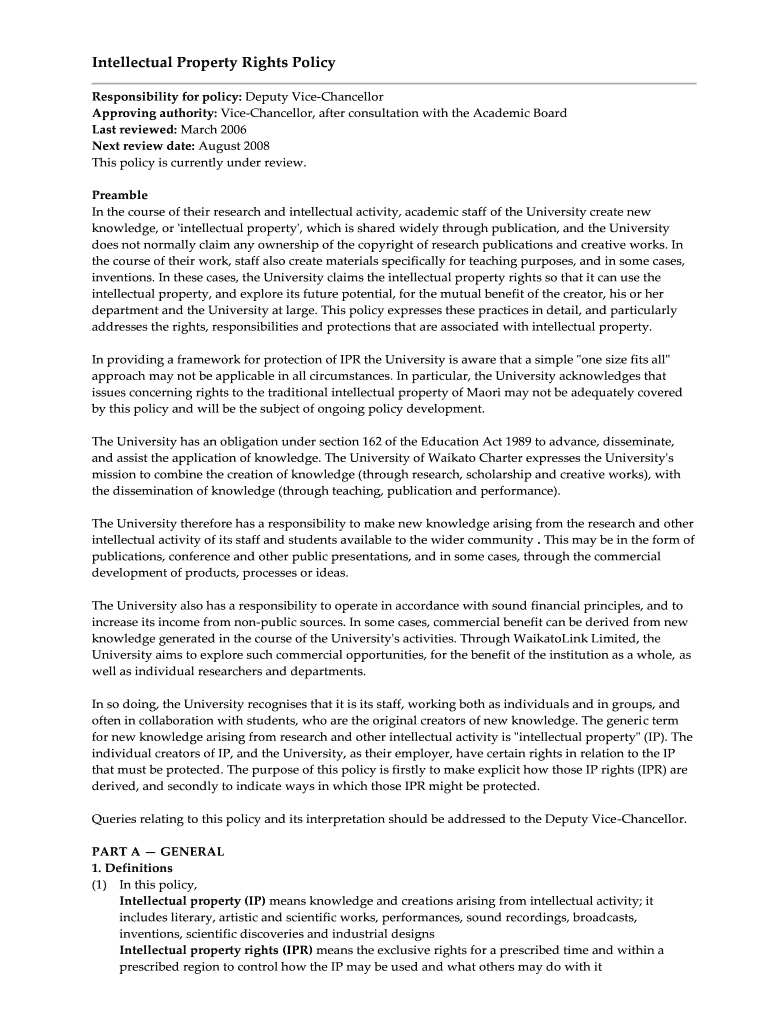







Definition & Meaning
The Intellectual Property Rights Policy at Waikato University is a comprehensive framework that governs the ownership and management of intellectual property (IP) within the academic environment. It is designed to protect the rights of those involved in creating original works, innovations, and research. The policy clarifies ownership rights among faculty, students, and visiting researchers, ensuring that while the university maintains rights over certain creations, the creators are equally acknowledged and protected.
Key Aspects of IP Rights
- University Ownership: The university claims ownership over teaching materials and inventions developed through university resources.
- Creator Rights: Individuals retain rights over research publications, aligning with academic freedom.
- Commercial Interests: Encourages the commercialization of inventions through affiliated entities like WaikatoLink Limited.
How to Use the Intellectual Property Rights Policy - Waikato AC
Understanding how to navigate and utilize the Intellectual Property Rights Policy is vital for staff, students, and researchers. The policy serves as a guide for determining the ownership and proper handling of IP created within the institution.
Practical Usage Steps
- Review Ownership Clauses: Verify who holds ownership for specific creations or inventions.
- Consult with Legal Advisors: Seek legal advice regarding IP rights if entering into collaboration or commercialization agreements.
- Engage with WaikatoLink: Use the university's technology transfer office for assistance in IP commercialization.
Steps to Complete the Intellectual Property Rights Policy - Waikato AC
Completing the obligations under the Intellectual Property Rights Policy requires a clear understanding of the necessary procedures. This section outlines the steps required for fulfilling IP-related processes.
Detailed Process
- Identify IP Creation: Determine if an invention or work falls under IP.
- Submit Disclosure: Complete and submit an IP disclosure form to the relevant university office.
- Engage in Review: Participate in reviews or audits conducted by the IP management team.
- Seek Approvals: Obtain any necessary approvals before proceeding with commercialization.
Who Typically Uses the Intellectual Property Rights Policy - Waikato AC
The policy is primarily used by individuals and groups engaged in research and development, teaching, and collaborative projects within the university.


Common Users
- Faculty Members: Professors and lecturers creating educational content or engaging in research.
- Researchers: Individuals conducting studies, experiments, or technology development.
- Students: Those involved in research projects that might yield IP.
- Visiting Scholars: Guests conducting research under university auspices.

Important Terms Related to Intellectual Property Rights Policy - Waikato AC
Familiarity with specific terms is essential for understanding and navigating the policy effectively. Here are key terms relevant to the policy.
Glossary
- Intellectual Property (IP): Creations of the mind, such as inventions, literary and artistic works, specific research findings, etc.
- WaikatoLink Limited: The technology transfer arm that facilitates IP commercialization.
- Commercialization: The process of bringing a product or technology to the market for financial gain.
Legal Use of the Intellectual Property Rights Policy - Waikato AC
Complying with this policy ensures that the creation and use of IP conform to legal standards both within and outside the university setting.
Legal Considerations
- Regulatory Compliance: Ensure that all IP practices are in line with national and international IP laws.
- Agreement Adherence: Abide by the terms stipulated in agreements signed under the policy.
- Conflict Resolution: Follow designated processes for resolving IP disputes, ensuring fair and transparent outcomes.
Key Elements of the Intellectual Property Rights Policy - Waikato AC
Comprehension of the core components offers insights into how the policy protects and promotes IP innovations within the academic environment.
Fundamental Elements
- Rights Retention: Clear demarcation of rights retained by creators outside standard university-tasks.
- Revenue Sharing: Framework for how income from IP commercialization is shared among the creators and the university.
- Flexibility & Support: Offers support structures for promoting IP development and commercial interests effectively.
Examples of Using the Intellectual Property Rights Policy - Waikato AC
Practical examples illustrate how the policy might function in real-world scenarios within an academic setting.
Case Examples
- Research Publication: A professor publishes a research paper while retaining personal rights, aligning with academic principles.
- Invention Commercialization: A student invention is marketed through WaikatoLink, allowing both the university and the student to share commercialization benefits.
- Teaching Material Creation: A lecturer develops a new curriculum utilizing university resources, with the university claiming ownership.
Digital vs. Paper Version
Understanding the formats available for accessing and interacting with the policy is essential for compliance and convenience.
Format Comparison
- Digital Access: Allows users immediate and convenient access to the policy via the university's website or internal portals.
- Benefits: Easier updates, real-time access, and more environmentally friendly.
- Paper Version: Hard copy of the policy is available for reference, ensuring accessibility for those without internet access.
- Benefits: Tangible reference, useful in environments with limited digital access.
Who Issues the Form
The institution responsible for the creation and distribution of the Intellectual Property Rights Policy within Waikato University manages the dissemination of the policy.
Issuing Body
- Office of Intellectual Property and Commercialization: Tasked with developing, updating, and communicating the policy to all stakeholders, ensuring alignment with the university's strategic goals.