






Definition & Meaning
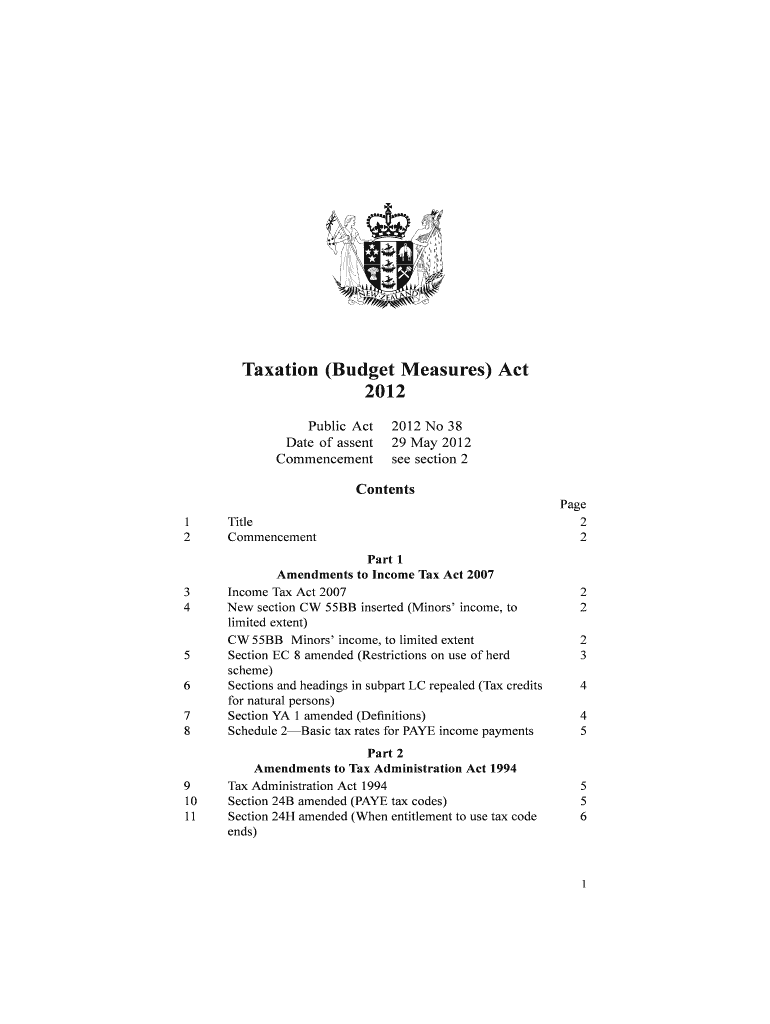
The Taxation (Budget Measures) Act is a legislative framework that modifies existing tax policies and regulations. Originally enacted by the Parliament of New Zealand in 2012, it amends previous laws like the Income Tax Act 2007 and the Tax Administration Act 1994. The Act focuses on changing rules related to minors' income, tax credit limitations for individuals, and updates to PAYE tax codes. These modifications aim to refine tax calculations and entitlements for individuals, affecting the taxation landscape starting from the 2012-13 tax year.
Key Elements of the Taxation (Budget Measures) Act
The Act’s amendments influence several critical components of tax law:
- Income for minors: Adjustments focus on taxation rules concerning minors, redefining how minors' income is treated under tax law.
- Tax credits: Restrictions have been placed on tax credits for natural persons, impacting eligibility and amounts.
- PAYE updates: Changes to PAYE tax codes are introduced to streamline tax deductions at the source.
- Definitions and Compliance: Clarifies or revises certain definitions within the existing taxation laws to ensure accuracy and compliance.
How to Use the Taxation (Budget Measures) Act
To effectively use the Act:
- Review the Specific Amendments: Understand which sections of existing laws are altered by this Act.
- Apply Changes to Your Tax Calculations: Ensure your tax computations reflect the amendments, especially if you are a tax professional advising clients.
- Update PAYE Codes: Businesses must adjust payroll systems to comply with the new PAYE codes.
- Seek Professional Guidance: Consulting with a tax advisor may be necessary to fully comprehend and apply these changes appropriately.
Legal Use of the Taxation (Budget Measures) Act
Compliance with the Act is mandatory:
- Business Compliance: Ensure your business is adhering to new employee PAYE code regulations.
- Individual Tax Compliance: Adjust personal tax filings to incorporate the changes in credits and allowances.
- Legal Penalties: Non-compliance can lead to penalties, enforcement actions, or scrutiny by tax authorities.
Who Typically Uses the Taxation (Budget Measures) Act
The Act is relevant for multiple stakeholders:
- Tax Professionals: CPAs and tax advisors use the Act to guide clients.
- Businesses: Corporations and small businesses need to alter payroll systems and compliance protocols.
- Individuals with Specific Circumstances: Particularly those affected by the changes in minors' income and tax credits.


Important Terms Related to the Taxation (Budget Measures) Act
Key terms include:
- Minor’s Income: Refers to income earned by individuals under a certain age as defined by tax law.
- PAYE (Pay As You Earn): A system where taxes are deducted at the source from employees’ paychecks.
- Tax Credits: Deductions from a taxpayer’s total tax liability.
- Natural Persons: A term referring to individual human beings rather than legal entities like corporations.
Examples of Using the Taxation (Budget Measures) Act
Example scenarios include:
- A Business Updating Payroll Systems: A company needs to revise its payroll software to accommodate updated PAYE codes.
- An Individual Assessing Tax Credits: A taxpayer reviews eligibility for credits in light of new restrictions.
- A Tax Advisor Guiding Clients: A tax consultant explains the implications of the Act to clients with specific tax situations, such as earning minor’s income.
Taxpayer Scenarios
Different groups impacted by the Act include:
- Self-employed Individuals: Adjustments to tax payments might be necessary due to changes in credit eligibility.
- Students or Minors: Young earners and their families may experience changes to how their income is taxed.
- Retired Individuals: Need to review tax credit eligibility in case they receive income from diverse sources.

State-Specific Rules for the Taxation (Budget Measures) Act
Understanding applicable state regulations is crucial:
- Local Amendments: Some amendments might be subject to state-specific interpretations aligning with federal provisions.
- Compliance Variations: Ensure compliance with both federal and state-level mandates where applicable.
Penalties for Non-Compliance
Failure to adhere to the Act can result in:
- Fines: Financial penalties for businesses and individuals alike.
- Increased Scrutiny: Non-compliant returns may be flagged for audits or further investigation.
- Legal Action: Repeated or significant violations may lead to legal consequences.
Filing Deadlines / Important Dates
Key timelines include:
- Annual Updates: Tax codes and regulations may be updated yearly, requiring constant vigilance.
- End-of-Fiscal Year Adjustments: Important for ensuring compliance before annual tax filings are due.
Examples from Real-Life Applications
In practice:
- Case Study: A Sole Proprietor Adjusts to New Credits: Navigating the revised tax credits to optimize liabilities.
- Small Business PAYE Overhaul: Implementing system changes to ensure compliance with new employee tax codes.
By thoroughly understanding the intricacies of the Taxation (Budget Measures) Act, stakeholders can ensure compliance and leverage the Act’s provisions effectively in various tax-related situations.