
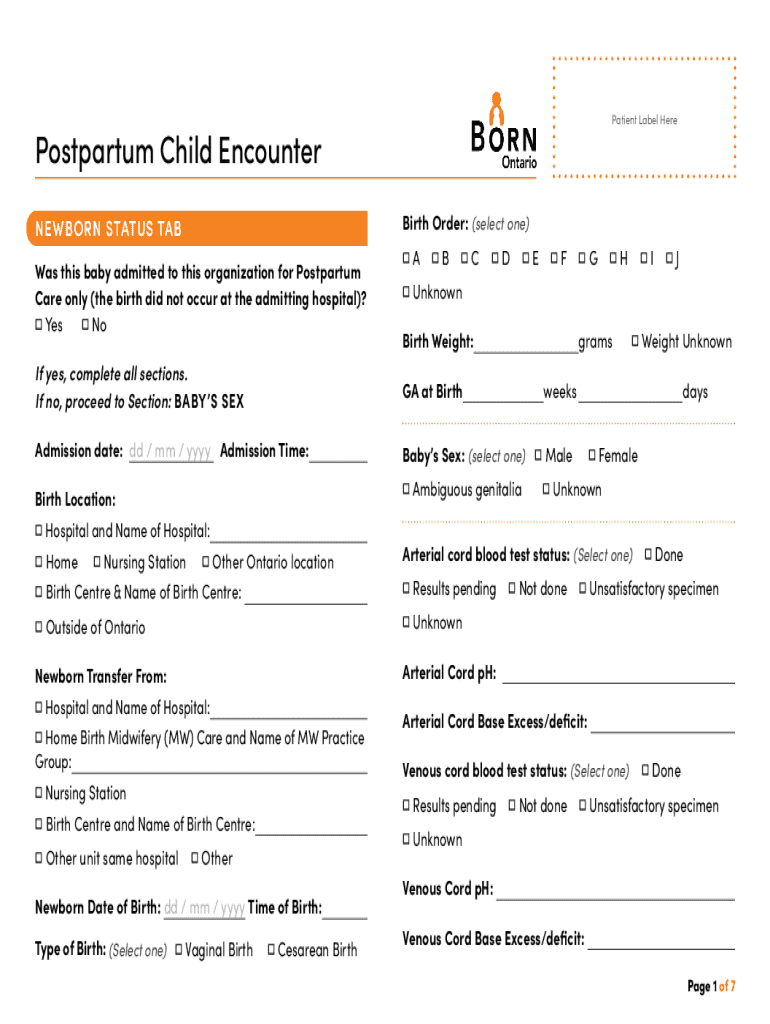







Definition & Purpose of the BORN Information System
The BORN Information System, or Better Outcomes Registry & Network, is a comprehensive health database designed to monitor and improve the quality of maternal and child healthcare services. It captures critical health data surrounding prenatal and postpartum care, primarily aimed at assisting healthcare providers in making informed decisions. This system's overarching goal is to promote better health outcomes for mothers and newborns by providing a centralized platform for data collection and analysis. By systematically organizing health information, BORN helps in tracking trends, identifying areas for improvement, and implementing policy changes where needed.
How to Use the BORN Information System
Using the BORN Information System begins with gaining authorized access, typically granted to healthcare providers involved in maternal and child health services. Once access is secured, users can navigate the system to input data related to prenatal visits, birth events, postpartum care, and child health check-ups. The system interface allows for the creation of detailed records for each patient encounter, ensuring comprehensive documentation. Healthcare professionals use these records to assess individual patient needs, plan appropriate interventions, and evaluate outcomes over time, contributing to a larger database that supports large-scale health studies and improvements.
Steps to Complete Entries in the BORN System
-
Log In to the System: Access the BORN system using personal login credentials provided to registered users.
-
Select Patient Profile: Navigate to the appropriate patient record, ensuring that all personal and demographic information is up-to-date.
-
Document Health Details: Record specific health details for each encounter, such as birth weight, gestational age, complications, and interventions provided.
-
Review and Confirm Entries: Double-check information for accuracy before submission. The system often provides prompts or checklists to ensure no critical details are omitted.
-
Submit and Save: Once verified, save the entries. The system will automatically update the central database, ensuring the information is available for further analysis and reporting.
Ensure all steps are meticulously followed to maintain data integrity and confidentiality within the BORN system.
Key Elements of the BORN Information System
The core components of the BORN Information System revolve around detailed data collection fields. These include:
- Patient Details: Demographics and identification numbers.
- Health Indicators: Vital signs, health conditions, and treatment outcomes.
- Event-Specific Information: Data relevant to specific health events like births or surgeries.
- Follow-Up Instructions: Recommendations for further care or future appointments.
- Consent Information: Documentation of any consents or permissions obtained from patients.
These elements enable the tracking of health patterns and outcomes, contributing to an enriched understanding of healthcare effectiveness.
Who Typically Uses the BORN Information System
The BORN Information System is primarily utilized by healthcare providers such as obstetricians, pediatricians, nurses, and midwives. Public health officials and researchers also access the system for data analysis and policy development. Additionally, hospital administrators may use BORN data to enhance operational efficiency and improve patient care standards. These users rely on the comprehensive data provided by the system to make informed clinical decisions, conduct research, and develop healthcare strategies.


Legal Use and Compliance of BORN System Access
Accessing and using the BORN Information System involves adhering to strict legal and confidentiality standards. Users must comply with health privacy laws that protect patient information, like the Health Insurance Portability and Accountability Act (HIPAA) in the United States. Compliance requires safeguarding data through secure logins, encrypted data transfers, and restricted access based on user role. Any misuse or unauthorized access can result in penalties, making it crucial for users to follow all prescribed protocols and updates regularly.
Software Compatibility with the BORN Information System
Integration with existing healthcare software systems is critical when using the BORN Information System. It typically operates synergistically with electronic health records (EHR) systems, allowing seamless data transfer and reduced manual entry errors. Compatibility with widely used platforms like TurboTax or QuickBooks is not a primary concern unless applicable in administrative functions related to billing or accounting within the healthcare setting. Healthcare providers often use specialized software that supports interoperability with BORN for smooth operations.
Examples of Using the BORN Information System
Consider a scenario where an obstetrician reviews a patient's prenatal visit within the BORN system. The physician can assess health trends across multiple appointments and fine-tune care plans based on aggregated data analysis. For public health research, epidemiologists might use BORN data to examine correlations between regional healthcare initiatives and improved birth outcomes. These real-world uses illustrate BORN's role in individual patient care and broader healthcare strategy development, highlighting its potential impact on public health initiatives.




