






Definition & Meaning
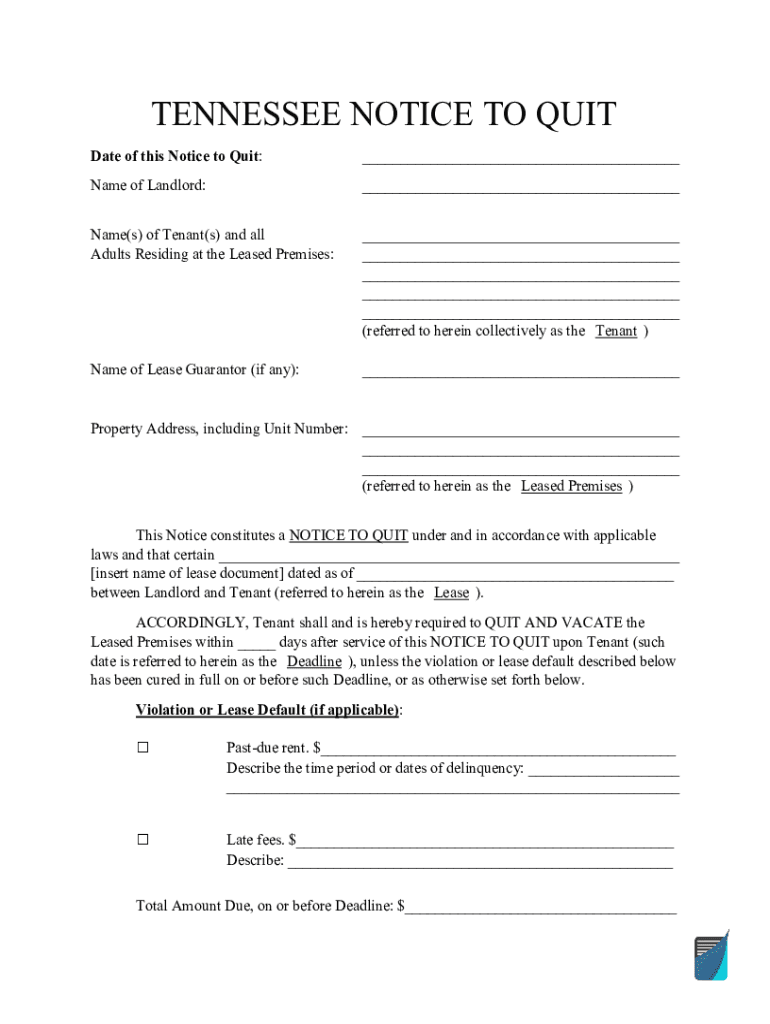
The "Tennessee Notice to Quit" serves as a formal legal document issued by a landlord to a tenant, indicating the need to vacate the leased premises due to specific violations of the lease agreement. This document is pivotal in initiating the eviction process when a tenant breaches terms like non-payment of rent or other defaults stipulated in the lease. The notice communicates essential information including the names of the landlord and tenants, the property address, specific violations, and the deadline for vacating. This document further warns tenants of potential legal repercussions should they fail to comply.
How to Use the Tennessee Notice to Quit
The Tennessee Notice to Quit is primarily used by landlords seeking to terminate a tenancy due to lease violations. Here’s a step-by-step guide on how to utilize this document effectively:
-
Identify the Violation: Determine the specific lease violation committed by the tenant, such as non-payment of rent or unauthorized alterations to the property.
-
Complete the Notice: Fill in the necessary details including landlord and tenant names, property address, and a clear description of the violation.
-
Specify the Deadline: Clearly state the date by which the tenant must vacate the property to comply with the notice.
-
Serve the Notice: Deliver the notice to the tenant through an appropriate method, such as personal delivery or certified mail, to ensure it is received.
-
Follow-Up Actions: If the tenant fails to vacate by the specified date, consult legal assistance to pursue an eviction proceeding.
Steps to Complete the Tennessee Notice to Quit - Formspal
Completing the Tennessee Notice to Quit requires attention to detail. Follow these steps:
-
Gather Required Information: Collect essential details including the tenant's name, address, specific lease violations, and any previous notices related to the current issue.
-
Enter Landlord’s Details: Provide the landlord’s full name and contact information to ensure there is no ambiguity about the notice's origin.
-
Detail the Violation: Clearly describe the specific violation or breach of the lease that has been committed by the tenant.
-
Set the Compliance Date: Clearly note the deadline by which the tenant must vacate the property.
-
Sign and Date the Notice: Ensure that the document is signed and dated by the landlord or an authorized representative to authenticate its legal standing.
-
Choose Delivery Method: Decide on the method of delivery, whether it be in-person, via mail, or otherwise, ensuring that proof of receipt can be documented.
Important Terms Related to the Tennessee Notice to Quit
Understanding the terminology within the Tennessee Notice to Quit can clarify the eviction process:
- Lease Violation: Breach of the terms agreed upon in the lease, prompting the need for a notice.
- Eviction: The legal process by which a landlord may repossess their property when a tenant breaches their lease agreement.
- Notice Period: The amount of time a tenant is given to rectify the violation or vacate the property after receiving the notice.
Legal Use of the Tennessee Notice to Quit
When issuing a Tennessee Notice to Quit, it is critical to align with state laws and regulations governing tenant-landlord relationships:
- Compliance with State Laws: Ensure all local laws are followed, particularly those related to notice periods and allowable reasons for eviction.
- Documentation: Maintain thorough records of all notices served to tenants for legal reference.
- Legal Advice: Seek legal counsel if unsure about any part of the notice process or if complications arise with tenant compliance.
Key Elements of the Tennessee Notice to Quit
The notice must encompass certain key elements to be effective and legally compliant:
- Identification Details: Names and addresses of tenants and landlords.
- Violation Description: A concise explanation of the tenant's lease violation.
- Notice Timeframe: The specified time within which the tenant must vacate the premises.
- Signature: The landlord’s or authorized representative’s signature indicating authorization.
Examples of Using the Tennessee Notice to Quit
Real-world scenarios where the Tennessee Notice to Quit might be employed include:
- Non-Payment of Rent: A tenant fails to pay rent for several months, warranting a notice.
- Property Damage: The tenant causes significant damage to the property, violating lease terms.
- Unauthorized Subletting: The tenant sublets the property without the landlord's consent, breaching the lease agreement.
State-Specific Rules for the Tennessee Notice to Quit
Tennessee has particular statutes that influence how a Notice to Quit is administered:
- Notice Period Regulations: Tennessee law specifies different notice periods depending on the type of violation, typically ranging from three to 30 days.
- Allowed Violations: Lease agreements in Tennessee must be constructed to comply with state laws governing permissible grounds for eviction.
These rules highlight the need for landlords to be informed and adhere strictly to state regulations to ensure the notice remains enforceable.