
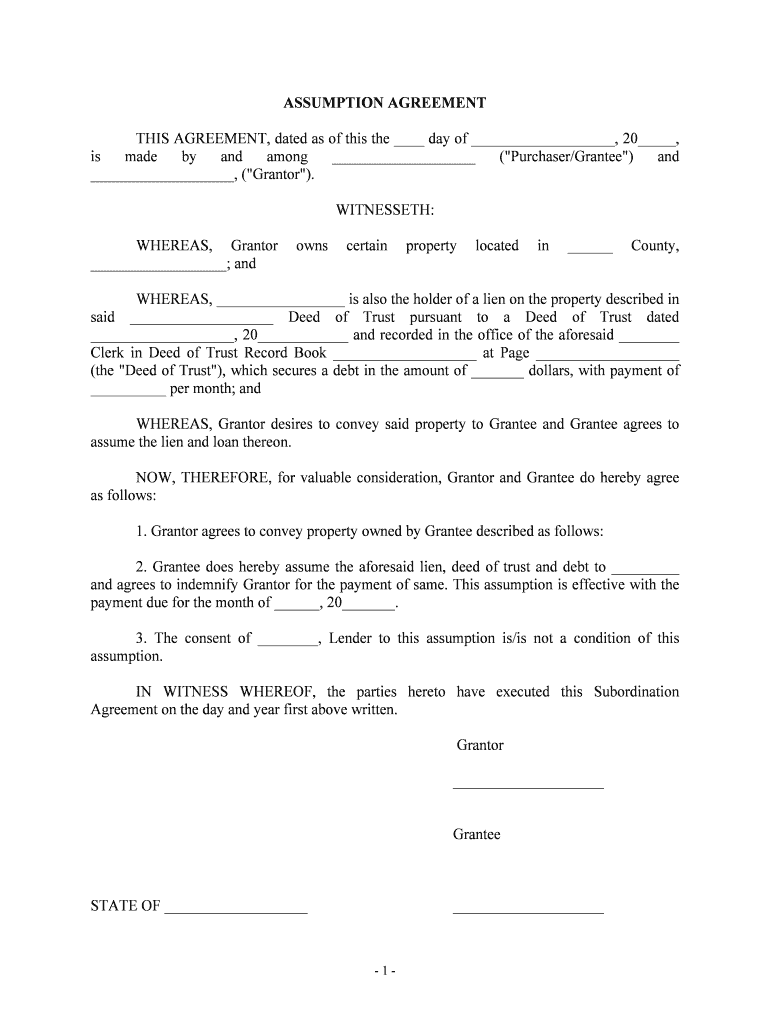







Definition and Meaning
An assumption agreement is a legal document where a purchaser, or grantee, agrees to take on the existing debt and responsibilities related to a piece of property from the original owner, or grantor. This agreement often coincides with a property transfer and is crucial for situations where the property has an existing lien or mortgage. The agreement ensures that the new owner assumes the payment obligations, thereby relieving the previous owner of these duties.
Key Elements
-
Parties Involved: Identifies the grantor and the grantee, both crucial in the agreement's execution.
-
Property Description: Clearly outlines the property being transferred, including its legal description to avoid disputes.
-
Lien and Debt Details: Lists and describes the existing debts or liens that the grantee will assume.
-
Indemnification Provisions: These clauses protect the grantor from liability related to the assumed obligations.
-
Lender Consent Requirements: Necessary lender approvals that might be required for the assumption to be valid.
Steps to Complete the Assumption Agreement
-
Gather Necessary Details: Ensure you have the relevant financial and legal information concerning the property, including loan details and current mortgage agreements.
-
Draft the Agreement Document: Use a legal template specific to assumption agreements to draft the document, including all necessary elements and clear language.
-
Review Legal Requirements: Each state might have specific legal provisions that need to be incorporated; consult legal advice for compliance.
-
Obtain Lender Consent: Contact the lender to notify them of your intent and obtain the necessary consent which might involve submitting the agreement for approval.
-
Sign and Notarize: Once terms are agreed upon by all parties, sign, and have the agreement notarized to ensure its legality.
Why Use an Assumption Agreement
Assumption agreements provide significant benefits in property transfers, particularly involving mortgages.
- Transfer of Debt Responsibility: Allows the seamless transfer of existing debts from seller to buyer.
- Potential Cost Savings: May allow the buyer to assume a favorable interest rate that might not be available in the current market.
- Change Ownership Without Refinance: This can expedite the process and reduce costs associated with refinancing.
Who Typically Uses the Assumption Agreement
- Property Buyers: Individuals purchasing a property who wish to take on the existing mortgage.
- Real Estate Investors: Looking to acquire properties without the need for new financing.
- Sellers with Attractive Loan Terms: Owners who want to leverage existing favorable mortgage rates to increase appeal to potential buyers.


Important Terms Related to Assumption Agreement
- Grantee: The party assuming the debt and receiving property ownership.
- Grantor: The party transferring the property and its associated debts.
- Deed of Trust: A legal document used to secure a loan on the property.
Examples of Using the Assumption Agreement
Consider a buyer purchasing a home with an existing mortgage that has a lower rate than current offerings. By using an assumption agreement, the buyer takes over the existing favorable loan terms without incurring the additional costs and time of securing a new mortgage.
State-Specific Rules for the Assumption Agreement
Assumption agreements might be subject to different requirements based on state laws. For instance, some states may require judicial approval, additional disclosures, or registration with local authorities. Consulting a legal expert familiar with local laws is advised to ensure all conditions are met.
Legal Use of the Assumption Agreement
In the U.S., assumption agreements align with several legal standards and are enforceable contracts. They must be drafted following applicable state laws and financial regulations, ensuring transparency and full disclosure to all involved parties.
Important Legal Considerations:
- Compliance with State Laws: Each state may impose different requirements, and adherence is necessary for the agreement to remain valid.
- Clarity in Terms and Conditions: It is essential that all terms are articulated clearly to prevent disputes.
- Verification of Lender Consent: Without lender approval, the agreement may be rendered null, impacting future property claims.
Examples of Using the Assumption Agreement
Real estate transactions across the U.S., such as family conveyances, corporate property acquisitions, or investment purchases, often use assumption agreements. In each case, the specific terms of the debt, the property descriptions, and the consents required will vary, highlighting the need for a tailor-made approach per transaction.




