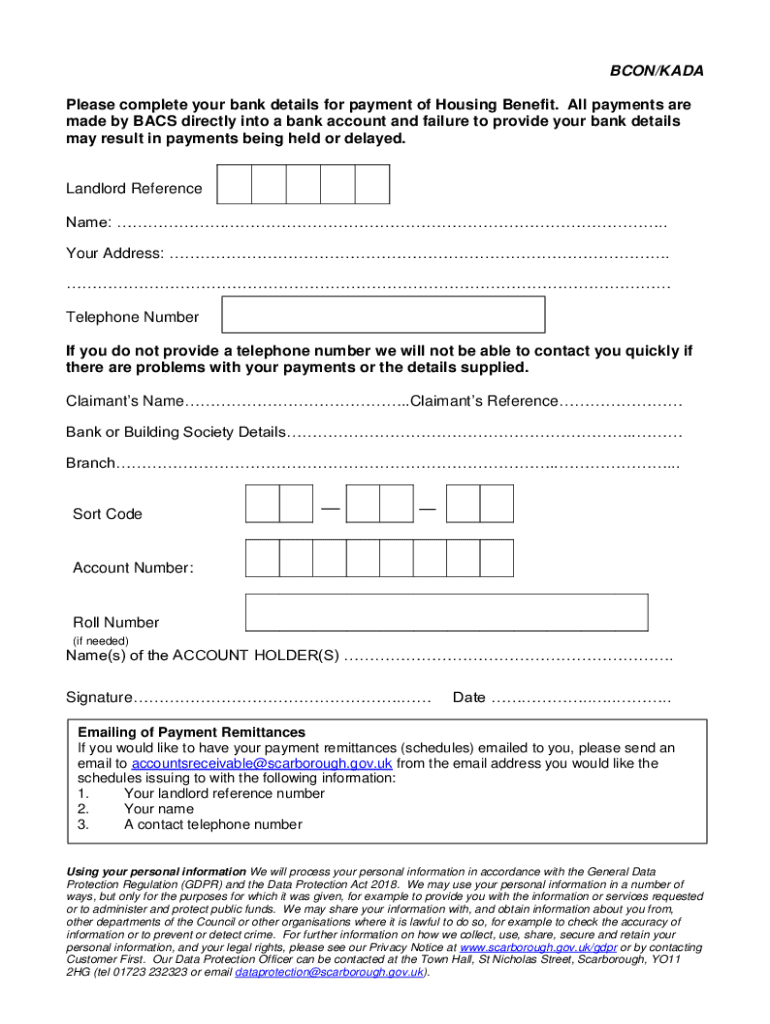







Definition and Purpose of the BACS Form
The BACS form is a standardized document used for processing electronic payments through the Banking Automated Clearing System (BACS) in the United States. This form is an essential tool for facilitating direct bank transfers, commonly used by businesses and individuals for payroll, supplier payments, and other direct financial transactions. The primary aim of the BACS form is to streamline the payment process, ensuring that funds are accurately and efficiently transferred between bank accounts.
Key Features of the BACS Form
- Bank Account Verification: Ensures that payments are directed to the correct account.
- Electronic Payment Processing: Enables the automated transfer of funds.
- Direct Deposit Capabilities: Useful for payroll and recurring payments.
- Error Reduction Mechanisms: Minimizes misdirected payments with strict information requirements.
How to Use the BACS Form
To effectively utilize a BACS form, individuals or businesses must ensure the accurate completion of several key fields that capture necessary banking details. The precise nature of the form allows for a seamless transfer of funds between accounts without manual intervention.
Steps to Complete the BACS Form
-
Gather Necessary Information: Before filling out the form, collect essential data such as the recipient's bank account number, sort code, and account name.
-
Input Bank Details: Enter the exact bank account information needed to facilitate transactions, ensuring no errors in numbers or spellings.
-
Specify Payment Instructions: Define the payment amount and frequency if the transaction is recurring.
-
Review and Confirm: Carefully review all information on the form to prevent errors that could result in payment delays or misdirection.
-
Submit the Form: Depending on the platform used, submit the form electronically or through another designated submission method.
Obtaining the BACS Form
Organizations and individuals can obtain the BACS form through various means. It is typically available from financial institutions, payroll service providers, or online platforms that facilitate electronic money transfers.
Methods to Acquire the Form
- Bank Websites: Many banks offer downloadable BACS form templates on their websites.
- Financial Software: Applications like QuickBooks or accounting software often include form templates.
- Payment Service Platforms: Platforms like DocHub may offer digital versions for easy access and integration.
Importance of Accurate Completion
The accuracy of the BACS form is crucial. Any errors could lead to significant issues such as delayed payments, misdirected funds, or non-compliance penalties. Correct completion ensures smooth financial operations and maintains trust between parties involved in a transaction.
Errors to Avoid
- Incorrect Account Details: Double-check all numbers and spelling.
- Missing Fields: Ensure that no mandatory fields are left blank.
- Improper Authorization: Obtain necessary signatures before submission.
Legal and Compliance Considerations
The legal framework surrounding the BACS form ensures secure and valid transactions. Adherence to these regulations is imperative to avoid penalties and ensure compliance with financial laws.
Key Compliance Aspects
- Data Protection: Follow regulations such as GDPR or equivalent U.S. data protection laws regarding personal information.
- Transaction Limits: Be aware of any financial limits imposed on BACS transactions.
- Tax Implications: Understand any tax reporting requirements associated with electronic payments.
Typical Users of the BACS Form
A wide range of users can benefit from the BACS form, particularly those involved in regular or high-volume financial transactions.
Common Users
- Businesses: Use BACS for payroll and supplier payments.
- Freelancers and Contractors: Prefer direct payments for simplicity and immediate fund access.
- Landlords: Collect rent payments electronically to streamline revenue collection.


Electronic vs. Paper BACS Form
While the traditional paper BACS form is still available, electronic versions provide greater convenience and enhanced security.
Advantages of Electronic Forms
- Faster Processing: Reduces the time required for fund transfers.
- Eco-Friendly: Eliminates the need for paper, supporting environmental sustainability.
- Security Enhancements: Includes encryption and other security protocols to protect sensitive information.
State-Specific Guidelines and Variations
Though the BACS system operates under a standardized set of national guidelines, some state-specific variations might apply, particularly concerning data privacy laws and financial compliance.
Areas of Difference
- Privacy Regulations: States may have unique requirements relating to personal data privacy.
- Transaction Caps: Some states might impose stricter limits on the amount transferable via BACS.
- Compliance Standards: Variation in state-level enforcement of financial regulations could impact usage.
By understanding and implementing these considerations, users can fully harness the benefits of the BACS form, enhancing efficiency and security in their financial transactions.