






Definition & Meaning
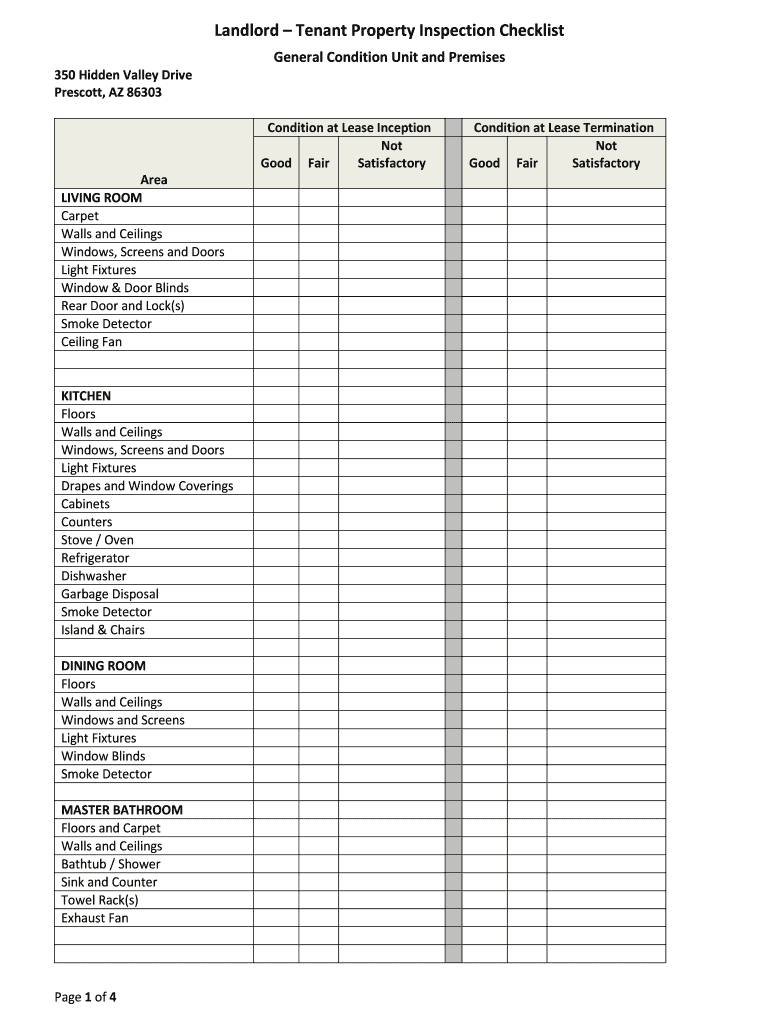
A landlord-tenant property inspection checklist is a vital document used by both landlords and tenants to assess the condition of a rental property at the beginning and end of a lease. This checklist itemizes various elements of the property, including structural components and appliances, to ensure that both parties have a shared understanding of the property's condition. This document helps in resolving disputes related to property damage or wear and tear during the tenancy. By documenting the state of key areas like living rooms, kitchens, bathrooms, and bedrooms, it provides an objective basis to evaluate what changes, if any, have occurred during a tenant's stay.
Key Elements of the Landlord-Tenant Property Inspection Checklist
Structural Components
The inspection checklist encompasses a range of structural elements, such as walls, ceilings, and floors. It assesses:
- Condition and integrity of surfaces.
- Presence of any cracks, stains, or damages.
- Windows and doors, focusing on functionality and security.
Appliances & Fixtures
The checklist includes an inventory of appliances and fixtures to verify their working condition:
- Kitchen appliances like refrigerators, stoves, and dishwashers.
- Bathroom fixtures including sinks, toilets, and showers.
- Heating and air conditioning systems for functionality.
Safety Features
Safety is a primary concern, with the checklist ensuring compliance with safety standards:
- Functionality of smoke detectors and carbon monoxide alarms.
- Condition and accessibility of fire extinguishers.
- Security features such as locks and alarm systems.
How to Use the Landlord-Tenant Property Inspection Checklist
Step-by-Step Guide
- Initial Walkthrough: Conduct a thorough walkthrough of the property using the checklist to document the initial state.
- Photographic Evidence: Capture photographs of key areas and items listed in the checklist for visual documentation.
- Tenant Acknowledgment: Have the tenant review and sign off on the checklist, confirming agreement with the recorded condition.
Mid-Tenancy Inspections
Periodic inspections ensure that the property remains in good condition during occupancy:
- Schedule regular checks using the checklist to monitor for maintenance issues.
- Address concerns promptly to prevent deterioration.
Legal Use of the Landlord-Tenant Property Inspection Checklist
The inspection checklist serves as a legal safeguard for both parties:
- Protects against unwarranted damage claims by providing clear evidence of the property's initial condition.
- Can be used in small claims courts as supporting documentation in disputes over security deposits.
- Helps in adhering to state regulations concerning rental property maintenance and tenant rights.
State-Specific Rules for the Landlord-Tenant Property Inspection Checklist
Variations Across States
While many aspects of the inspection checklist are standard, variations can exist based on state laws:
- Certain states mandate specific disclosures or additional documentation.
- Variations in safety requirements, such as those for smoke detectors or carbon monoxide alarms.
- Deadlines for conducting move-in and move-out inspections may differ.
Compliance Considerations
- Stay informed about state-specific legal requirements to ensure both landlord and tenant rights are protected.
- Consult with local legal experts or real estate professionals to understand regional differences.
Why You Should Use a Landlord-Tenant Property Inspection Checklist
Benefits to Landlords
- Ensures properties are maintained, reducing the risk of costly repairs.
- Provides a clear record to support recovery of security deposits for damages beyond normal wear and tear.
Benefits to Tenants
- Protects against unjust claims on the security deposit by documenting the property's condition upon move-in.
- Helps outline any existing issues the landlord agrees to address.
Steps to Complete the Landlord-Tenant Property Inspection Checklist
- Preparation: Gather necessary materials such as pen, checklist, and camera.
- Detailed Inspection: Walk through each section of the property, noting the condition of listed items.
- Record Findings: Document findings meticulously, indicating any pre-existing damage or issues.
- Tenant Collaboration: Review the checklist with the tenant, discussing any concerns or discrepancies.
- Final Agreement: Obtain signatures from both parties to acknowledge the checklist's accuracy.
Examples of Using the Landlord-Tenant Property Inspection Checklist
Sample Scenario
In a scenario where a tenant moves out, the checklist might show wear on carpets and chipped paint in certain areas. Using this documented evidence, the landlord can determine if these issues fall under normal wear or if they require deductions from the security deposit.
Case Study
A property management company employs checklists across multiple properties, standardizing their inspection process. This approach not only simplifies tracking maintenance needs but also reduces disputes with tenants by maintaining consistent records.