Definition & Purpose of the Blood Lead Testing Certificate
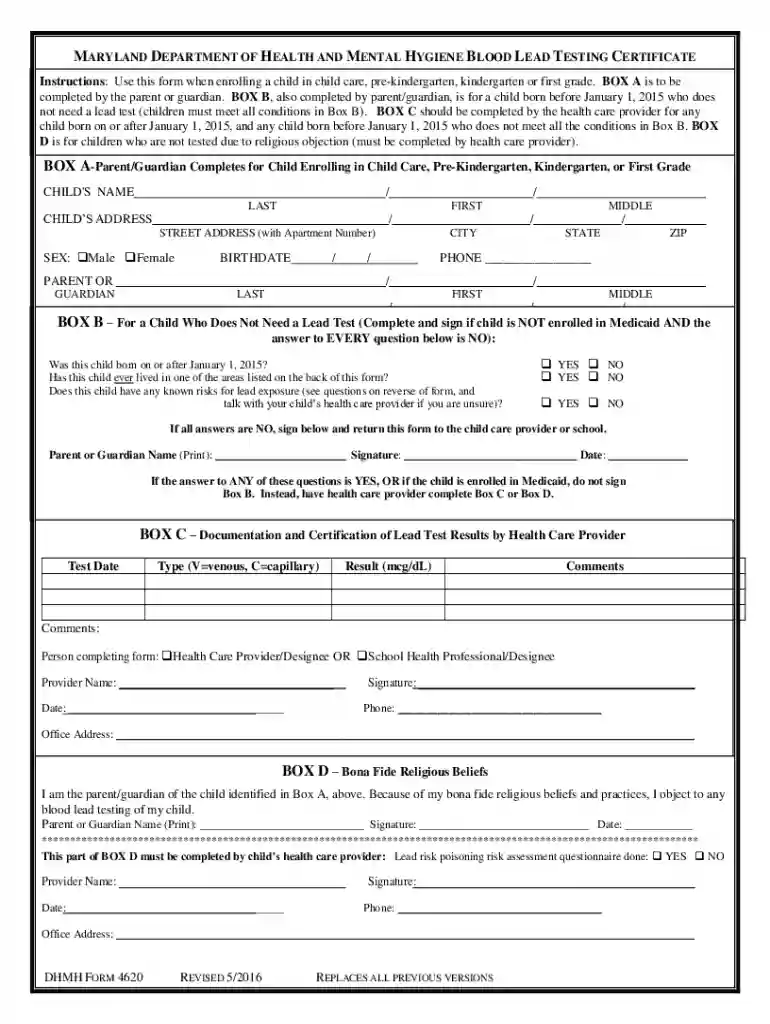
The Blood Lead Testing Certificate from the Maryland Department of Health and Mental Hygiene serves as an official record for enrolling children in child care or school settings. This document is crucial for verifying a child’s blood lead levels, ensuring compliance with public health standards. The aim is to protect children from the harmful effects of lead exposure, which is a known hazard, particularly in older U.S. housing.
Key Functions
- Verification of Lead Levels: Certifies the lead testing status of a child, essential for educational enrollment.
- Health Assessment Tool: Acts as a guide for assessing potential health risks associated with lead exposure.
- Regulatory Compliance: Ensures adherence to health regulations set by local authorities, crucial for public safety.
Steps to Complete the Blood Lead Testing Certificate
Completing the Blood Lead Testing Certificate requires adherence to specific instructions to ensure accuracy and validity.
Step-by-Step Process
- Parent/Guardian Information: Begin by filling out the child’s personal details, including full name, birthdate, and contact information.
- Testing Details: Record the date of the blood lead test and the corresponding results as provided by a certified healthcare professional.
- Certification by Healthcare Provider: Obtain the signature of a licensed healthcare provider who can verify the test results.
- Possible Exemptions: If applicable, note any exemptions such as religious beliefs that the family may claim, following the outlined guidelines.
Considerations
- Ensure all sections are complete and legible.
- Double-check the provider’s certification for authenticity.
- Be aware of the conditions under which testing might be exempted, including specific health thresholds.
How to Obtain the Blood Lead Testing Certificate
Acquiring the Blood Lead Testing Certificate is a vital step for parents and guardians.
Procedure
- Doctor’s Office Visit: Request the certificate during a routine child health examination, where lead testing will be conducted.
- Health Department: Contact the Maryland Department of Health for guidance or visit their official website for downloadable forms.
- School Requirement: Schools may often provide information packets detailing how to obtain and complete the certificate.
Helpful Tips
- Schedule tests well in advance to ensure timely submission to schools.
- Verify whether additional documentation from the health department is necessary if your child’s blood lead levels exceed certain thresholds.
Importance of the Blood Lead Testing Certificate
Understanding the significance of this certificate is crucial for safeguarding children’s health.
Health Implications
- Preventive Measure: Helps in early detection of lead exposure, enabling timely intervention.
- Public Health Compliance: Aligns with state health regulations, fostering a safer environment for children.
Societal Benefits
- Contributes to reducing lead-related health issues among children.
- Promotes awareness of environmental health risks in residential areas.
Primary Users
- Parents and Guardians: Responsible for initiating the testing process and maintaining accurate records.
- Schools and Childcare Providers: Use the certificate to validate health prerequisites for student enrollment.
- Healthcare Providers: Facilitate testing and certify results, playing a crucial role in the documentation process.
Contextual Use
- Utilized extensively in urban areas with older infrastructure, where the risk of lead exposure is higher.
- Required in regions identified by ZIP code as at high risk for lead exposure.
Legal Use of the Blood Lead Testing Certificate
Understanding the legal framework surrounding the Blood Lead Testing Certificate ensures compliance and promotes health security.
Legal Framework
- ESIGN Act Adherence: Certificates completed via electronic means must comply with electronic records laws to ensure validity.
- State Health Regulations: Submittal of the certificate fulfills legal requirements for school and childcare enrollment in Maryland.
Authorized Signatures
- Recognized signatures from licensed healthcare providers lend authenticity to the certificate, integral for compliance checks and balances.
Key Elements of the Blood Lead Testing Certificate
Breaking down the essential elements of the certificate reveals its comprehensive nature.
Principal Components
- Personal Information Section: Includes the child’s and guardian’s details for traceability and accountability.
- Test Results: Precise recording of the blood lead test results and dates, crucial for health assessments.
- Healthcare Provider’s Certification: Confirms the accuracy of the information and authenticity of the test results.
Supporting Sections
- Exemption Clauses: Provides for exceptions and outlines the documentation required for claims.
- Instruction Guide: Assists users in correctly filling out the form, ensuring compliance with all procedures.
State-Specific Rules for the Blood Lead Testing Certificate
Variations exist in the application of blood lead testing requirements across different states.
Maryland Regulations
- Mandatory Testing Areas: Specific ZIP codes are identified where testing is mandatory due to higher risk levels.
- Exemption Criteria: Maryland law outlines particular conditions under which testing can be exempted for religious or health-related reasons.
National Context
- While focus here is Maryland-centric, many states have varying requirements. Parents should ensure they consult local health departments for information specific to their state.
Each of these sections is crafted to ensure comprehensive, clear, and informative coverage suitable for understanding the Blood Lead Testing Certificate, its requirements, and its purpose within a U.S. context.