






Definition & Meaning
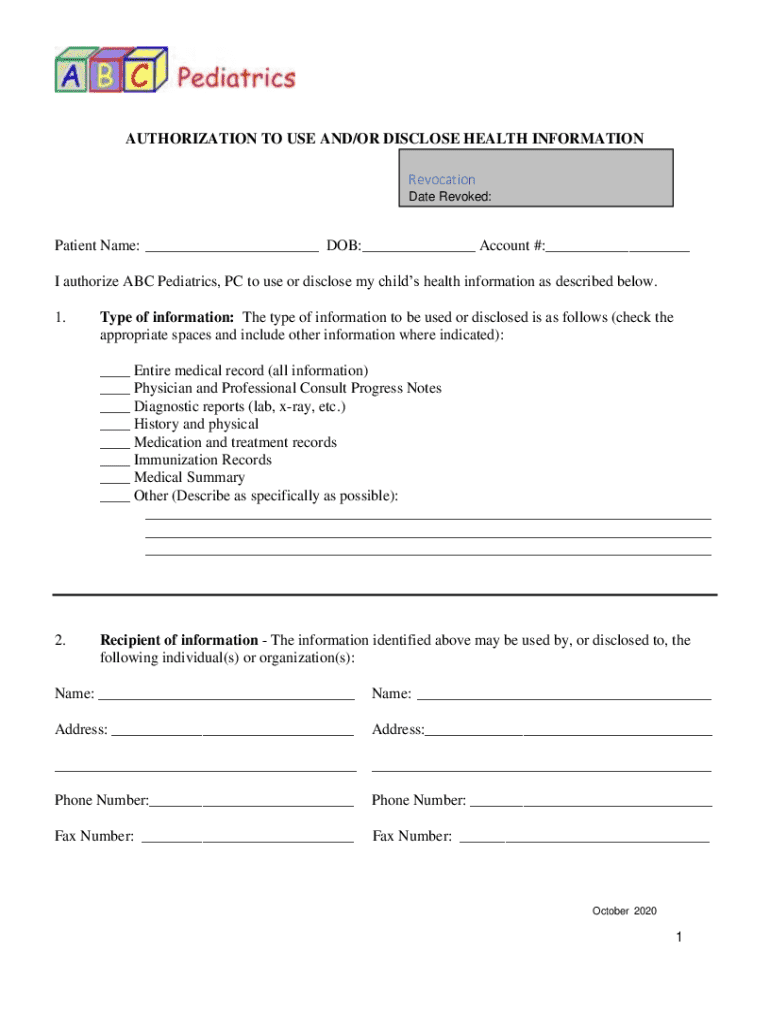
The "Authorization to Release Medical Records Fax" is a formal document used to permit the disclosure and sharing of an individual's medical records through fax. This authorization is commonly used in healthcare, legal, and insurance contexts to ensure patient data is shared securely and in compliance with privacy laws. It specifies who can access the records, what information can be disclosed, and the purpose of disclosure.
- Purpose: Ensure informed consent from a patient or their legal representative for sharing sensitive medical information.
- Content: Typically includes patient identification, recipient details, information type, and intended use.
- Legal Basis: Often required by healthcare providers to comply with privacy laws like HIPAA in the United States.
Key Elements of the Authorization Form
The form consists of several critical components that ensure comprehensive communication regarding the release of medical records.
- Patient Information: Full name, date of birth, and other identifying information.
- Recipient Details: The name and contact information of the entity receiving the records.
- Information Disclosure: Specific types of information to be released (e.g., treatment history, lab results).
- Purpose: The reason for which the records are released (e.g., legal proceedings, medical treatment).
- Expiration Date: Specifies when the authorization expires.
- Patient or Guardian Signature: Provides legal consent, verifying acknowledgment of the terms.
Steps to Complete the Authorization Form
To accurately fill out the "Authorization to Release Medical Records Fax," follow these steps:
- Obtain the Form: Download the form from your healthcare provider’s site or request it directly from their office.
- Enter Patient Details: Fill out the patient’s full name, date of birth, and medical record number for accurate identification.
- Specify the Recipient: Clearly indicate the full name and fax number of the individual or entity receiving the records.
- Define Information Scope: Choose the type of medical records to be released, such as lab results or treatment notes.
- Declare the Purpose: State why the records are being released and how they will be used.
- Set Expiration: Include an expiration date for the authorization to limit indefinite access.
- Sign the Form: Sign and date the form; if a guardian is involved, they must sign and include their relationship to the patient.
- Submit the Form: Send the completed form to the healthcare provider's relevant department.
Legal Use of the Authorization Form
The use of this form is governed by stringent legal standards designed to protect patient privacy and ensure lawful data handling.
- HIPAA Compliance: Healthcare providers must adhere to the Health Insurance Portability and Accountability Act (HIPAA) regulations, which mandate obtaining patient consent for sharing medical information.
- State Regulations: Rules can vary by state, requiring additional disclosures or specific wording in the authorization form.
- Revocation Rights: Patients often have the right to revoke the authorization in writing, provided the information has not yet been released.
Examples of Using the Authorization Form
- Medical Coordination: Doctors may need to share patient information with specialists for further care.
- Legal Proceedings: Lawyers might request medical history to support a client's case in court.
- Insurance Claims: Insurance companies often require medical records to process claims efficiently.
State-Specific Rules for the Authorization Form
State legislation can influence the format and content of the authorization form. Here are examples of state-specific variations:
- California: May require including language about the ability to revoke designation at any time.
- New York: Could necessitate additional sections highlighting particular patient rights.
- Texas: Might stipulate specific types of health data that cannot be shared without further consent.
Important Terms Related to the Authorization Form
Understanding relevant terminology can enhance comprehension and facilitate appropriate usage of the form:
- Protected Health Information (PHI): Any data concerning health status, provision of healthcare, or payment for healthcare that can be linked to an individual.
- Revocation: The act of withdrawing consent or permission.
- Healthcare Provider: Any organization or individual providing medical services and responsible for maintaining patient care records.
How to Obtain the Authorization Form
There are multiple avenues to obtain this form, ensuring accessibility based on personal preferences and circumstances:
- Healthcare Provider's Website: Often available for download directly from the provider’s portal.
- Physical Request: Obtain a printed copy by visiting a medical office or hospital.
- Third-party Services: Some online platforms offer customizable templates for such forms in compliance with federal and state regulations.
Digital vs. Paper Version
Both digital and paper versions of the authorization form have their advantages, and it is crucial to choose based on specific requirements:
- Digital Version: Convenient for electronic submission, easy to store, and ideal for rapid processing and remote communication.
- Paper Version: Useful in settings where electronic access is limited or for individuals preferring hard copies to maintain personal records.